
Refine by
Laser Imaging Articles & Analysis
24 articles found
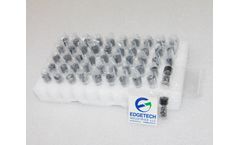
Platinum iridium marker bands are often preferred over other types due to their high density and radiopacity, making them more visible under imaging equipment. This results in a more precise treatment with reduced risk of complications. ...

Core Technologies and Advantages Intelligent Sorting System Equipped with an advanced intelligent sorting system, the equipment can quickly identify and classify different types of waste batteries. Using laser scanning and image recognition technologies, the system precisely distinguishes battery models, capacities, and conditions, providing accurate input for ...
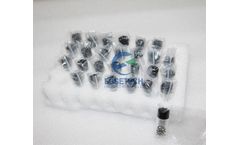
Marker bands, a simple but effective solution, are now commonly used to improve imaging and localization, resulting in more accurate and effective medical diagnoses and treatments. ...
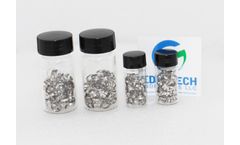
Marker bands, a simple but effective solution, are now commonly used to improve imaging and localization, resulting in more accurate and effective medical diagnoses and treatments. ...
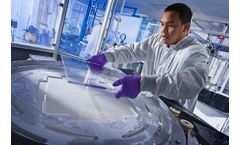
Vacuum windows are typically used in laser systems where they are used to transmit laser beams into or out of vacuum chambers; in spectroscopy where they allow light to enter or exit a spectrometer while maintaining a vacuum environment for accurate measurements; in microscopy where they enable observation of samples under vacuum conditions; in space applications ...

Additional advanced services, including preparation of research tissue microarrays, laser capture microdissection (LCM), and other methods to support tissue-based research may be arranged following consultation with the Lab Director. ...

Here’s how laser marking works. Laser Source Laser marking systems use laser sources. ...

For the procedures described here, standard endoscopy with the addition of Volumetric Laser Endomicroscopy (VLE). using the NvisionVLE; Imaging System with Real-time Targeting, was performed to localize abnormalities and inform ...

When thinking of a high powered laser, the image that comes to mind is likely to have some connection to a sci-fi “death ...

LNF is a particle shape classifier that also provides a highly accurate particle count for particles greater than 4 um using laser imaging techniques and advanced image processing software. Silhouette images of all particles larger than 20 um in major dimension are automatically classified into the following categories: ...
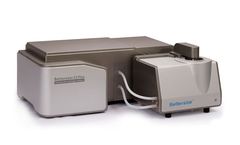
Particularly the precise and reproducible detection of particles with sizes close to the measuring range limits as well as the simultaneous determination of particle sizes of very small particles (nanometer range) as well as large particles (lower millimeter range) for the characterization of polymodally or very broadly distributed samples provides a challenge. State-of-the-art ...

3D assessment of plants became a commonly used technology in plant phenotyping to measure morphological and architectural features of plants. Although, 3D sensors such as PlantEye can be the workhorse for every phenotyping platform, it still lacks the ability to measure changes in color or other spectral information that are an important indicator for the plants physiological ...
It is often known as filter debris analysis and can be measured by x-ray fluorescence spectroscopy, microscopy (either optical or scanning electron microscopy), and direct imaging particle count. However, because it's qualitative, a skilled diagnostician is required to review the data. ...

Optical coherence tomography (OCT) has recently emerged as a promising technique to non-destructively capture mesoscale three-dimensional images of environmentally relevant biofilms. For this study, OCT was used to image the three dimensional structure of mixed culture biofilms enriched in a synthetic wastewater. ...

The average total suspended solids, total chemical oxygen demand, biological oxygen demand, total Kjeldahl nitrogen, and total nitrogen removal efficiencies achieved were 94.3, 83.1, 98.0, 93.1, and 63.3%, respectively, during steady-state operation. The confocal laser scanning microscopy image indicated that the backwash could effectively remove the ...

In this work, we use a recently reported dynamic speckle laser method, to process images and to distinguish motile surface patterns per area of colonisation by applying image processing techniques called fuzzy mathematical morphology (FMM). ...
To check whether feedwater TEP could be a source for extracellular polymeric substances (EPS) of early biofilm, 5 experiments were run with either untreated (active bacteria) or chlorinated (inactivated bacteria) feedwater. Confocal scanning laser microscopy and image analysis of biofilm on membranes after 50 h showed similar EPS in the biofilm, irrespective of ...
Physico-chemical characterisation, by means of comparison of extracellular polymeric substances (EPS) and soluble microbial products (SMP) concentrations, as well as the mixed liquor suspended solids (MLSS) concentration were unable to explain the differences in membrane fouling of the contrasting membrane materials. The use of confocal laser scanning microscopy (CLSM) to ...

A leakage jet plume was revealed by a laser light sheet, and images were captured by high definition video. ...

In the development of the AWP, EPA researched multiple remote sensing technologies to measure pollutant concentrations, including the following: Ultra-Violet Differential Optical Absorption Spectra (UV- DOAS) Open-Path Fourier Transform Infrared Spectroscopy (OP-FTIR) Rama-Spectroscopy Tunable Diode Laser (TDL) Differential Absorption Light Detection and Ranging ...