
Layer Nutrient Articles & Analysis
13 articles found
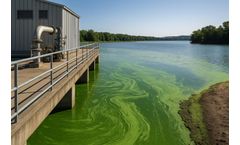
Real-time buoy-based systems enable remote data access to support proactive management. For nutrient-focused monitoring, continuous phosphate monitoring can illuminate conditions favorable to bloom formation before population surges.Prevention and ManagementThree fundamental approaches exist: prevent blooms at source, reduce long-term nutrient inputs, and ...
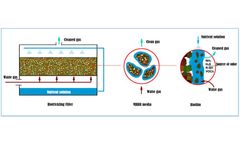
Biotrickling odor removal is a highly efficient and economical exhaust gas treatment technology suitable for treating low-concentration and large-volume organic exhaust gases, especially malodorous gases. This technology utilizes microorganisms to degrade organic pollutants and has the following advantages: High removal rate: Biotrickling odor removal can achieve a removal rate of over 95% for ...

Water is a vital resource for life, playing a critical role in everything from our health and well-being to the functioning of the natural world around us. From the smallest microorganisms to the largest animals, all living things rely on water to survive. And yet, despite its importance, water is often taken for granted, and the delicate balance of ecosystems that rely on it is easily disrupted. ...

Diet plays an important role in nutrient availability, which is then modulated by both the organism’s nutrient absorption and microbial nutrient utilization. ...

The project will attempt to address a key problem with the macroalga-farming concept: the top layer of the open ocean has a lot of sunlight but few nutrients, whereas the deeper layers have abundant nutrients but no sunlight. ...

Plant root systems are usually exposed to heterogeneous environmental conditions due to vertical differences in soil moisture and strength. Strong subsurface layers of soil can confine root systems to shallower soil layers, thus limiting water uptake from deeper layers. ...

When these organisms die, the organic material sinks to the bottom and builds a nutrient rich sediment layer and an oxygen-poor water column through biological decay. ...
During the day algae are photosynthesizing in the top layer, using carbon dioxide and dissolved nutrients from the surrounding water to produce oxygen and polysaccharides. ...

Nutrients may be eliminated from ice when liquid water is freezing, resulting in enhanced concentrations in the unfrozen water. The nutrients diluted from the ice may contribute to accumulated concentrations in sediment during winter and an increased risk of algae blooms during the following spring and summer. ...

Poor Quality Soil Within any plantation area, the top layer of soil - known as topsoil - contains many of the organic materials and nutrients needed for plant growth. ...

Top: Inorganic arsenic accumulates in the outermost layers of the rice grain. Jay Smith/Discover, Adapted from Tracy Punshon, Department of Biological Sciences, Toxic Metals Superfund Research Program, Dartmouth College (rice grain) and from Andrew Meharg, Queen's University (structural formulas) The Rice Connection As evidence of harm from low-dose arsenic in water mounted, ...

After absorption in the thin water layer, the polluting components will be degraded by the micro-organisms which are settled on the packing material (in the so called “bio-film”). The degraded pollutants will be discharged out of the filter by the same water layer. Nutrients and minerals for the bacteria can be dosed by a separate ...

Topsoil is eroding faster than new soil forms on perhaps a third of the world’s cropland. This thin layer of essential plant nutrients, the very foundation of civilization, took long stretches of geologic time to build up, yet it is typically only about six inches deep. ...