
Refine by
Ldar Program Articles & Analysis
37 articles found
The current regulatory environment, driven by the oooob summary and the Greenhouse Gas Reporting Program GHGRP, demands Ground Truth. The regulator no longer accepts an estimate when a measurement is technologically possible. ...
ByOPGAL
Modern infrared camera leak-detection (OGI) enables multi-spectral detection to identify a broad range of gases, supporting safety, environmental compliance, and product recovery within a single workflow.The Downstream Complexity: More Than Just a Methane ProblemFor years, LDAR programs prioritized methane leaks, driven by regulations such as NSPS OOOOA and ...
ByOPGAL

EPA OOOOb/c standards for new sources and OOOOc for existing sources, alongside stringent European methane regulations, drive a shift from voluntary leak detection to mandatory, quantitative LDAR. Operators and field engineers must determine the required level of OGI sensitivity to comply and preserve profitability.The Regulatory Perfect Storm: From OOOOa to the OOOOb/c EraFor ...
ByOPGAL
EPA OOOOb/c standards for new sources and OOOOc for existing sources, alongside stringent European methane regulations, drive a shift from voluntary leak detection to mandatory, quantitative LDAR. Operators and field engineers must determine the required level of OGI sensitivity to comply and preserve profitability.The Regulatory Perfect Storm: From OOOOa to the OOOOb/c EraFor ...
ByOPGAL

The EPA continues to accelerate its methane reduction strategy by tightening performance standards across the petroleum and natural gas sector. Two major components of this regulatory shift are OOOOb and OOOOc, each addressing different stages of industry activity. While operators are becoming familiar with the OOOOb summary that outlines requirements for new, modified, and reconstructed sources, ...
ByOPGAL

Introduction: Why Camera Leak Detection Matters Gas leaks pose significant safety, environmental, and financial risks. Methane and other volatile compounds are invisible to the naked eye, but even small leaks can lead to catastrophic accidents, regulatory fines, and lost revenue. For decades, industries relied on handheld sensors that could only measure one point at a time. Today, a camera leak ...
ByOPGAL
Introduction: Why Leaks Are a Hidden Threat Leaks, whether from gas pipelines, industrial equipment, or fluid systems, represent a significant risk for businesses worldwide. They can threaten worker safety, damage equipment, harm the environment, and cause millions of dollars in financial losses. The challenge is that most leaks are invisible to the naked eye and extremely difficult to detect ...
ByOPGAL
Whether handheld, fixed, or drone-mounted, OGI cameras have become essential tools for LDAR (Leak Detection and Repair) programs, compliance with EPA rules, and corporate ESG commitments. ...
ByOPGAL
As EPA regulations like OOOOa, OOOOb, and Subpart W tighten, industries face growing pressure to enhance emission monitoring. Optical Gas Imaging (OGI) technology—especially when combined with artificial intelligence (AI)—offers a powerful way to stay ahead. This article explores how companies like Opgal are turning compliance into innovation with smart OGI tools that simplify ...
ByOPGAL
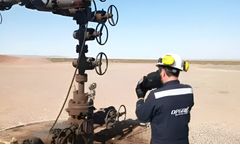
The ability to see gas leaks in real time has revolutionized leak detection. What was once a reactive process relying on handheld sensors and periodic inspections has now become a proactive, visual practice-thanks to the advent of optical gas detectors and imaging cameras. These devices give maintenance teams and safety personnel the power to identify even small leaks before they escalate into ...
ByOPGAL
As environmental regulations become increasingly stringent, it’s crucial for industries to stay ahead of the curve by adopting innovative strategies to improve their Leak Detection and Repair (LDAR) programs. An effective LDAR program minimizes harmful emissions and demonstrates a company’s commitment to environmental ...

Leak Detection and Repair (LDAR) programs are utilized in refineries and other industrial environments where volatile organic compounds (VOCs) are abundantly present. In principle, LDAR elements are designed to eliminate fugitive emissions by optimizing equipment monitoring, reporting, and maintenance. However, there are many more benefits of a ...

Energy executives must understand the application of LDAR in monitoring fugitive emissions to ensure a safe and sustainable refinery. In truth, there are actually multiple ways that LDAR equipment and methods help reduce gas leaks in facilities. Read on to learn the different LDAR techniques for monitoring unwanted emissions. ...

Managing a successful emissions control program at your petroleum facility is no easy task, especially with the endless list of rules and regulations specific to this industry. Read this guide on understanding LDAR requirements for refinery operations to ensure better compliance and overall business performance. ...
In fact, detailed documentation is a massive component of any LDAR system. Read on to learn three LDAR program record-keeping best practices that can optimize your ...
Inspectors visit refineries to test their systems’ efficacy to ensure proper LDAR programs are upheld throughout their facilities. Read on to learn what to expect during an LDAR program audit. ...
Read on and learn the four key components of an effective LDAR program for refineries and processing facilities. ...

The year was 1996 and 11-year-old me (Kevin Moses), and my 9-year-old brother, were up to no good, or so we thought. Mom and Dad left us in the hands of our very capable teenage sister, who was undoubtedly talking on the cordless phone in her room. Recently Dad left a video in the VCR called “Fugitive Emissions” and this was the moment we had been waiting for. Popcorn made, we sit ...
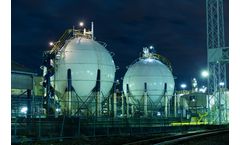
Introduction The traditional method 21-based Leak Detection and Repair (LDAR) program quantifies leaks in volumetric concentration units (ppm v). ...
ByOPGAL
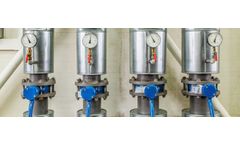
INTRODUCTION The traditional method 21-based Leak detection and repair (LDAR) program quantifies leaks in volumetric concentration units (ppm v). ...
ByOPGAL