
Refine by
Libs Spectroscopy Articles & Analysis
14 articles found
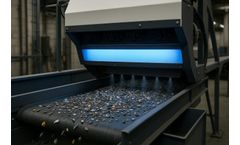
X-ray transmission sensors measure material density and atomic number. Laser-induced breakdown spectroscopy (LIBS) probes elemental composition by analyzing the light spectrum of laser-ablated micro-plasmas on the material surface. ...
Introduction: Metal 3D printing, also known as additive manufacturing, has revolutionised various industries by enabling the production of complex and customised metal parts with unprecedented precision. However, ensuring the integrity and quality of printed components remains a critical challenge. Gas detection technologies offer a solution to this challenge, providing valuable insights into ...

Integration with Other Techniques: Combining thermal desorption with complementary techniques, such as solid-phase microextraction (SPME) or laser-induced breakdown spectroscopy (LIBS), could provide comprehensive analytical solutions. See this oil sludge pyrolysis. ...
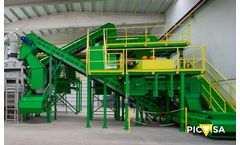
For this, the future goes through continuous innovation in separation and classification technologies such as magnetic and induction separators, screening systems, sensors, robots, optical separators or laser spectroscopy (LIBS), a technique used in metal detection. At the moment, the most cutting-edge innovation goes through the development of material ...
Soil testing has become a must-check item for environmental testing. In recent years, countries around the world have attached great importance to soil testing, which has led to great progress in soil testing technology. At the same time, countries around the world have increased their investment in soil metal testing, using advanced technologies such as spectroscopic analysis technology, ...
This is known as laser-induced breakdown spectroscopy (LIBS). The ablated material is subsequently transported to a second excitation source of an ICP-MS (inductively coupled plasma-mass spectrometry) instrument. ...

So, here is my introduction to LIBS for those testing houses and my answers to the questions I usually get. What is a LIBS analyser? LIBS stands for Laser Induced Breakdown Spectroscopy. LIBS analysers emit a small and powerful laser beam onto the surface of the sample to be checked. ...
And for laboratories which are accredited according to DIN EN ISO/IEC 17025, calculating and applying the measurement uncertainty is essential. MSA in Spectroscopy In XRF, LIBS and OES analyses, the measurement system includes the following: The operators of the spectroscopy equipment. ...
Laser Induced Breakdown Spectroscopy or LIBS is an analytical technique that's been used in laboratories for many years. Most handheld LIBS analysers are used for fast sorting of alloys in scrap yards, and alloy identification and analysis in various applications within the metals industry. Watch video here. How does LIBS ...
In the wake of mis-certification scandals around the world, firms are tightening their quality assurance (QA) processes using materials analysers.Industry has been shaken recently by news of companies providing false certification in a range of fields, from emissions testing through to metal grading. Cases where suppliers have delivered mislabelled products only serve to highlight the importance ...
Laser Induced Breakdown Spectrometry (LIBS) and X-ray Fluorescence (XRF) handheld analysers are both compact, easy-to-use and fast. Materials can be identified at the pull of a trigger. It’s that simple. Often, cost is a key factor in the decision making process, especially when it comes to thinking about overheads long-term. When both products are comparably priced and have a similar ...
Elemental alloy analysis is usually carried out by using either OES (optical emission spectroscopy), XRF (X-ray fluorescence) or with LIBS (laser induced breakdown spectroscopy). ...
This article, recently published in Spectroscopy, reviews the most common laser ablation techniques such as LIBS (Laser Induced Breakdown Spectroscopy) and LA-ICP-MS (Laser Ablation Inductively Coupled Plasma- Mass Spectrometry), as well as introduces the exciting possibility of LAMIS (Laser Ablation Molecular Isotopic Spectrometry). ...
The savings can easily be € 200 per tonne. Sorting with LIBS There have been quiet some efforts made recently to develop LIBS (Laser Induced Breakdown Spectroscopy) for sorting aluminum alloys. At the moment, LIBS is multiple times more expensive than XRF or XRT in terms of cost per tonnage and only a very few prototype ...