
Lidar Application Articles & Analysis
12 articles found
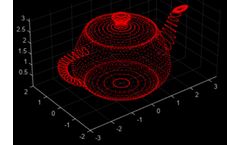
LiDAR provides centimeter-level accuracy and is excellent for long-range applications such as autonomous vehicles. TOF sensors are more compact, suitable for short- and medium-distance applications, and consume less power. In this article, we will consider the construction of a point cloud based on LiDAR scanners. ...
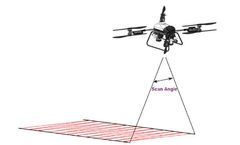
The sections will cover Introduction to LiDAR, The Importance of Estuaries, How LiDAR Can Help Estuary Research, and Applications of RESEPI Payload for Estuary Mapping. Finally, the benefits of using lidar in estuarine surveys will be briefly described. Section 1. Introduction to LiDAR. ...
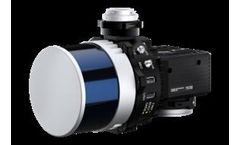
Abstract. Light detection and ranging (LiDAR) technology is finding new applications in various industries. Due to its high data accuracy, speed, and safety, LiDAR has found its application in construction. People often wonder why construction takes so long to complete. ...
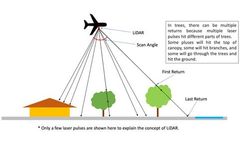
It employs laser light to measure distances to the Earth’s surface, generating precise, three-dimensional information about the shape of the Earth and its surface characteristics. LiDAR technology has many applications, including topographic mapping, forestry, agriculture, urban planning, and autonomous vehicles. ...
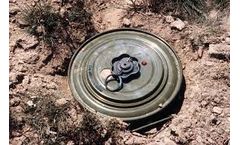
Over the past couple of decades, Light Detection and Ranging (LiDAR) technology has become common in many areas. Military applications are no exception, where LiDAR is used to detect explosive objects and mines on the earth's surface. ...
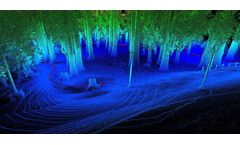
These sections will be discussed: Introduction to LiDAR, Fertilization in Farming, and How can LiDAR help Fertilization. Lastly, a conclusion is discussed to display the overall effects of implementing LiDAR for fertilizing methods and some other broad applications of LiDAR use in the precision agriculture ...

This alignment is critical for urban planning applications. Seamless Integration Integrating RESEPI LiDAR with Inertial Labs' solutions is designed to be seamless and user-friendly. ...

What is LiDAR Point Cloud? What is LiDAR Point Cloud? Components Overview A LiDAR point cloud deliverable is a collection of millions (even billions) of points used to accurately map an environment, similar to how a pointillism painting creates a picture. Each of these points has a location in a known coordinate system (local or global), ...
Introduction to Remote Sensing and Scanning Light detection and ranging (LiDAR) sensors are a commonly used source of optical information for remote sensing payloads in scanning and surveying applications. LiDAR payloads use penetrating pulses of laser light that are reflected and used to determine the relative distance to the point that it is ...

Robert Rissland, Director, Int’l Sales for Micro Pulse LiDAR, explains the advantages of the polarized, single-photon detecting Mini Micro Pulse Lidar (MiniMPL) over Doppler Wind Lidar systems. ...

In the framework of the two-year 2016 – 2018 research Project QOMA II (Q-Switched Optical Master for Optoelectronics Space Applications II) funded by European Agency (E.S.A.), Raymetrics S.A. together with National Technical University of (Professor A. Papayannis’ team), Cilas (France) and Laser Centre of Hannover, LZH (Germany) designed, developed, manufactured and ...

A Rapid-Scanning Backscatter Lidar (RASCAL) has been deployed at Heathrow and Manchester Airports to collect backscatter data from particulate emissions in the wakes of several hundred flights. The principal aim of these measurements was to characterise the dispersion of the engine exhausts, but it was found that tyre smoke was also visible, giving a signal substantially greater than that from ...