
Refine by
Lidar Data Articles & Analysis
37 articles found

The ability to import publicly available lidar data, merge it with the firm’s own detailed field survey data, and then make adjustments to the model directly on the map has been ...
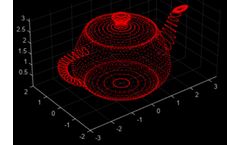
In the scope of a LiDAR payload, the INS is essential for precise data georeferencing. ...
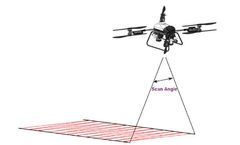
After collecting data with LiDAR payloads such as the RESEPI Payload, it is essential to process the raw data before creating the point cloud. ...
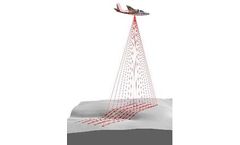
The distance data is combined to produce a point cloud showing objects' shape and location within the lidar field of view.Variations among LiDAR models primarily include differences in scanning angle, maximum scanning range, and scanning precision. ...
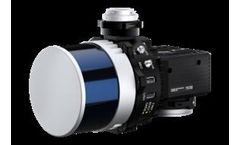
Due to its high data accuracy, speed, and safety, LiDAR has found its application in construction. ...
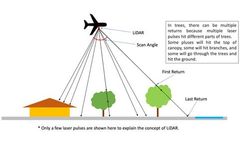
The main components of LiDAR include a laser, scanning system, receiver, and data processing system. ...
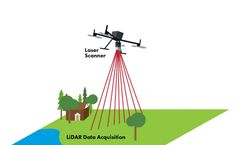
After data collection by LiDAR payloads like the RESEPI Payload, it is crucial to subject the raw data to post-processing before generating the point cloud. ...
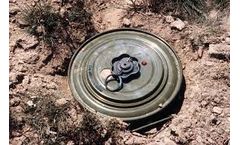
After LiDAR payloads collect data, sending the raw data through post-processing is necessary before obtaining the point cloud. ...
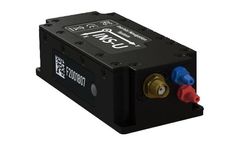
This drift is mitigated in an aided system by integrating external signals from sources such as GNSS, magnetometers, barometers, and visual or LiDAR sensors, which correct and refine the data obtained from the inertial sensors. ...

Introduction What is a LiDAR Payload? LiDAR stands for Light Detection and Ranging and has become an increasingly prevalent technology over the past decade. NASA and meteorologists have used LiDAR, now embedded within cell phones with the release of the iPhone 12 Pro. LiDAR is commonly used in surveying, mapping, and inspection applications where it can provide very detailed and accurate ...

One technology that has revolutionized urban navigation data quality is RESEPI LiDAR, a cutting-edge system that combines LiDAR technology with precise inertial navigation solutions. ...
The ability to import publicly available lidar data, merge it with the firm’s own detailed field survey data, and then make adjustments to the model directly on the map has been invaluable. ...

Los Angeles County Flood Control District Overview HEC-HMS model of 110 sq. mi. urban watersheds Development of custom LiDAR processing tools "What-if" mitigation scenarios analyzed Applied Software WMS (HEC-HMS, MODRAT, XPSWMM) SMS (TUFLOW) Problem A study conducted by Los Angeles County Flood Control District determined that some of the levees along Compton Creek and Dominguez ...

The subsequent research efforts included the following activities: Tracking plumes of volcanic ash or dust through the atmosphere Understanding local air quality Providing warnings to air traffic controllers, meteorologists, and industrial sites related to aerosol events During the summer of 2012, using desert dust as a proxy, MF collected data provided by several ...
Ongoing research to support improved forecasting and modeling of volcanic activity uses a combination of sensors, including Mini Micro Pulse LiDAR (MiniMPL) to collect data. Recent Crises There have been several notable incidents recently that are drawing attention to the dangers of volcanic eruptions. ...
Data and imagery from drones can exponentially improve infrastructure design, monitoring, and maintenance, as long as you properly integrate their data into your systems and software. ...

Light Detection and Ranging (LiDAR) is a remote sensing technique which uses near infra-red laser and GPS to provide a precise three-dimensional mapping of land and forests. LiDAR can be used for large-scale maps with planes/drones or small-scale scans when installed on the ground. LiDar is useful for generating the following information: ...
Micro Pulse LiDAR remote sensing data are used to calculate a highly accurate Planetary Boundary Layer (PBL) height to improve plume models that help assess emissions sources. ...
The wet/warm waves were observed staying in the local atmosphere longer, greatly reducing visibility and forming a heavy pollution layer about 400m thick for several days! Micro Pulse LiDAR technology plays a key role in such data synergy because its vertical aerosol profiling capability uses highly efficient and sensitive photon-counting detectors that produce ...
Continuous monitoring with aerosol-detecting remote sensors, such as Micro Pulse LiDAR (MPL) and Mini Micro Pulse LiDAR (MiniMPL) systems, provides valuable data that complement the traditional collection methods. ...