
Refine by
Liquid Analyzer Articles & Analysis
51 articles found

Medical & Biotechnology Blood pH Measurement: In medicine, blood pH is an important diagnostic indicator. pH sensors are used in blood gas analyzers to monitor a patient’s acid-base balance, especially during intensive care or surgery. ...

Mass Spectrometry (LC-MS/MS): This enriched sample is then analyzed by liquid chromatography-tandem mass spectrometry (LC-MS/MS). ...
Obtaining precise results in X-ray fluorescence (XRF) analysis requires thorough and proper sample preparation. For liquid samples, meticulous preparation ensures high accuracy and reproducibility of measurement outcomes. This article covers essential aspects of liquid sample preparation and handling procedures for XRF ...
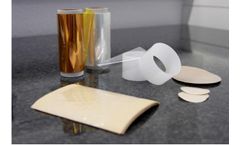
The preparation of liquids using X-ray fluorescence analysis is done by simply pouring the sample into a sample ...

XRF is widely used in fields such as materials science, environmental analysis, archaeology, and mining due to its ability to quickly and accurately analyze solids, liquids, and powders. Its main advantages include fast results, minimal sample preparation, and the ability to analyze a broad range of materials. ...
ByB&W Tek

One of the most effective methods is mass spectrometry (MS), often combined with liquid chromatography (LC-MS). This technology enables the detailed identification and quantification of lipids and metabolites from small samples like exosomes, which are typically limited in number. ...

Techniques like mass spectrometry and high-performance liquid chromatography are employed to analyze and identify protein modifications, opening new avenues for personalized medicine. ...
Label-free quantification (LFQ) is an innovative approach in proteomics that allows researchers to analyze protein abundance without the need for isotopic labeling. This technique focuses on the enzymatic cleavage of proteins into peptide fragments, which are then analyzed using liquid chromatography coupled with mass spectrometry (LC-MS). ...

Mass Spectrometry AnalysisThe peptides obtained by digestion are analyzed by liquid chromatography-mass spectrometry (LC-MS). In the mass spectrum, hydrogen/deuterium exchange leads to an increase in peptide mass. ...
This article investigates the effect of temperature on near-infrared (NIR) absorption spectroscopy and why it is crucial to control it – especially when analyzing liquid samples. These insights will help you to understand how to improve the accuracy and repeatability of NIRS measurements. ...
ByB&W Tek

|A common protease is trypsin, which recognizes specific amino acid sequences and cuts the protein into peptides.Mass Spectrometry AnalysisThe cut peptides are analyzed using Liquid Chromatography-Mass Spectrometry (LC-MS/MS).|In the mass spectrometer, the peptides are ionized and separated and detected based on their mass-to-charge ratio ...

Optical Impuritiesracemization, non-enantiomeric impurity.Common Techniques for Impurity Detection in Peptide Drugs1. High-Performance Liquid Chromatography (HPLC)HPLC has become the most commonly used method in drug quality analysis. ...

Firstly, the protein sample needs to be enzymatically digested, and then the ubiquitination site is analyzed by liquid chromatography-tandem mass spectrometry (LC-MS/MS). ...

Mass Spectrometry Analysis The digested peptides are analyzed by liquid chromatography-mass spectrometry (LC-MS). Heavy-labeled and light-labeled peptides can be distinguished in the mass spectrum due to the tiny mass differences derived from the amino acids containing different isotopes. 5. Data Analysis By comparing the heavy/light peak ratios of the same ...
As instruments become cheaper, LC-MS is becoming increasingly important in clinical biochemistry, competing with traditional methods such as liquid chromatography and immunoassays. Quadrupole mass analyzers are typically used for tandem mass spectrometry (MS/MS), selecting ions based on different m/z ratios, and using collision-induced dissociation (CID) to ...

For anyone deeply involved in gas chromatography (GC), understanding the quality, consistency, and safety of the oxidant gas source is as crucial as grasping the concepts of boiling point, retention time, and stationary phase. This brings us to the significant role played by zero air generators in GC applications. Let’s delve into the reasons behind the preference for zero air generators ...

The use of thin-layer chromatography detection technology can quickly detect the biguanide ingredients in medical products and other substances, thus ensuring the quality and safety of medical products. Liquid Chromatography Liquid chromatography is a relatively common chromatographic detection technique. It has a wide range of applications and can ...

MySep studio predictions for liquid-liquid performance of HP and LP separators in a Refinery Diesel Hydrotreater application are discussed. Comparison is made with plant data and a good level of agreement is found. ...

Cannabis and near-infrared spectroscopy Near-infrared spectroscopy (NIRS) is a fast analytical technique with low running costs used to perform quality control (QC) and product screening on various cannabis products, including hemp. It can determine the cannabinoid profile or even the potency of dried cannabis flowers. NIRS can also be used for QC of cannabis oils, waxes, tinctures, ...
Solvent recovery is the process of extracting useful solvents and raw materials from waste or byproduct solvents that are generated during manufacturing processes. The solvents that are used in these situations are often not disposed of or incinerated, but instead recovered and purified, as this saves considerable costs. Used solvents are mostly purified by means of distillation. Solvent ...