
Lithium Detection Articles & Analysis
12 articles found

For lithium brines, XRF cannot detect lithium directly because lithium has a low atomic number. ...

Lithium is present in all Li-ion chemistries, so detecting lithium does not distinguish NMC, NCA, or LFP. ...
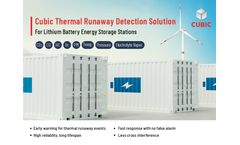
Lithium-ion batteries are currently widely used in the field of energy storage. ...
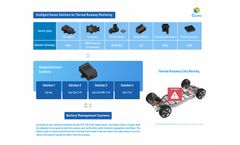
Thermal runaway in lithium-ion batteries is a critical concern for safety in electric vehicles. ...

Current research shows that for earlier detection of lithium-ion batteries thermal runaway, it is more effective to monitor the gas concentration released by the battery compared to monitor the battery voltage and temperature. ...

The rapid growth of the electric vehicle market and the increasing demand for portable electronics have driven the need for advanced energy storage systems. In recent years, lithium-ion batteries have emerged as a promising solution due to their high energy density, long cycle life, and low self-discharge rate. ...

Hiden Analytical details its production of several manufacturing systems and tools that are required to study surface analysis. Surface analysis is an increasingly important aspect of manufacturing. The surface is where chemical reactions happen, catalysis and corrosion take place, adhesives bond – and can catastrophically debond. Additionally, the exposed surface is where light is ...

Honeywell (Nasdaq: HON) announced today it is expanding its strategic alliance with Nexceris, developer of Li-ion Tamer® lithium-ion gas detection solutions, to help make electric vehicles (EVs) safer. ...
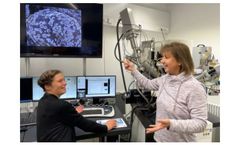
We at IMFAA are extremely grateful for the cooperation and the resulting support of our research by Hiden. Our institute is located in the new research building at Aalen University / in southern Germany and we are a team of about 80 scientists, PhD students, Master students, Bachelor students and research assistants. Thanks to Hiden, we are able to do research on a SEM-SIMS combination at the ...

From single-view conventional x-ray to dual-view x-ray to explosives detection systems (EDS), innovation in screening technology allows air cargo companies to enhance security, improve their operations and protect against developing threats. The goal of these innovations is to make the security screening processes easier, faster and more accurate, while removing human errors. Combined with ...
As threats to security continuously evolve alongside the impact and challenges of COVID-19, now is the time to implement technologies to gain greater efficiencies, move cargo faster and leverage digital assistance. Key Benefits Ensures compliance with new TSA standards Reduces need for secondary screening Improves safety and efficiency ...

Wyoming: Lithium and selenium levels in groundwater have been observed at 100 times safe levels. Wyoming: In southwest Wyoming, groundwater levels of lithium and selenium have been detected at 100 times safe levels, and arsenic has been detected at five times safe levels. ...