
Refine by
Macroalgae Articles & Analysis
30 articles found

It is found in various marine organisms, such as macroalgae and certain bacteria. l Chitin Chitin is another important marine polysaccharide, consisting of N-acetylglucosamine monomers linked by β-1,4-glycosidic bonds. ...
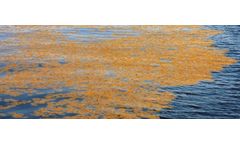
This is why Sargassumhas earned a place on our list of the worst water weeds. This genus of macroalgae (seaweed), started making headlines back in 2015 when huge amounts of it started piling up and decaying on lovely Caribbean island beaches such as the Dominican Republic, Barbados, Antigua, and Tobago. ...

We used our expertise in biosecurity and automation and applied it to macroalgae. Our new Seaweed Gametophyte Bioreactors have been in development for 3 years, and represent a critical tool to support sustainable growth of the seaweed ...
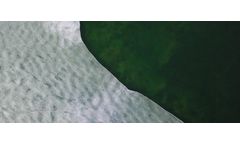
If you’ve read any of our blogs, you already know the plethora of negative impacts of harmful algal blooms (HABs). From depleted oxygen levels to fish kills, and from skin irritations to liver damage, the consequences of these blooms are well-documented. But when we think of harmful algal blooms (HABs), we typically imagine warm weather and stagnant water, with greenish-blue scum covering ...
Algae produce about 70% of the oxygen in the atmosphere, and they can be mainly classified as microalgae and macroalgae. What Can Algae Do? Single-celled microscopic algae are called microalgae and multicellular filamentous, membranous, tubular, or foliar plants are called macroalgae, which are autotrophic oxygen-releasing plants. ...
In Far East, longlines of seaweed – also known as macroalgae – is a common sight at the surface of the sea, however, seaweed cultivation is still at a modest level in Denmark and in Europe.. ...
Ocean Rainforest Sp/F is leading the case study: Sustainable offshore macroalgae cultivation. This case study aims to further develop the cultivation and processing capacity at Ocean Rainforest and identify possibilities for expansion of macroalgal production in other areas of the Atlantic Ocean. ...
The European seaweed – or macroalgae - industry relies on wild harvest and growth is limited by ecological sustainability considerations. But large scale macroalgae cultivation can satisfy this demand. However, macroalgae cultivation needs increased knowledge and understanding of seasonal variation of growth rates and biological content ...
A widely available but underutilised Nordic bio-resource is macroalgae (seaweed). Traditionally, macroalgae have been used for many years in the feed and food industry as binders (hydrocolloids extracts) and macroalgae can also be used as partial replacement in food and feed products, as proteins, oils, vitamin & mineral mixes, antibiotics, ...
MacroSystems’ goal is to demonstrate that the harvested macroalgae will contain five times the amount of energy relative to the amount of energy required to produce the biomass product. ...
The purpose of MacroBiotech was to continue development - and prove the technical and commercial viability - of a concept for macroalgae cultivation in the open ocean. Cultivation was here used in the broadest sense and encompasses seeding, cultivation, harvesting and bio-refining. ...
This is a production platform that covers the whole technological chain for processing sustainable cultivated macroalgae biomass – also known as seaweed – to highly processed value added ...

Once harvested, seaweed, also known as macroalgae, could potentially be turned into various forms of energy, such as biogas and ethanol, through different chemical processes. ...

Abstract : Management of toxic chemicals in the aquatic environment is performed in Japan by setting environmental standards by law. Forty-nine chemicals are regulated and measured once a month at specific sites in rivers and lakes. Many of these chemicals are detected at various places in Japan, but in concentrations below the standard values. Dioxins, which are not regulated, have been detected ...
If successful, this system could be the basis for an autonomous network of floating kelp farms that could be scaled up to produce the amount of kelp biomass necessary to make macroalgae biofuel cost competitive with fossil fuel. Over the next year or so, the team, which includes Kim, John Heidelberg, associate professor of biological sciences and environmental studies, David ...

In the present work, Iridaea cordata (IC), a red marine macroalgae, was used as an efficient biosorbent for the removal of crystal violet (CV) and methylene blue (MB) dyes from aqueous solutions. ...
The ability of Sargassum hemiphyllum to remove methylene blue (MB) from aqueous solution was evaluated. Batch experiments were conducted to examine the effects of parameters such as initial pH, contact time, biomass dose and initial dye concentration on adsorption capacity. S. hemiphyllum before and after MB adsorption was characterized by Fourier transform infrared spectroscopy (FT-IR), ...
Sargassum swartzii, marine macro brown alga, showed a high malachite green (MG) biosorption capacity in batch mode of operation. The analytical evidence from Fourier transform infrared spectra confirmed the involvement of amine group in the biosorption of MG and electrostatic interaction type of mechanism was proposed to occur between the amine group of dye and the cationic MG dye ...

Multiple types of algae, including microalgae, cyanobacteria, and macroalgae are of interest. The request is only for information that may be used by DOE to support program planning and is not a funding opportunity announcement. ...

In particular, amphipoda showed a composition connected with macroalga development. During the warm season, macroalgae underwent degradation processes and this caused the presence of high abundance of opportunistic species and species connected to perturbed sediment. ...