
Magnetometer Gyroscope Articles & Analysis
6 articles found
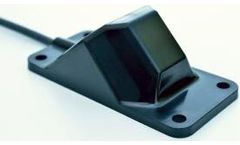
Key products include: Inertial Measurement Units (IMUs): These devices combine accelerometers, gyroscopes, and magnetometers to measure orientation, velocity, and gravitational forces precisely. ...
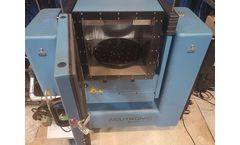
All Inertial Labs IMUs (Inertial Measurement Units) consist of robust MEMS-based accelerometers and gyroscopes. Fundamental Design of MEMS Accelerometers and Gyroscopes Fundamentally, all MEMS accelerometer sensors commonly measure the displacement of a mass with a position-measuring interface circuit. ...
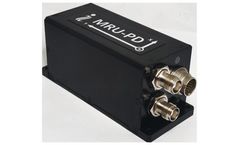
Sensor Technology and Signal Processing The core of MRU technology lies in its sensor array—typically consisting of accelerometers, gyroscopes, and, occasionally, magnetometers. Here's how these sensors function within an MRU: Accelerometers: These sensors detect acceleration along their axes by measuring the displacement of a mass suspended within a ...
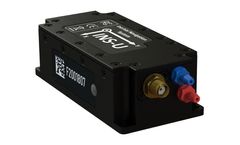
Introduction to Inertial Navigation Systems An INS is a self-contained mechanism that uses accelerometers, gyroscopes, and occasionally magnetometers to continuously calculate a moving object’s position, orientation, direction, and speed without external references. ...
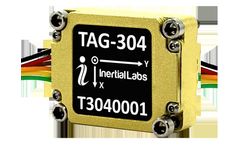
This data is obtained through sensors that detect changes in linear acceleration along each axis and gyroscopes for detecting rotation around each axis. Heading information may come from magnetometer-type sensors or a fiber-optic gyroscope. ...

These systems leverage state-of-the-art sensor fusion algorithms that combine data from gyroscopes, accelerometers, and magnetometers, resulting in highly accurate orientation measurements.What truly sets Inertial Labs apart is the versatility of their AHRS systems. ...