
Refine by
Manganese Oxide Articles & Analysis
85 articles found

Here's a question that sounds simple but rarely gets a straight answer: what are lithium cells used for? Most articles give you a recycled list — "smartphones, laptops, EVs" — and call it a day. That's fine if you're writing a middle school science report. It's useless if you're an OEM engineer, a procurement manager, or a product developer trying to figure out which cell chemistry ...
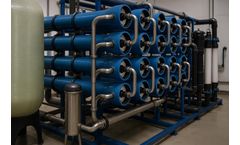
Suspended solids: Measured as SDI and turbidity, particulates and colloids can plug filters and accumulate on membranes, causing fouling and higher pressure drop. Silica, iron, and manganese can also cause fouling and are difficult to remove with standard cleaning. ...
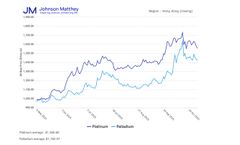
Promising alternative materials include Hopcalite (a mixture of manganese and copper oxides) and Perovskites. At present, neither of these can match the efficiency or durability of precious metals but forward-thinking companies such as Whitebeam are in the process of optimising them. ...

Among commercially available cathode materials, lithium cobalt oxide (LiCoO2), lithium manganese oxide (LiMn2O4), lithium iron phosphate (LiFePO4), and ternary composites are widely used. ...

Equipment Overview DOING’s lithium battery recycling equipment adopts advanced technologies and automated processes to handle various types of waste lithium batteries, including lithium iron phosphate (LFP), nickel-cobalt-manganese (NCM/NCA), and lithium cobalt oxide (LCO). By combining physical and chemical methods, the equipment efficiently separates and ...
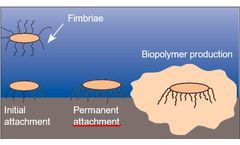
The development of biofilms and the role they play in corrosion and deposition processes may be the most misunderstood and underestimated factor in the treatment of cooling water and other industrial water systems. Ask any water treatment professional about calcium carbonate scale or to explain the major attributes of a typical corrosion cell, and you may get a reasonable explanation provided ...

These particles may include hazardous elements like Chromium, Lead, Cadmium and Manganese. Gases: Various gases, such as Nitrogen Oxides, Carbon Monoxide and Ozone can form during the welding process. ...

Conductivity can be used to indicate industrial spill events in source water monitoring applications. ORP Oxidation reduction potential is a measure of the potential flow of electrons between oxidizers and reducers. This defines the oxidizing or reducing powerof a solution. As such, ORP indicates a water sample’s ability to break down ...

We have discussed Manganese in surface water sources and the potential issues when stratification in the water source occurs. ...
ByCoftec

Antiferromagnetic Non-magnetic even under the action of an induced magnetic field. Example: Manganese Oxide (MnO2). Ferrimagnetic Lower magnetic degree than ferromagnetic materials. ...

A major disadvantage is the heavy dependence of UV system efficacy on turbidity and flow rate [8]. Ozone Ozone is a strong oxidizing agent which eliminates contaminants such as bacteria, viruses and metals [9]. The chemical works by oxidizing organic material in membranes of microorganisms (i.e. bacteria, viruses and parasites) which ruptures and kills their ...
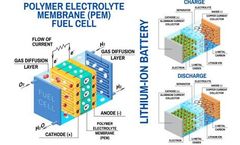
Research and development (R&D) into novel energy storage materials is important to improve the utility of energy generated from renewable sources, thereby reducing reliance on fossil fuels, a finite resource. Lithium ion batteries are a central to such initiatives, and are increasingly pivotal in green markets like that of hybrid electric vehicles (HEVs). Fossil fuels are a finite resource ...

On our website recently, we started to ask and answer a fundamental question that is critical for the global energy storage industry to address – If cobalt is so bad, why are some companies still using it in lithium-ion ...
Lithium ion chemistries with cobalt include: Lithium Cobalt Oxide (LiCoO2 or LCO) Lithium Nickel Manganese Cobalt Oxide (LiNiMnCoO2 or NMC) Lithium Nickel Cobalt Aluminum Oxide (LiNiCoAlO2) or NCA) Chemistries without cobalt include: Lithium Ferrous (Iron) Phosphate (LiFePo4 or LFP) Lithium Titanate (Li4Ti5O12 or ...
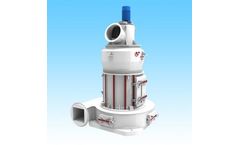
Non-metallic ores: gypsum, talc, graphite, fluorite, calcite, limestone, calcite, barytes, apatite, tabular spar, feldspar, quartz and so on. Metal oxides: manganese iron ore, chromite, Ilmenite, bauxite and so on. Chemical compounds: coke, lime coke, smelting coke, barium sulfate and so on. ...

Indoor air filtration technology is particularly useful for dealing with potentially harmful air particulates from welding, including: Lead oxide Iron oxide Nickel oxide Beryllium oxide Chrome VI compounds Thorium oxide Manganese Gaseous substances, such as phosgene, ozone, carbon ...
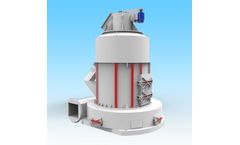
Common grinding materials and usage ways are as follows:Soil types: clay, China clay, bentonite, magnesia, clay, bauxite, etc.Non-metallic ores: gypsum, talc, graphite, fluorite, calcite, limestone, calcite, barytes, apatite, tabular spar, feldspar, quartz and so on.Metal oxides: manganese iron ore, chromite, Ilmenite, bauxite and so on.Chemical compounds: coke, ...

Ozone has been used for more than 100 years to purify water by oxidizing minerals such as iron, manganese and hydrogen sulfide and by destroying bacteria, viruses and cysts. ...

Manganese is a naturally occurring mineral deposited from sediment and rocks. ...
GS+ has a manganese dioxide coated surface that acts as a catalyst in the oxidation-reduction reaction of iron and manganese, and a silica sand core that can withstand operating conditions in waters with low silica, todal dissolved solids (TDS) and hardness. ...