
Manure Control Articles & Analysis
21 articles found

Location: Wolfe Power Line Dairy, Milton, PA Background: The Wolfe Power Line Dairy is a 750-head dairy farm with a 1.8 million gallon, above-ground manure storage silo designed to hold six to twelve months of manure production. The storage system is 30 feet below the barn grade and utilizes gravity to feed manure to the bottom of the containment ...

The piece highlights how biosurfactant chemistry provides a sustainable, source-level solution for fly management in livestock environments—particularly deep-pit, slatted-floor, and lagoon systems. It fits naturally alongside your recent Livestock Product Alert content, complementing topics like manure handling, barn design, and herd ...

Summary This report was derived from 6 separate studies utilizing BG1 in combination with other additives as compared to the control setting, looking for the pathway(s) to the highest gas production. Samples were derived from various feedstocks, predominantly manure, but also wastewater from a meat processing facility, to determine the most effective ...

It can be used to process cow dung, chicken manure, pig manure, etc. This process significantly reduces the moisture content in the manure, which, in turn, minimizes the risk of nutrient-rich runoff entering water bodies. ...
Mitigating greenhouse gas emissions: The use of biochar in livestock farming systems has the potential to reduce greenhouse gas emissions by sequestering carbon and reducing methane and nitrous oxide emissions from manure and fertilizers. C. Odor Control Adsorption of volatile compounds: Biochar has adsorption properties that can capture and reduce the release ...

Currently, HDPE geomembrane pond liner has become a necessity for many farms and dairy farms. The huge pond liner can control manure and discharge agricultural waste without polluting the land. In some cases, if proper containment and systems are appropriate, it can also allow manure to be reused to regenerate energy. ...
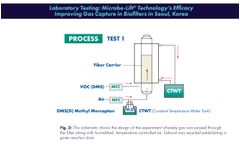
MICROBE-LIFT®/HOG was designed for use in manure pits where it has been used successfully for over thirty years. ...
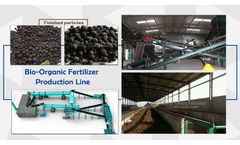
The simple composting method has a long time to treat livestock manure, a low content of organic fertilizer nutrients and a slow release. ...

One of these trials was monitoring a range of green manures on a certified organic vegetable farm. The demonstration trialled and compared 6 different green manure crops each year for 3 years against a control. The control was immediately adjacent to the other strips and no green manure crops were sown into the ...

Positive mentality towards AD on farms is mainly due to the added manure storage onsite that comes with an installation, as well as the control over manure volume and flow. ...
Positive mentality towards AD on farms is mainly due to the added manure storage onsite that comes with an installation, as well as the control over manure volume and flow. ...

” Globally, nutrient pollution of coastal systems has risen from fewer than 75 systems in 1960 to more than 800 systems today. Controlling Pollution through Water Quality Management Efforts to control agricultural pollution must be part of a larger, holistic water quality management strategy that provides the scientific basis for effective actions, ...

Most of these facilities were open air type (windrow, giant piles or ASP) with little or no odor control technology. The threat of closure has forced permitting agencies, banks, and facility owners to put odor control at the top of the facility design requirements. ...

Animal manure application based on crop N requirements often leaves excess P in the soil because of the differences in the N/P ratio in manures and that required by the plants. ...
Animal manure application based on crop N requirements often leaves excess P in the soil because of the differences in the N/P ratio in manures and that required by the plants. ...
Runoff was analyzed for concentrations of sediment, dissolved reactive P (DRPC), bioavailable P (BAPC), and total P (TPRC). Non-incorporated manure consistently increased (P 0.10) concentrations of all runoff P fractions in five sites, but there were increasing trends at all sites, and on average manure increased DRPC, BAPC, and TPRC 32, 23, and 12 times, ...
After 28 yr, soil organic carbon (SOC) declined by –0.25 g C kg–1 yr–1 and total nitrogen (TN) by –0.025 g N kg–1 yr–1 with balanced mineral fertilization (NPK, no manure), comparable to the control (no manure, no fertilizer). In addition, mean weight diameter (MWD) of water-stable aggregates was lower with balanced mineral fertilization than in ...
Fall CC dry matter (DM) was 26% lower in the manure treatments than the no manure CC control, although no difference was detected for N (9.4 kg ha–1) or P (1.4 kg ha–1) uptake. No difference was detected for spring DM between CC no manure and manure treatments. Shoot DM, N, P, and K uptake increased 29, 41, 31, ...
Three preplant whole plot treatments (control, 56 kg N ha–1 as NH4NO3, and manure) were used to create a range of N availability. ...
This management practice is also beneficial for controlling manure-borne pathogen transport to surface water. The objective of this work was to assess the VFS efficiency and evaluate the uncertainty in predicting the microbial pollutant removal from overland flow in VFS. ...