
Refine by
Mass Chromatography Articles & Analysis
436 articles found

Edible oils are not only a major source of nutrition but also a key basic material in the food industry. Vegetable oils are increasingly important because of their high content in mono- and polyunsaturated fatty acids in comparison with animal fats. In this application note, the main ingredients of olive oil, camellia oil, arachis oil, sunflower seed oil, and colza oil are analyzed using a ...
ByB&W Tek

Using specialized tools like antibodies that recognize the unique signature left after ubiquitin digestion (the "di-glycine remnant" or K-GG motif), scientists can selectively isolate ubiquitinated peptides from a cell lysate. Mass Spectrometry (LC-MS/MS): This enriched sample is then analyzed by liquid chromatography-tandem mass spectrometry ...
The gold standard for Sterol Lipids Analysis is a combination of chromatography and mass spectrometry (LC-MS/MS or GC-MS/MS). Chromatography (LC or GC): This first step acts like a molecular sorting system, separating the different sterol lipids from each other and from other molecules in the sample. Mass Spectrometry (MS): Once ...

Among available techniques, gas chromatography-mass spectrometry (GC-MS) remains the gold standard due to its sensitivity, reproducibility, and specificity. ...
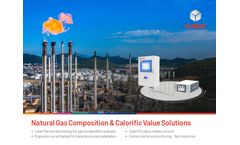
Designed to enhance flare combustion efficiency, Cubic has developed an advanced In-situ gas composition Analyzer based on Laser Raman Spectroscopy principle, to help prevent the release of unburned methane (CH₄) into the atmosphere, providing a more efficient and straightforward solution in contrast to traditional Gas Chromatography-Mass Spectrometry (GC-MS) ...
Modern Lipidomics Services offer powerful solutions for studying lipid composition, quantification, and interactions in biological samples. Combined with advanced mass spectrometry and chromatography techniques, these services primarily employ two complementary approaches: untargeted lipidomics and targeted lipidomics. ...

Designed to enhance flare combustion efficiency, Cubic has developed an advanced In-situ gas composition Analyzer based on Laser Raman Spectroscopy principle, to help prevent the release of unburned methane (CH₄) into the atmosphere, providing a more efficient and straightforward solution in contrast to traditional Gas Chromatography-Mass Spectrometry (GC-MS) ...
Advanced methods, such as liquid chromatography-tandem mass spectrometry (LC-MS/MS), are indispensable tools. ...

Both species were analysed using gas chromatography-mass spectrometry, their surface hydrocarbons were identified as consisting mostly of (Z)-7-tricosene, and the rest were very obviously unrelated so that the male adults of each species were unable to detect the female adults of the other, and they became reproductively isolated. ...

Purity and Concentration Analysis ServicePurity and concentration analysis is a fundamental service that assesses the quality of the RDC drug before it progresses to further testing. High-performance liquid chromatography(HPLC) and mass spectrometry (MS) are commonly employed techniques in this analysis. ...
Here are some common methods: High-Performance Liquid Chromatography (HPLC): HPLC is one of the most widely used methods for vitamin analysis. ...

Analytical Chemistry: Methods like HPLC (High-Performance Liquid Chromatography) and mass spectrometry can be used to analyze secreted products, confirming the functional characteristics of the cells. ...
Key Analytical Techniques Liquid Chromatography-Mass Spectrometry (LC-MS): LC-MS is the gold standard for glucosinolate analysis. It provides high sensitivity and specificity, allowing for the accurate identification and quantification of glucosinolates and their metabolites. Gas Chromatography-Mass Spectrometry (GC-MS): GC-MS is ...

In some cases, amino acids need to be derivatized either before they pass through the chromatographic column or after to improve the sensitivity of the detection.(4) QuantificationBy comparing the peak area detected with that of a standard of known concentration, the amino acids in the sample can be quantified.2. Gas Chromatography-Mass Spectrometry (GC-MS)(1) ...

Accurate analysis and monitoring of the components of the medium can help researchers and manufacturers optimize the production process, increase yield, and ensure the safety and effectiveness of the final product.Technologies for Analyzing the Components of Antibody Drug Culture Media1. High-Performance Liquid Chromatography (HPLC)(1) HPLC can be used to quantitatively analyze ...

Applications in Medicine and Research In medical research, understanding how proteins conjugate can lead to breakthroughs in diagnostics and therapeutics. Techniques like mass spectrometry and high-performance liquid chromatography are employed to analyze and identify protein modifications, opening new avenues for personalized medicine. ...
This technique focuses on the enzymatic cleavage of proteins into peptide fragments, which are then analyzed using liquid chromatography coupled with mass spectrometry (LC-MS). By comparing the signal intensities of corresponding peptide fragments across different samples, scientists can achieve relative quantification of proteins. ...
The following list encompasses instruments that are commonly used for environmental analysis: Avance III 400MHz NMR: applied for Component Analysis, Micro-analysis, Surface Analysis, Structure Identification, Performance Analysis, Toy Analysis, Polymer Material Analysis, Spice Analysis, Food Analysis, Environmental Analysis, Mineral Element Analysis, Analysis of Metal Materials Avance III 600MHz ...

For instance, High-Performance Liquid Chromatography (HPLC) and Capillary Electrophoresis (CE) can be used to analyze the types and quantities of proteins and amino acids; Gas Chromatography (GC) and Mass Spectrometry (MS) can be used to analyze the composition of sugars and lipids; various biochemical analysis methods can be used to measure the ...

Analytical methods: We use advanced analytical techniques and instruments, such as Gas Chromatography-Mass Spectrometry (GC-MS) and Liquid Chromatography-Mass Spectrometry (LC-MS), to perform qualitative and quantitative analysis of pesticide residues. ...