
Refine by
Material Characterization Articles & Analysis
115 articles found
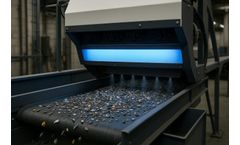
X-ray transmission sensors measure material density and atomic number. Laser-induced breakdown spectroscopy (LIBS) probes elemental composition by analyzing the light spectrum of laser-ablated micro-plasmas on the material surface. ...
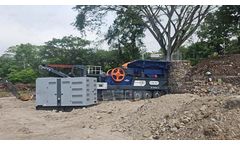
Road construction needs coarse base materials, intermediate binder courses, and fine surface treatments, often all on the same day. ...

Raman spectroscopy is a very effective analytical technology to characterize carbon materials. The Raman bands associated with different carbon bonds reveal details of the structure on the molecular level. Most of the research using Raman technology has been applied to carbon nanotubes and graphene. The fast characterization of carbon black ...
ByB&W Tek
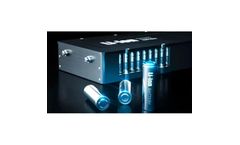
The European Union’s Battery Regulation (EU 2023/1542) marks a new era for energy storage technologies. One of its most significant features is the introduction of the EU Battery Passport — a digital system designed to ensure transparency, sustainability, and traceability throughout the entire battery value chain. From February 2027, every large industrial and electric vehicle (EV) ...

Diffuse reflectance infrared Fourier transform spectroscopy (DRIFTS) is a powerful analytical technique for the study of powdered and rough surface materials. It is widely employed for quality control, materials characterisation and catalytic studies in both research and industrial settings. However, optimal sample preparation and instrument setup are crucial to obtain the most reliable results ...
BySpecac

Polymer characterization is a pivotal aspect of polymer science that involves determining the properties and behaviors of polymeric materials. ...

Molecular sieves are a crucial class of synthetic crystalline materials characterized by their exceptional adsorption properties. These materials, primarily composed of metal aluminosilicates, have a unique three-dimensional interconnecting network of silica and alumina tetrahedra. ...
Biomedical etchants enable the selective removal of material or the creation of desired surface structures, ensuring the proper integration of these devices with the patient's body or tissue. Etchants for energy applications Etchants play a crucial role in energy applications as they are used for materials preparation, surface modification, and ...
AI-Aided Material Structure and Performance Prediction One of the key advantages of incorporating AI into biomaterials research is the ability to rapidly predict a material's structure and performance characteristics. ...

The imaging powers of chemical microscopy have helped to uncover the smallest worlds that we previously never could see. Uncovering different aspects of particles, such as their shapes and sizes, is only one of its uses. In fact, chemical microscopy can be used in biology to learn about proteins and how DNA reacts to drugs. It can also analyze the most minute formations within various types of ...
Understanding the concentration of hydrogen in steel is crucial for innovating and developing new grades of steel to meet the rising demands of advanced applications. The Temperature Programmed Desorption (TPD) method, also known as Thermal Desorption Spectrometry (TDS) or Thermal Desorption Analysis (TDA), is a foundational approach for quantifying hydrogen content in steel and other materials. ...

Non-contact measurement refers to the process of determining the dimensions, geometry, or other physical properties of an object without physically touching it. This technique leverages various advanced technologies to capture precise data while ensuring that the object’s integrity remains unaltered. Non-contact measurement is crucial in situations where physical contact could damage the ...

Ensuring high-quality biochar necessitates precise control over pyrolysis conditions, thorough characterization of feedstock materials, and rigorous quality assurance protocols. Environmental Impact As advocates for sustainability, it's paramount to assess the environmental impact of biochar pyrolysis equipment throughout its lifecycle. From raw ...
Raman spectroscopy is used in solid state physics to characterize materials, gauge temperatures, and identify sample crystal orientation. Characteristic phonon modes can be used to distinguish solid materials. The ratio of the Stokes and anti-Stokes intensity of the spontaneous Raman signal provides details about the population of phonon modes. ...
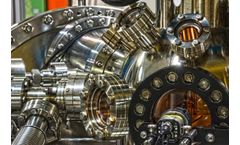
Right now, the market for mass spectrometry is on the rise. In fact, by the time we arrive in 2029, it is expected to be worth around $9.17 – $14.6 billion. Mass spectrometers examine ions and their mass through the use of magnetic fields and electric fields. By using mass spectrometry to undertake ion energy analysis, we can learn about ions and the different formations of molecules. ...
Thermal desorption is a powerful technique used in various fields, including environmental science, analytical chemistry, and material science. It involves the process of heating a material to release volatile compounds or contaminants absorbed within it. ...
In this article, we unravel the intricate working process of the coconut shell charcoal making machine, shedding light on each crucial stage of production. Raw Material Preparation Selection of High-Quality Coconut Shells At the heart of how to make coconut shell charcoal is the meticulous selection of raw material. Optimal coconut shells are ...
The discovery of new materials with desirable properties in the field of materials science used to heavily depend on laboratory experiments and trial-and-error methods. ...

UV-Vis Absorption Detector Ultraviolet-visible detector (UVD) is one of the most widely used detectors in HPLC, and almost all liquid chromatographs are equipped with this detector. UVD is characterized by high sensitivity, wide linear range, low noise, and is suitable for gradient elution. ...
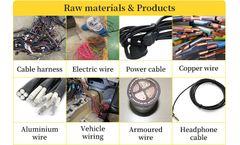
Clean copper tubing is an example of # Copper grade as it is free against fittings, paint, solder, and other materials. #2 COPPER This is characterized by miscellaneous, unalloyed wire or solid metal with solder or other coatings such as paint. #2 Copper includes dirty copper metal with a 94-96% copper composition and should be uninsulated and with a 16th-inch ...