
Refine by
Material Scanning Articles & Analysis
24 articles found

The cost of storing materials—along with related salaries, transportation, handling, taxes, insurance, depreciation, and shrinkage—could add up to 10-30% of total inventory costs, according to Investopedia. ...
Although helpful, it’s likely you don’t have time to digest full-line brochures and long-winded product articles to determine which bin level sensors your operations need. BinMaster is here to arm you with high-level knowledge about your options and what to consider before calling someone—or us—to discuss your needs. Being prepared will pay off, easily helping you rule ...

The demolition industry stands at a transformative crossroads, moving from brute force destruction to sophisticated material recovery operations that prioritize resource conservation. Concrete crushers have become the cornerstone of this revolution, evolving from simple crushing machines into intelligent systems that sort, separate, and prepare materials for ...

Semiconductor metrology is a specialized branch of measurement science that ensures the accuracy and precision of semiconductor manufacturing processes. The evolution of semiconductor technology, from early microprocessors to today’s highly advanced integrated circuits (ICs), has been driven by the demand for smaller, faster, and more efficient electronic devices. As semiconductor ...

SSE missions include three main components: enter the site, assess the environment, and collect and identify materials. Military personnel, first responders, and Hazmat specialists must be prepared to find anything while working: chemical warfare agents, toxic chemicals, deadly narcotics, or even improvised explosives. ...
ByB&W Tek

The design and inspection of helicopters—whether military, commercial, or civilian—are subject to strict regulations. This makes sense: helicopters are a fast, versatile method of flight, but also can have a very low threshold between normal operation and challenging situations. For the safety of pilots, passengers, and bystanders, there needs to be strict regulations requiring all ...
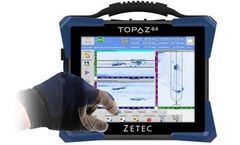
Nondestructive testing (NDT) analyzes a material for flaws, defects, and discontinuities without damaging the material. ...
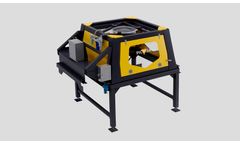
ECOPICK by PICVISA has been designed as an innovative response, the first product from our Robotics business unit built to enhance efficiency and quality in the classification and sorting of waste in recycling plants. ECOPICK scans different materials, identifies them among all the waste and separates them for recycling and subsequent valorisation. ...

However, ultrasonic testing is not a panacea. Depending on the type of materials being scanned and their geometry, even surprisingly thin materials can sometimes pose challenges. ...
Phased array probes are much more efficient, capable of scanning a large area more quickly. Their complex scan patterns are also more able to detect hidden flaws and defects than the simple beams of older probes. ...
Read more about eddy current analysis software Eddy current probes direct electromagnetic currents into the materials being scanned. As such, they are a necessary component of all eddy current inspections. ...
One method collects the reflection of these waves and interprets wave variations in order to form an image of the object’s interior. As different materials—or holes in materials—reflect ultrasonic waves differently, wave variations provide consistent signals which can be reliably interpreted. ...
Read more about advanced ultrasonic testing software While ultrasonic testing technology has been proven continually to be a highly effective means of flaw detection, no technology is entirely without drawbacks. Not every material can be effectively scanned using ultrasound, and other factors like material depth, grain, and irregularities can ...
In order to achieve the highest quality of data and speediest inspection times, analysts need instruments with enough range to cover a wide testing radius and enough flexibility to scan a variety of materials at different angles quickly and in great detail. ...

The built-in drum screen is kept and continues to separate the material into three fractions: Fine, medium and coarse material. The fine material (0-50 mm) is fed directly into a container, where it is then sent off for thermal utilisation. ...

cieTrade Systems Inc., a global provider of business software for paper stock brokers, scrap dealers, and recyclers has announced the addition of Inventory Control, Material Processing, and Barcoding Scanning features to their recently launched cloud software. Their new Inventory module offers a perfect solution for commodities such paper stock rolls/sheets ...
Both RED-WAVE machines are arranged in parallel and are used for sorting material to be used as an RDF (refuse derived fuel). Thereafter the remaining material will be scanned by another 2 REDWAVE sorting machines, which will separate paper and cardboard. All sorted materials will be further checked and cleaned manually to ...

Various electrical, optical and material characterisations were performed to examine degradation trend and failure mechanism. On the basis of multiple material analyses, including scanning electron microscopy (SEM) with focus ion beam (FIB), energy dispersive X–ray spectrometry (EDX) and secondary ion mass spectroscopy (SIMS), deformation of the ...
The effect of different concentrations of surfactants (span–80/tween–80) on the synthesis of nano–CaCO3 was investigated. The material was characterised by scanning electron microscopy (SEM), transmission electron microscopy (TEM), X–ray diffraction (XRD) and thermogravimetric analysis (TGA/DTA) techniques. ...
In the evidence, we successfully developed a novel method of nano–RSV manufacture and demonstrated that this method could circumvent the physicochemical drawbacks of raw RSV with respect to dissolution, such as the reduction of particle size and gradually release from collagen materials. The scanning electron microscopy (SEM) data have shown the RSV nanoparticles ...