
Refine by
Membrane Train Articles & Analysis
10 articles found
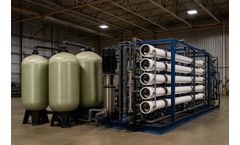
Fluence designs integrated treatment trains that combine pretreatment, membrane filtration, reverse osmosis, and demineralization to deliver reliable feedwater across a wide range of industrial applications. ...

What happens when you bring 90+ expert dentistry and maxillofacial surgeon’s together in a room to unpack the burgeoning world of collagen membrane technology and digital dentistry? There are plenty of reasons to smile, that’s what. ...
This water needs to be free from contaminants in order for the boiler to operate correctly, without frequent shutdown for maintenance. For this reason, a membrane filtration train is frequently used. Unfortunately, the exposure of plant water to the manufacturing process means that the feed water can be contaminated with both high levels of oils and solid ...

The Gippsland Water Factory (GWF), owned and operated by Gippsland Water in south eastern Australia, is a 35,000 m3/day water reclamation facility which treats 16,000 m3/day of domestic wastewater and 19,000 m3/day of industrial (pulp and paper) wastewater through parallel membrane-bioreactor (MBR)-based treatment trains prior to discharge to the Pacific ...
The majority of advanced reuse schemes incorporate the dual membrane process – microfiltration or ultrafiltration followed by reverse osmosis (RO) – in the treatment trains and while this membrane based treatment has been shown to produce a very high quality of product water, it does come at a cost and there is renewed interest in ...
To address this challenge, SANASA (a publicly owned water and wastewater concessionaire from Campinas) has recently constructed the ‘EPAR (Water Reuse Production Plant) Capivari II’ using the GE ZeeWeed 500D® ultrafiltration membrane system. This is the first large-scale membrane bioreactor (MBR) system in Latin America with biological ...

Better Level Control With the advent of the new water treatment process, however, water was to be fed directly from the contact chamber (around 12 minutes in retention time) to the membranes. In addition, the fine-screen washing and membrane back pulse cleaning would generate sudden raw water flow variations. “It was clear that a better level control ...
Active surface area of the membrane elements is typically increased by membrane production process automation, by denser membrane leaf packing and by adding membrane leaves within the same element. The total active surface area in a membrane element is also be increased by increasing membrane ...
The use of integrated membrane systems (a train of treatment processes incorporating one or more membranes) is increasing globally as the technology is very effective for the production of high quality drinking water. In this investigation a laboratory scale integrated membrane system (IMS) featuring coagulation, powdered ...
A typical RO membrane desalination plant includes the following key components: source water intake system; pretreatment facilities; high-pressure feed pumps; RO membrane trains, and a desalinated water conditioning system. But the 'engine' of every desalination plant that turns seawater into fresh potable water is the RO ...