
Refine by
Methylene Chloride Articles & Analysis
48 articles found
Basic Operating Parameters Design treatment air volume: 35,000 Nm³/h Inlet VOC concentration: ≤4,000 mg/m³ (large component fluctuation); inlet relative humidity ≤75% Core components: toluene, xylene, methanol, o-dichlorobenzene, methylene chloride, etc., with trace HCl and ammonia; halogenated hydrocarbons are the primary corrosion source Operation mode: 24h × ...

Polymers are the foundation of countless modern applications, from automotive components to medical devices. Ensuring the integrity of raw materials, optimizing production processes, and maintaining product purity are essential to achieving high-performance polymers. Fourier-transform near-infrared (FT-NIR) spectroscopy is an indispensable tool for polymer manufacturers, providing rapid, ...
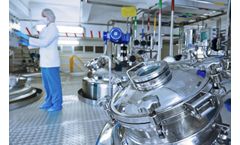
The pharmaceutical sector is facing several challenges nowadays. From an environmental point of view, and as for exhaust gas emissions generated during production, one of the main problems found in the pharma sector is that several different chemical processes often coexist in the production of a single product, while different products are produced in the same plant. Consequently, the analysis ...
ByTECAM

Solvent recovery is the process of extracting useful solvents and raw materials from waste or byproduct solvents that are generated during manufacturing processes. The solvents that are used in these situations are often not disposed of or incinerated, but instead recovered and purified, as this saves considerable costs. Used solvents are mostly purified by means of distillation. Solvent ...

(B) Best = 1-4%, (G) Good = 5-10%, (F) Fair = 11- 15%, (P) Poor = 16%+ Aqueous Solutions Water B Sodium Chloride (Saturated) B Aluminum Sulfate B Acids & Bases Sulphuric Acid (66° Be) B Acetic Acid, Glacial B Hydrochloric Acid (30° Be) B Nitric Acid (40° Be) B Sodium Hydroxide (50% sol.) B Ammonia Hydroxide B Aliphatic ...
APPLICATION Monitoring of reclaimed water for VOC contamination CUSTOMER Petrochemical plant in Taiwan PROBLEM The customer needed an on-line method to monitor the methylene chloride and dichloro-methane concentration levels in reclaimed water after a gas reclamation tower PRODUCT MS1200 with 4-20mA output WHY MULTISENSOR? ...

During production processes, several sectors are affected by high peaks of Volatile Organic Compounds (VOC) concentrations, especially industries working in discontinuous or batch processes. Having discontinuous production, some production plants can emit variable polluted flows at different moments of the day. The pharmaceutical sector and fine chemicals industries are common examples of sectors ...
ByTECAM
In the 1970s, the approach to energy efficiency compromised Indoor Air Quality (IAQ). Efforts should concentrate on net-zero energy buildings that do not repeat past mistakes. Forums have discussed sustainable buildings concentrating on energy use. Indoor air quality and its effect on health should factor into building design. IAQ has worked with ventilation standards such as the American Society ...
ByAKCP

Replace sandblasting This method is better than sandblasting because dry ice is soft enough not to damage the surface below. Dry ice quickly sublimates into the air, and only cleans up the substances that need to be removed. Dry ice cleaning eliminates equipment damage in two ways. First of all, dry ice will not erode or wear equipment surfaces like traditional grit media or even wire brushes. ...

Certainly, the principal VOCs of interest include benzene, toluene, formaldehyde, ethylbenzene (BTEX), xylene, acetaldehyde, ethylene glycol, methylene chloride, acetone, styrene, etc. There are a large number of VOCs present in the environment making it difficult to continuously monitor them simultaneously. ...

The objective of the pilot test was to evaluate whether the ART Technology could effectively remove chloroform and methylene chloride from groundwater. The ART Technology was installed in a single six inch diameter well within the source area and operated from April through July, 2006. ...

The most volatile substances, sometimes referred to as very volatile organic compounds or VOCs, may present a risk of fire or explosion. Some VOCs including methylene chloride (found in paint strippers and aerosol paints), benzene, and perchloroethylene (dry cleaning fluid) are hazardous to human and animal health or may cause cancer (carcinogenic). ...
PURGIT has the correct equipment and experience to degas tank barges Case history Methylene chloride Recovered 325 gallons—about 1583 pounds or clean condensate by pulling vapors from the vessel liquid line. ...
During the COVID-19 pandemic, the importance of sanitization and cleaning in Data Centers has increased. In this article, we’ll examine cleaning methods and the recommended disinfection procedures for a data center. Modern data centers are usually clean areas with their own air filtration units, controlled access, static mats at many entries, and air pressurization in white spaces with ...
ByAKCP
PCE, TCE, cis-1,2-dicloroethene (1,2-DCE), 1,1-dichloroethane (1,1-DCA), 1,1-dichloroethene (1,1-DCE), 1,4-Dioxane and methylene chloride. Be-ginning in 2002, source removal occurred using soil excavation, as well as single and multi-phase extraction. ...
TPH concentrations were measured by using the modified Standard Method 5520-F (Clesceri, 1989). Ten mL of methylene chloride were added to a vial containing one gram of Nature's Broom. ...

It can also occur from exposure to methylene chloride. Therefore, Carbon monoxide is spatially variable and short lived in the atmosphere, where it has a role in forming ozone at a ground level. ...
Common hazardous substances emitted from building materials include formaldehyde, acetaldehyde, phenol, glycol ethers and methylene chloride. Sources of VOC exposure in building materials are separated into two categories: solid building materials and liquid building materials. ...
Common hazardous substances emitted from building materials include formaldehyde, acetaldehyde, phenol, glycol ethers and methylene chloride. Sources of VOC exposure in building materials are separated into two categories: solid building materials and liquid building materials. ...
The most volatile substances, sometimes referred to as very volatile organic compounds or VVOCs, may present a risk of fire or explosion. Some VOCs including methylene chloride (found in paint strippers and aerosol paints), benzene, and perchloroethylene (dry cleaning fluid) are hazardous to human and animal health or may cause cancer (carcinogenic). ...