
Microbiotests Articles & Analysis
105 articles found
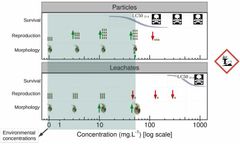
Study led by Paul Boisseaux from the University of Exeter showed that microparticles and leachates showed distinct effects on reproduction and morphological development at environmentally relevant concentrations, with dose-dependent uptake of particles visible in the digestive tract. https://lnkd.in/ekdTx3nc The test species Daphnia magna used in this study were hatched from ephippia provided ...

From algae and crustaceans to bacteria, these test organisms help us understand ecological risks and safeguard ecosystems. At Microbiotests Inc, we offer a diverse and scientifically validated test battery of test biota and bioassays to meet your ecotoxicological needs. ...
Abstract : The acute toxicities of the first 50 chemicals (dextropropoxyphene hydrochloride excluded) of the multicentre evaluation of in vitrocytotoxicity (MEIC) programme were determined on four aquatic invertebrates and a bacterial strain (Photobacterium phosphoreumfor the MicrotoxTM test) commonly used in ecotoxicology testing. Three of the aquatic invertebrate tests consisted of cyst-based ...
This has lead to the development of a (increasing) number of alternative small-scale toxicity tests also called microbiotests. The present paper reviews the potential use and limitations of a number of these alternative assays. For bacteria, algae and invertebrates, a brief description of conventional assays is given followed by an analysis of the sensitivity, reproducibility, ...
Abstract :An intensive review on the use of algae in ecotoxicological testing is herein described. The state of the art in algal toxicity testing is given and the currently applied algal tests in hazard assessment schemes are emphasized. However, the need of an alternative, rapid and cost-effective algal tests is underscored considering the inequality between the plethora of new chemicals being ...
Abstract : The primary objective of this project was to evaluate six Toxkits and the IQ Toxicity TestsTM, for suitability in the role of screening of whole effluents in DTA required by Resource Consents. As an extension, their role as \'up the pipe\' toxicity identification tests were also evaluated. Screening tests must be cost effective (so that regular testing may be performed), easy to use ...
Abstract :Linear and non-linear modelling of human acute toxicity (as human lethal concentrations; HLCs) of the 38 organic chemicals from the 50 priority compounds of the Multicentre Evaluation ofIn VitroCytotoxicity (MEIC) programme was investigated. The models obtained were derived either from a set of 23 physicochemicals properties of the compounds of from their acute toxicities to five ...
Abstract : Aquatic microbiotests were selected and evaluated for their potential usefulness in measuring ecotoxicity in monitoring programs. ...
Abstract : The linear and non-linear relationships of acute toxicity (as determined on five aquatic non-vertebrates and humans) to molecular structure have been investigated on 38 structurally-diverse chemicals. The compounds selected are the organic chemicals from the 50 priority chemicals prescribed by the Multicentre Evaluation of In Vitro Cytotoxicity (MEIC) programme. The models used for the ...
Abstract :Small-scale biological tests (microbiotests) have steadily increased in development and application over the last 30 years in the field of aquatic ecotoxicology. Multitrophic level assessment requirements, attractive features of microbiotests, and the constant search for simplicity and cost efficiency of testing are reasons explaining the expanding use ...
The toxicities of the wastewater samples and their artificial phenolic analogues (mixtures) were studied by using a battery of Toxkit microbiotests (Daphtoxkit FTM magna, Thamnotoxkit FTM, Protoxkit FTM and Rotoxkit FTM) and three photobacterial tests (MicrotoxTM, BioToxTM andVibrio fischeri 1500). ...
Abstract : Toxic effects and microcystin content from various extracts of aPlanktothrix agardhiibloom and two different strains ofPlanktothrix agardhii, HUB 076, and NIVA 34 were investigated. Extracts were obtained with solvents of different polarity such as hexane, dichloromethane, methanol, and water. Additionally, different pre-treatments were used to break the cells before extraction. Acute ...
Abstract : As the stabilization criteria for landfill sites, only chemical criteria for the leachate discharges from the landfill sites have been used in Japan and many other countries. Recently, chemical oxidation has been developed as a method for the early-stabilization of landfills. However, by-products that are difficult to detect by chemical analysis can be produced by this method. ...
Abstract :Lake Koronia, located in Northern Greece, is an environmentally sensitive area protected by Ramsar Convention. However, COD values higher that 900 mg/l and nitrate-nitrogen concentration higher than 10 mg/l were measured in the lake water. Furthermore, toxicity bioassays based onDaphnia magna, resulted in mortality values of test species higher than 40% in the lake water. The poor water ...
Abstract :In this study the results of toxicity assessment assays in the area of Thessaloniki in Greece are presented.Daphnia magnatests were used for the assessment of freshwater and wastewater andArtemia salinatests for the assessment of seawater. There was increased toxicity in the seawater of inner Thermaikos gulf as well as in the freshwater of Koronia lake. Measures, taken to prevent toxic ...
Abstract : The effects of three common agrochemicals, lindane, methyl parathion and atrazine, on crustaceanDaphnia magna, algaSelenastrum capricornutumand marine bacteriumVibrio fischeriwere investigated in this study. Methyl parathion was the most toxic compound towards all three organisms, while lindane was more toxic toDaphnia magnaandVibrio fischerithan atrazine, and atrazine was more toxic ...
Abstract : The western part of Teshima Island in the Seto Inland Sea (Japan) had been used as an illegal dumping ground for more than 10 years and the accumulated waste was estimated to be about 510.000 tons. There has been no systematic toxicity assessment conducted on this waste. In this study, a battery of bioassays was applied to the collected leachates. Toxicity of the leachates was ...
Abstract : Ten bioassays were used for the evaluation of acute, (sub)chronic toxicity and genotoxicity of an unknown soil from a military base and six model soils that were contaminated at former military bases with the major pollutants : kerosene, petroleum and used motor oil. The test species represented algae and higher plants, invertebrates and bacteria. The ability to detect toxicants in ...
Abstract :The toxicity of a sediment pore water and an effluent was characterized using Toxicity Identification Evaluation (TIE) procedures. Both samples exhibited acute toxicity to the freshwater crustaceanThamnocephalus platyurus. The TIE approach was conducted using an enlarged battery of fractionation tests. Toxicity of the pore water sample was removed or reduced significantly by the cation ...
Abstract : A comparative study has been made of the sensitivity of the acute Daphnia magna immobilization test and the Daphtoxkit F™ magna microbiotest for 30 household products of different categories (cleaning and degreasing products used in the industry, wash products for large laundries, household cleaning products and products for hygienic and personal care). ...