
Refine by
Microplate Articles & Analysis
25 articles found

Enzyme-Linked Immunosorbent Assay (ELISA)Using antibodies with high specificity and affinity fixed on microplates, the level of methylation is evaluated by detecting and quantifying the methylation of histones.When carrying out these experiments, it is necessary to use highly specific antibodies and strict control of experimental conditions to ensure the accuracy and ...

Enzyme-Linked Immunosorbent Assay (ELISA)ELISA is a common method that can quantify the binding ability of antibodies to antigens. The antigen is fixed on a microplate, the test antibody is added, and then a secondary antibody (against the test antibody) with enzyme labeling is used for detection. ...

Firstly, the nucleic acid primer complementary to the target nucleic acid is coated on the microplate. Then, the target analyte and a biotin-modified nucleic acid primer with the same sequence as the target are added for competitive binding. ...

Hold the internal temperature – if the freezer is 100% racked it will hold the overall required temperature more precisely.Freezer Racking from FroilaboUltra Low Temperature FreezersFroilabo offers a range of different freezer racking devices for our Ultra Low Temperature and Low Temperature Freezers.Our Evolution -86°C range, Trust -86°C range and Bio Memory -86°C Freezer all come complete with ...

Incubators: These provide temperature control for growing microbiological cultures. Microplate reader: This device measures chemical reactions. Microscope slides: Slides are essential for examining samples under a microscope. ...
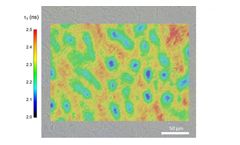
Here we demonstrate florescence lifetime imaging (FLIM) on a sample of mouse kidney, taken with our new MicroPL Upgrade. The FLIM map was acquired on a FLS1000 Photoluminescence Spectrometer with an EPL-485 pulsed diode as the excitation source and a high-speed PMT as the detector. ...
The samples were examined for the presence of Salmonella following the conventional techniques of ISO standard and using OMNILOG bacterial identification system, GEN III microplate for confirmation and sub species identification. Out of 116 fecal samples examined for the isolation of Salmonella, of which 8 (6.89%) were positive. ...

Our environment needs to be protected and technology can make huge contributions in many sectors, such as renewable energy, in the fight against climate change and global warming. At Solar MEMS we have applied all the know-how accumulated through years of experience in the aerospace sector and focused it on the technology of solar sensors for terrestrial purposes. What is more, we have been able ...

Description: This project include the design and development of a microplant of heliostats to concentrate solar radiation into a cogeneration receiver to generate electricity and storage hot water. ...
We are always open to innovation in the space industry with the use of new technologies. Bringing the space closer to the global community and accelerating innovation is not an easy task. That’s why we created Solar MEMS and discovered our passion: solar sensors. We are all aware of the importance of satellites and their correct functioning and optimization. Solar Mems is specialized in ...

“We recently published on our custom 96- and 384- well RGB LED microplate compatible light panels in JoVE—our video is accessible without JoVE’s paywall and in SLAS Technology. ...

Plastic Makes the Difference: Ideal Real-time PCR Signals with Optimized Plastic Products Various microplates are available for quantitative real-time PCR in 96 well format. ...

These include 1) adapting the Microtox® acute toxicity assay in a 96-well microplate format to markedly increase its sample throughput capabilities, 2) employing the SOS Chromotest™ to determine the genotoxic status of major industrial effluents discharging to the Saint-Lawrence River and their potential impact on downstream biota, 3) developing an alternative to whole ...
While petri dishes and qPCR plates with skirts provide ample room to affix microplate labels, qPCR plates without skirts do not. The best available product to label high-profile PCR plates without skirts is PCR-TagTrax™, which can efficiently tag PCR tubes, 8-tube strips, and microplates with more information than any other labeling method. ...

A 7 × 7 full factorial experimental design (49 combinations in total) was used to test each binary metal mixture. A 3‐d fluorescence microplate toxicity assay was used to test each combination. Mixture effects were predicted by concentration addition (CA) and independent action (IA) models based on single metal concentration‐response relationship between relative growth rate and ...

The biofilm formed on the soaked membrane was quantified by fluorescence intensity microplate analysis. The soaking method's capability in detecting biofilm formation was confirmed when percentage coverage obtained through fluorescence microscopy and intensity values exhibited a linear correlation (R2 = 0.96). ...
The 5 tested species represent riverine primary producers most likely to be affected by herbicides. A fluorescence microplate toxicity assay was used as an efficient and economical high‐throughput assay. ...
The results demonstrate that the solid contact test can be performed in 24‐well microplates and that the miniaturized test system fulfills the validity criterion. ...
Substrate utilization profiling using Biolog microplate™ classified the isolates into four groups. Bacteria in Cluster 1 (e.g., Methylobacterium sp. and Acinetobacter sp.) mainly utilized polymers, esters, amides, and alcohol. ...
Polyclonal antibodies (Abs) for ATL were generated, and a highly specific microplate immunochemical assay, i.e., an enzyme‐linked immunosorbent assay (ELISA), for its detection was developed. ...