
Refine by
Microscope Light Articles & Analysis
15 articles found

There are many particle size measuring instruments, including nanometer laser particle size measuring instruments and microscopes (such as transmission electron microscope and scanning electron microscope) based on dynamic light scattering technology. Electron microscope technology Transmission electron ...

The substrate chromogen is the final step in the detection process, allowing the antibody-antigen complex to be viewed under a light microscope. This occurs because HRP Yellow acts as an electron donor in the presence of the enzyme horseradish peroxidase. ...
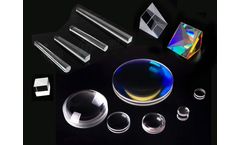
Notably, quartz glass lenses boast a high light transmittance rate of up to 95%. These lenses are essential in various domains including daily life, science, education, and industry, being integral components in lights, cameras, microscopes, telescopes, and collimators, among others. ...

The passage time is generally about 7-10 days, but if the volume of the nerve ball is large, or the center of the nerve ball has begun to appear black areas under the light microscope (the reason for the black area may be the volume of the ball is too large, affecting the light transmission, but at this time the center of the ball often appears ...
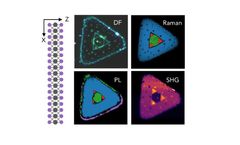
Comprehensive characterisation of these properties can be achieved by compiling information from multiple microscopic and spectroscopic techniques. In our recent Application Note, a crystal of chemical vapour deposition (CVD) grown WSe2 was characterised using the RMS1000 Confocal Microscope with five different imaging modalities: reflected brightfield (BF) and ...
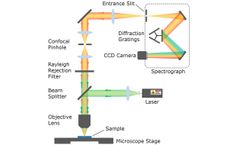
The synergy between the spectral and spatial information enables the chemical analysis of individual particles, discrete sample features or layers down to less than 1 μm in size.Confocal Raman MicroscopeA schematic of the optical layout of a confocal Raman microscope is shown in Figure 1. The sample to be analysed is placed on the microscope stage and the ...

Nanosight The NanoSight LM10 instrument is based on a conventional light microscope and uses a laser light source to illuminate nanoscale particles within a 0.3 ml sample introduced into the display unit with a disposable syringe. ...
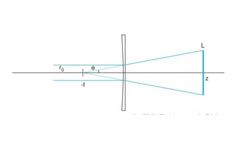
Cylindrical Lens can be used in a single axial convergence or divergence of the beam and found in optical measurement, laser scanning, spectroscopy, laser diode output beam shaping, the X-ray light microscopic imaging, and many other industries and fields have a wide range of applications. Turn the quasi-direct light source into the line ...

The microsections are specifically stained before being examined in the light microscope. Most staining solutions (e.g., hematoxylin, eosin) are aqueous. ...
ByBUCHI

Introduction: Traditionally, a geologist's analytical toolkit consisted of a hand lens, rock hammer, acid bottle, magnet, and perhaps a polarizing light microscope back in the laboratory. In geoscience professions, these tools are increasingly being supplemented by field and laboratory instrumentation that utilizes spectroscopy. ...
ByB&W Tek

Toxicity was influenced by the type and source of the CNTs, by whether the materials were precleaned by acid, by whether sonication was used to disperse the materials, and by species of the test organisms. Light and electron microscope imaging of the surviving test organisms showed the presence of CNTs in the gut as well as on the outer surface of the test ...

EMSL Analytical has extensive experience in compositing the spectroscopic analysis by Fourier Transform Infrared Spectroscopy (FTIR) with microscopic examination. EMSL’s IlluminatIR® interfaced with a light microscope and an attenuated total reflection (ATR) objective allows regions as small as 15 µm to be simultaneously ...
Transparent exopolymer particles (TEP) are ubiquitous in marine and freshwaters, and have been subject to intensive study by oceanographers and limnologists over the past 15 years. These microscopic organic particles (visualized by Alcian Blue staining for acid polysaccharides) may be considered a planktonic form of exopolymeric substances (EPS). ...
Transparent exopolymer particles (TEP) are ubiquitous in marine and freshwaters, and have been subject to intensive study by oceanographers and limnologists over the past 15 years. These microscopic organic particles (visualized by Alcian Blue staining for acid polysaccharides) may be considered a planktonic form of exopolymeric substances (EPS). ...

Proper training in the use of stereo and polarized light microscopes, a thorough knowledge in dispersion staining and polarized light microscopy (PLM), and familiarity in the morphology and crystal characteristics of asbestos and other fibers is important. ...
ByEurofins