
Refine by
Milk Processing Articles & Analysis
60 articles found

The coconut tree (Cocos nucifera) is one of the world’s most versatile and valuable plant species. Capable of producing food, fuel, cosmetics, building materials, growing media and cosmetic compounds, it’s no wonder that in the Philippines, the coconut is known as the Tree of Life. The global market for coconut products is predicted to reach $53.4 billion by 2033, thanks to annual ...

Milk element detection pretreatment: Tianyi Zhongke microwave digester proves its worth Tianyi Zhongke Microwave Digester: Complete Milk Digestion Process What is the purpose of digesting milk? In the field of food testing, accurately analyzing the content of various elements in milk is crucial for ensuring ...

Electromagnetic flow meters (EMFs) offer several advantages in dairy and beverage processing, making them a popular choice for these industries. Here are the key benefits: High Accuracy and Reliability: EMFs provide precise and consistent flow measurements, which are crucial for maintaining product quality and meeting regulatory standards in dairy and beverage ...
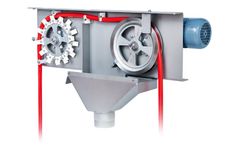
A milk processing company produces milk powder. In a vacuum evaporator, water is extracted from the milk. Approx. 15 % of the milk will be processed to milk powder. Approx. 85 % of the milk is water. ...
The dried materials are subjected to screening by the vibrating sieve, which plays a crucial role in separating the starch milk from the fiber. This process ensures the removal of fine residue, allowing for the recovery of starch from the fiber through detergent treatment, ultimately achieving the separation and purification of starch. ...

Find answers to FAQs about milk pH. Introduction Milk, a staple in many diets, is not just a simple beverage. ...
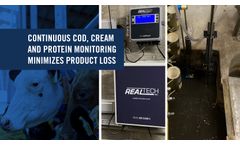
How much this affects profitability of a plant can be demonstrated with an example. Consider a plant that processes 645,000 pounds of milk per day. The plant discharges its wastewater in a municipality where the surcharge is 20 cents per pound of BOD. In the best case scenario, where one pound of BOD is discharged per 1,000 pounds of milk ...
LOST PRODUCT = LOST REVENUE Manufacturers in the food and beverage industry lose significant quantities of product in the production process. In the dairy industry, milk losses are on average 2-3% of total production and can be even higher for ice creams and novelty products. ...
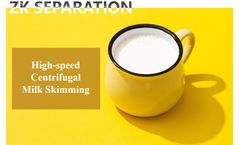
Milk fat is one of the most important components of cow's milk. Fat is high in calories and is a carrier and transmitter of vitamins A, D, E and K. ...
What is being done to cut Greenhouse Gas Emissions in the Milk Production Process? Under the 2008 Climate Change Act, the agricultural industry has pledged to reduce 2008 GHG emissions by 11% by 2020.2 Each and every dairy farmer must contribute towards this national goal. ...

In aerobic environments, ammonia from agricultural pollution, sewage, decaying protein and other nitrogen pollution sources becomes successively oxidised (nitrified) to nitrite (NO2–) and then to nitrate (NO3–). Nitrate, is of course, a recognised environmental issue due to its role in eutrophication and groundwater contamination. But what about the environmental impact of ...

Particulate impurities (dirt and grit, yeast bodies, udder cells, or anything else) need to be separated for removal prior to homogenization and pasteurization of juice or milk. Even minimally processed beverages (like beer, kombucha, and cold-press juices) need to be relatively free of yeast bodies, bacteria, and the remains of microorganisms if you want to ...
ByTrucent
High-speed disc stack centrifuges play three key roles in standardized milk production: Clarification: removing foreign matter—like hair, stray cow cells, and dirt Purification: pulling the butterfat from the raw milk in order to produce skim milk and cream Standardization: regulating the fat content of your finished ...
ByTrucent

Customer: Casein manufacturer (milk refining) Material: Casein Installation: In a pneumatic line downstream of a storage container Function: Material flow monitoring of the upstream rotary valve. Early detection of blockages and control of the material flow for the downstream dryer. APPLICATION In the milk production, the refinement of the raw ...
ByENVEA

This includes the production of alcohol from fermentation and the production of cheese by the breakdown of milk proteins. Many biocatalytic processes have been implemented across a range of chemical, pharma, agriculture, and food industries and this article will outline some of the details surrounding the use of biocatalysis in ...

Retain more process fluids, save time and budget on maintenance, increase heat transfer efficiency by up to 50%, and integrate into your existing system, or upgrade to a new skid-mounted heater exchange ...
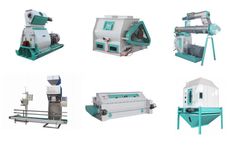
Cost-effective Pelletizing Machine For Dairy Feed Production Dairy animals such as goats, cows, buffaloes, camels, etc. need to be fed nutritious food so that they can produce a good amount of milk every day. Dairy feed pellets have all the essential components mixed in them that are needed to make nutritive milk. Animal feed processing ...

About DMK Deutsches Milchkontor GmbH With around 7,700 employees at more than 20 locations in Germany, the Netherlands and other international hubs, Germany's largest dairy cooperative processes milk into food of the highest quality. The product portfolio ranges from cheese, dairy products and ingredients to baby food, ice cream and health products. ...

Dairies use water for many different stages in the production process. There are often potential savings to be made here in terms of resources and energy. To achieve this, however, an integral view is required, since the cycles used in dairies, which have often grown over the years, are highly complex. Water is ubiquitous within the milk industry. Whether a ...
The organic substances left behind by rinsing during milk processing and found in whey and whey permeates are acidified, hydrolysed and conditioned. ...