
Refine by
Milk Yield Optimization Articles & Analysis
11 articles found
Utilizing modern bagging can provide superior silage quality and nutritional value compared to common, old-fashioned storage methods Canadian dairy farms face several silage-related challenges that are uniquely shaped by national climate, regulatory, and logistical factors not commonly seen in the United States. In much of Canada, the growing season is significantly shorter than in many ...

Ensuring the nutritional and compositional quality of livestock feed and natural products is essential for agricultural efficiency and sustainability. With the increasing demand for precision in livestock nutrition, accurate feed analysis has never been more essential. Near-infrared (NIR) spectroscopy has enhanced quality assessment, providing rapid, non-destructive analysis of key parameters ...
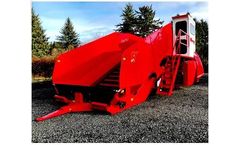
Dairy farmers are bagging silage to reduce spoilage by up to 30%, increase nutrient value and milk production, improve herd health, and potentially earn environmental carbon credits. For dairy farmers, “good feed promotes good production” is a guiding principle that has a direct cause-and-effect impact on milk tank volume. As a result, providing the highest quality feed is crucial ...
As a cost saving alternative to dry grain supplementation, bagged snaplage/earlage offers high energy content and easy digestibility Dietary supplementation with dry grains has traditionally been utilized as an economical way to meet the high energy demands of the herd, particularly when forage is scarce or of low quality. However, dairy farmers are increasingly turning to high moisture corn ...
Why is it important to have a high-quality feed? The quality of ruminant feed is directly linked with milk production, animal health, as well as farm performance. As feed costs represent a significant number of the total production costs, it is crucial to ensure feed nutritional values and quality throughout the whole year. Therefore, the intake of superior quality TMR and silages can help to ...
Interest in the increasing carbon footprint of the dairy industry has grown considerably over the past few years and growing greenhouse gas emissions from the milk production process are a contributing factor. A number of greenhouse gases (GHG) are produced from fertiliser production through to consumption and disposal of packaging. Methane is produced as a direct emission from cows and carbon ...
Magnesium (Mg) is an essential mineral for dairy cattle. Many forages are deficient and excessive amounts of other minerals, especially potassium (K), can interfere with Mg utilization, resulting in a greater Mg deficiency. While grains and oilseeds contain more Mg than most forages, the total ration still can be deficient. Most dairy nutritionists recommend 0.35% Mg in the total ration. ...

Fetzer Farms operates a double-20 parallel DeLaval milking parlor as well as its own calf and heifer facilities in Elmwood, WI. Their animal environments need to accommodate unpredictable summer humidity and heat, followed by below-zero winter temperatures and shorter daylight ...

“I assume that it is since there has been more focus within the industry on the correlation between the health of the cow, and the amount of milk and calves they produce. If healthy animals give you a greater yield, then health become more important than before.” Provide the cows with comfort, and they will pay with higher yield It ...
Abstract Dairy production systems involve large inputs and large outputs. In environmental and economic terms, this means dairying is potentially a large consumer of natural resources and a generator of large amounts of pollutants and waste as green house gases (GHG) and manure. To ensure a sustainable milk production system; it becomes important to understand the environmental and economic ...

This paper summarises the experiences in Israel and elsewhere of the biotechnological processing of organic matter experiences that could be applied in developing countries. Emphasis is given to relatively simple technologies, and the applications include preservation of forage crops and by-products, mushroom cultivation and recovery of plant cell contents. These technologies might increase milk ...