
Mobility Particle Sizer Articles & Analysis
10 articles found

Venacontra delivered Diluting Aerosol Sampler (DAS) during the year 2012 for the HICE – The Helmholtz Virtual Institute of Complex Molecular Systems in Environmental Health consortium. DAS has been succesfully used in various HICE measurement campaigns including the following combustion sources: marine applications with heavy fuel oil and marine gas oil vehicle emissions small ...
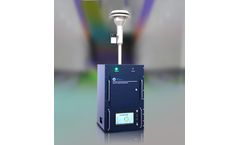
Each site will be supplied with four advanced instruments to achieve different purposes: an Aerosol Chemical Speciation Monitor (non-refractory aerosols), Xact 625i Ambient Continuous Multi-Metals Monitor (trace metals), Aethalometer (black/brown carbon), and a Scanning Mobility Particle Sizer (aerosol number, size, distribution, and ...

ISO 21501-4 is the recognized standard for optical particle counter calibration. In this blog, we look at the basics of the ISO 21501-4 standard for those new to particle counter ...
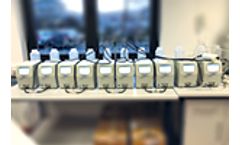
These ultrafine particle spectrometers are based on electrical mobility measurement (as described in ISO15900:2009) and utilize CPCs to count the number of particles in each size channel. ...

The monitor’s functionality relies on electrical charging of airborne particles and subsequent measurements of the total particle charge concentration under various conditions. Information obtained with the NP monitor in a typical workplace environment has been compared with simultaneously recorded data from a Scanning Mobility ...

Cork Harbour, to detect fluorescence particles in real time during July and September 2011. A scanning mobility particle sizer (SMPS) was also installed providing sizing analysis of the particles over the 10-450 nm range. ...
Liquid clouds form by condensation of water vapour on aerosol particles in the atmosphere. Even black carbon (BC) particles, which are known to be slightly hygroscopic, have been shown to readily form cloud droplets once they have acquired water-soluble coatings by atmospheric aging processes. ...

Nano particles have been sized based on their electrical mobility. This is not efficient because most of the nano particles are electrically neutral. ...

The concentrations and chemical compositions of the formed particles were similar for the two plants. The measurements were performed simultaneously at three locations including both total dust measurements and fine particle characterisation with low pressure impactors and scanning mobility particle sizers. The ...

Effective radius and C/F ratio of aerosol are also calculated to study the relationships between lidar ratio and particle size dependences. The results show backscatter-related scattering properties are more sensitive to coarse mode particle than total scattering. The mean values of lidar ratio for 355 nm and 532 nm are 31.9 ± 6.2 sr and 40.5 ± 6.1 sr ...