
Monolith Catalyst Articles & Analysis
15 articles found
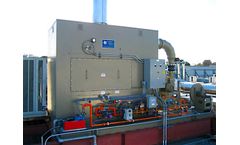
Air Pollution Control using this technology is most appropriate in applications where high destruction efficiency is required, particulate and catalyst poisons are not present, and Volatile Organic Compounds (VOCs) concentrations are below 25% LEL. The Technology: How it Works Recuperative Catalytic Oxidizers incorporate a heat exchanger and precious metal ...
Catalytic treatment of VOCs and other air pollutants works by reacting the harmful air pollutants over a specially designed catalyst where VOCs are converted to CO2, water vapor (H2O), and usable heat. The ceramic monolith catalyst provides a surface to promote the oxidation reaction to take place at a much lower activation temperature than ...

Learn more information about Tri-Mer&rsquos;s hot gas filtration. The micronized catalyst offers a larger surface area for reaction than conventional SCR, with virtually no diffusion restriction. The catalyst particles are micro-porous, and due to their small size, they catalyze the gas phase reactions without diffusion and restriction (i.e. almost 100% ...
The catalyst particles are micro-porous, and due to their small size, they catalyze the gas phase reactions without diffusion and restriction (i.e. almost 100% utilization of the catalyst intrinsic activity) as opposed to usual pellet or monolithic catalysts. In industrial plants, the conventional catalyst types ...
Catalyst filters feature the same fibrous construction as the standard version, but have nanobits of catalyst embedded throughout the filter walls. ...
Catalyst filters feature the same fibrous construction as the standard version, but have nanobits of catalyst embedded throughout the filter walls. ...
By designing for the highest mixing, VECTOR system can deliver the highest temperature uniformity before the catalyst bed. Temperature uniformity ensures that 100% of the catalyst is efficiently oxidizing the VOC’s. When the stream enters the catalyst bed, a catalytic reaction occurs and efficiently oxidizes the VOC’s. This VECTOR ...
We recommended a 12,000 scfm catalytic recuperative oxidizer with bead catalyst. Although their previous experience had been with monolith catalyst, a bead catalyst can provide from 10-20 times the poison resistance of monolith style catalyst. This is important with varying mixes of solvents. The ...

Utilization of a high temperature baghouse on the TDU skid removed concerns associated with dust or dirt plugging of the monolithic catalyst cells. Global utilized an induced draft FRP fan on the backend of the treatment package due to the high temperature, highly saturated exhaust from the TDU. ...
The monolithic catalyst Anguil chose was a 300 cell-per-square-inch ceramic substrate. ...
Anguil utilized a low temperature precious metal catalyst that allowed for a 500F inlet temperature and a 625F catalyst outlet temperature. ...
The effort then focused on the proper design of a catalytic unit to meet all of the customer's operational goals. A precious metal catalyst was selected as the core of the catalytic system due to its ability to provide 98% DRE of the formaldehyde, methanol, dimethyl ether, and carbon monoxide at a catalyst bed inlet temperature as low as 500° F/260° C. ...

One area of catalyst system design which has received relatively little attention is the method of application of precious metal, specifically with regard to its positioning in the catalyst. Recent advances in catalyst coating technology have enabled both washcoat and precious metals to be distributed inhomogeneously (zoned) along the length of a ...
Precious-metal catalysts can be of either the monolith or bead type design. Both have advantages and disadvantages depending upon your specific application. ...
Precious-metal catalysts can be of either the monolith or bead type design. Both have advantages and disadvantages depending upon your specific application. ...