
Refine by
Moving Bed Bioreactor Articles & Analysis
27 articles found
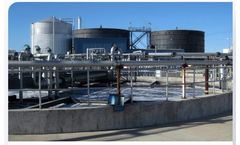
Attached growth systems include fixed film systems such as trickling filters, rotating biological contactors, and submerged fixed-film and moving-bed bioreactors. Suspended growth systems include activated sludge systems and sequenced batch reactors. ...

Water scarcity is a growing global concern, and industries are increasingly turning to innovative solutions like desalination and wastewater treatment to address this challenge. Industrial water management has become critical in the quest for sustainable practices, helping to conserve our precious fresh water sources and offering new opportunities for water reuse and recycling across various ...
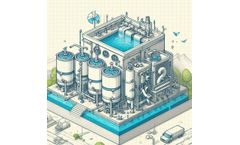
Imagine a world where wastewater treatment is no longer a centralized, energy-intensive process. A world where communities, both urban and rural, can take control of their wastewater management and reap the benefits of a more sustainable, cost-effective solution. Well, that world is here, and it’s all thanks to decentralised wastewater treatment. I know what you’re thinking – ...

Understanding Industrial Wastewater Treatment The world of industrial wastewater is vast and varied, encompassing a broad spectrum of waste liquids. These are typically generated during various industrial treatment processes such as manufacturing or production activities. A key player in this arena is production wastewater, which stems from the use of water in numerous processing operations. ...
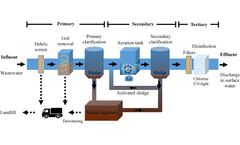
While its pace might be slower than other methods due to its reliance on environmental conditions, it aligns perfectly well with sustainability goals as it minimizes energy consumption while maximizing pollutant removal efficiency for locations with plenty of low cost land available. Moving Bed Biofilm Reactor (MBBR) Method Lastly, the moving ...

MBBR Treatment Treatment is most widely achieved by passing the circulating water through an aerobic moving bed biofilm reactor (MBBR) in which a biomass, principally bacteria although other microorganisms play a part, grows on the surface of a specially designed plastic carrier or media. ...
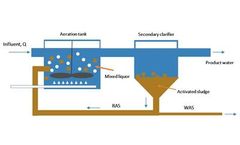
If you aren’t sure that a conventional activated sludge treatment process is right for your municipality or company, and want a more advanced optimized wastewater treatment solution call Genesis Water Technologies, Inc. at 1-877-267-3699 or email us at [email protected] will help you figure out how to optimize and convert your activated sludge process to take advantages of ...
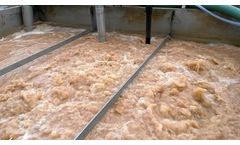
A moving bed bioreactor is a biological wastewater treatment process. In many instances, wastewater is full of organic matter that can be difficult to filter out by chemical or physical means. ...

A membrane bioreactor (MBR) and a hybrid moving bed biofilm reactor-membrane bioreactor (hybrid MBBR-MBR) for municipal wastewater treatment were studied to determine the effect of salinity on nitrogen removal and autotrophic kinetics. ...
Two configurations were studied: (1) high-rate moving bed bioreactor (HR-MBBR) and (2) inoculum-chemostat (IC) system consisting of a very HR-MBBR inoculating a continuous flow stirred-tank reactor. ...
Two anaerobic reactors, an anaerobic filter (AF) and an anaerobic moving bed bioreactor (AnMBBR), were operated over a period of 131 days at mesophilic conditions. ...

Introduction A facility specializing in poultry processing with operations in roast beef, poultry and ham cook operations, was utilizing a moving bed bio film reactor (MBBR) for BOD reductions prior to discharge to the local municipality. Challenge The MBBR was designed without pretreatment prior to the biological process. Due to an increase in production and the introduction of the roast beef ...
This work aims to assess the acclimation of microorganisms to a gradual increase of salinity and hydrocarbons, during the start-up of two moving bed membrane bioreactors (MB-MBRs) fed with saline oily wastewater. ...
A hybrid moving bed biofilm reactor–membrane bioreactor (hybrid MBBR-MBR) system was studied as an alternative solution to conventional activated sludge processes and membrane bioreactors. ...
The anaerobic ammonia oxidation (anammox) bacteria were adapted in mainstream conditions by allowing the growth on the moving bed bioreactor plastic media in a fully anoxic reactor. The total inorganic nitrogen (TIN) removal performance of the entire system was 75 ± 15% during the study at a modest influent chemical oxygen demand ...

To answer such questions, we've put together a summary of advantages and limitations for each technology. MBBR Moving-bed bioreactors are relatively mature in the industry, with over 600 installations worldwide. ...
These processes were the integrated fixed-film activated sludge membrane bioreactor (IFAS-MBR), which combined suspended and attached biomass, the moving bed membrane bioreactor (MBMBR) (only attached biomass) and the MBR (only suspended biomass). ...
Attached growth systems include fixed film systems such as trickling filters, rotating biological contactors, and submerged fixed-film and moving-bed bioreactors. Suspended growth systems include activated sludge systems and sequenced batch reactors. ...
Four membrane bioreactors (MBRs) with the same dimensions were studied for 180 days: three hybrid growth membrane bioreactors with biofilm attached in different packing media and a conventional MBR (C-MBR). ...
The wastewater treatment system improvement goal was to simply add new equalization (EQ) and moving bed bioreactor (MBBR) capacity. The trick was converting an under performing tank into an MBBR. ...