
Refine by
Moving Fish Articles & Analysis
21 articles found

Operating a fish feed mill can be a overwhelming task, particularly for novices. Safety measures are vital when managing a fish feed mill to avoid injuries as well as damage to the device. In this article, we will review the common precaution that should be followed when running a fish feed mill. ...

Similar experiments might subject fish to acute temperature changes or take place in laboratory environments, both of which would inflict greater stress levels upon the fish. Heightened stress can artificially inflate metabolic rates, and the short duration of experiments could deny fish adequate time to become accustomed to spontaneously higher ...

” This means that raceways frequently require higher volumes of moving water compared to other fish habitats common in the aquaculture industry. ...
ByAquasend
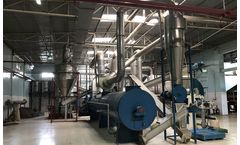
As we all know, fish meal plant is also called fish meal machine. It is composed of a horizontal shell and a rotating shaft containing steam heating. ...
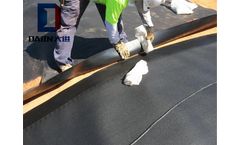
If the hole of the liner is at the bottom of the pond, drain the pond completely. This task may need moving the fish in the pond to a bucket filled with aerated pond water and leaving them in the bucket while the liner is being repaired. ...
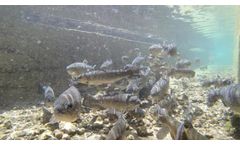
The sixth installment in the series “Happy Fish - How Aquaculture Operators are Growing Better Fish.” A curious question that we have been asking is a concept that we’re thinking about in regards to fish – can fish be happy or show signs of happiness? Both RAS systems and Net Pen operations aim to raise the best and highest quality fish to fetch the greatest market value. ...
Then, use a pump to move the clean water back to the fish tank and use it with the newly hatched fish. ...

With good management, your fish should be ready to harvest within six to nine months after stocking. ...
ByFishward
Stop feeding the fish two days before harvesting. Set up all harvesting and transportation equipment well in advance. ...
ByFishward

This is due to several factors, among them increased demand for seafood due to population growth and a greater understanding of the nutritional benefits of eating fish; increased pollution of seas and oceans and over-fishing, resulting in a decline in fish populations around the globe; and a growing awareness of the significant environmental ...

The Strategy: After two seasons the lake has yet to have a recurrence of golden algae. The fish populations are thriving, water order has been eliminated, and the lake is clearer than it has ever been. ...
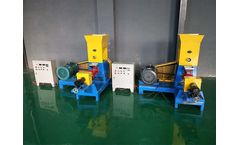
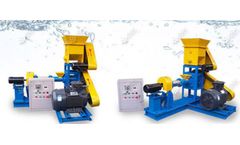
Fish feed pellet machine, the main equipment is “screw extruder”. The main kinds are fish feed extruder, soybean/corn extruder, and feather extruder. Fish feed extruder is the common machine in the fish feed production line, which includes a single screw extruder and twin screw extruder. Extrusion Process And Main ...

It was known that most of the Paludarium tanks' water substances are just a small piece you saw before, and there is less space for fish to move. If they can be improved, they can both raise fish and landscape plants. ...
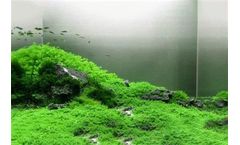
Filters should not be cleaned on the day of trimming When trimming, it is unavoidable to move the base of the fish tank (most common in weeding, planting grass, changing landscape, etc.), even if the tank doesn't become dusty, the water may become muddy. In addition to changing the water at this time, some people also want to clean the filter by the way, but ...

This case study shows how Fluence helped a fish processing plant in Ecuador upgrade its wastewater treatment facility to improve the quality of its effluents, reduce disposable waste, and save thousands in energy costs – all without interrupting its operations. ...

Today, 80 percent of global fish stocks have been fished to the limit or beyond, and our failure to protect the ocean — not just the fish in it — as a finite resource now threatens its ability to recover, argued an international commission of government and business leaders in a 2014 report. ...
ByEnsia

Arctic grayling (Thymallus arcticus) have a life-history strategy specifically adapted to the extreme climate of the North. These fish migrate to spawning grounds just after breakup in the spring, then migrate to feeding sites in early summer, and finally in the fall migrate back to their overwintering sites. ...

Found from the tropics to the poles, forage fish typically travel in dense schools of thousands or even millions of fish. ...

There is also the need for a parallel shift in social science understandings of fishing towards context and interrelationships amongst and between fishermen and fishing communities. While the move towards ecosystems is well underway, a corresponding movement in fisheries social science is less well established. ...

When the wooden fibres and pulp were released, 16 of 32 (50%) salmon showed an immediate avoidance response. Six (19%) salmon moved upstream and 10 (31%) salmon moved downstream. Of the salmon moving downstream, eight (25%) moved all the way to sea (average 14.8 km). Four re-entered the River Numedalslågen, two entered a ...