
Refine by
Nanofiltration Articles & Analysis
209 articles found

Fluence uses technologies like electrodeionization, ultrafiltration, reverse osmosis, and nanofiltration to remove impurities and minerals. This results in high-quality makeup water that maintains heat transfer and prolongs the lifespan of steam systems. ...
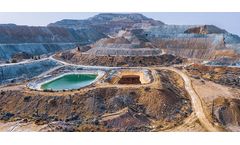
For example, various stages of lithium brine processing may use reverse osmosis, nanofiltration, and ion exchange. At the same time, workers, often living on-site, need safe drinking water and wastewater ...

Advanced Filtration (Membrane Filtration): Uses reverse osmosis, ultrafiltration, or nanofiltration to remove dissolved solids and contaminants from the water. 5. ...
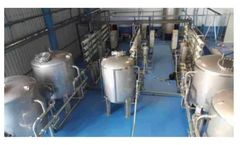
This is where seawater purification using nanofiltration steps in. This emerging technology holds incredible promise, offering an efficient and sustainable way to transform seawater into a valuable resource. Seawater purification using nanofiltration tackles the challenge of high salt concentration head-on, providing a promising solution for a thirsty ...
![[MEMS] Understanding the Difference Between Slot Die and Doctor Knife in Flat Sheet Membrane Manufacturing](https://d32zuqhgcrpxli.cloudfront.net/eyJidWNrZXQiOiJlZS1maWxlcyIsImtleSI6ImZpbGVzLzExNDIyMi9hcnRpY2xlcy8xMTUzOTc4LzExNDIyMl82XzIwMjQwODIzMDMzMjE4Mjc4NzgxMl9yYXcucG5nIiwiZWRpdHMiOnsicmVzaXplIjp7ImZpdCI6ImNvbnRhaW4iLCJiYWNrZ3JvdW5kIjp7InIiOjI1NSwiZyI6MjU1LCJiIjoyNTUsImFscGhhIjoxfSwid2lkdGgiOjI0MCwiaGVpZ2h0IjoxNDV9fX0= "[MEMS] Understanding the Difference Between Slot Die and Doctor Knife in Flat Sheet Membrane Manufacturing")
Advantages of Slot Die Coating: Uniform Thickness: The slot die method is known for its ability to produce a consistent coating thickness, which is crucial in applications like reverse osmosis (RO) and nanofiltration where membrane performance depends on precise layer thickness. ...
![[MEMS] Your Complete Guide to Flat Sheet Membrane Systems](https://d32zuqhgcrpxli.cloudfront.net/eyJidWNrZXQiOiJlZS1maWxlcyIsImtleSI6ImZpbGVzLzExNDIyMi9hcnRpY2xlcy8xMTUwMTExLzExNDIyMl82XzIwMjQwNzA0MDIwNzEwMTk5OTkxMl9yYXcuanBnIiwiZWRpdHMiOnsicmVzaXplIjp7ImZpdCI6ImNvbnRhaW4iLCJiYWNrZ3JvdW5kIjp7InIiOjI1NSwiZyI6MjU1LCJiIjoyNTUsImFscGhhIjoxfSwid2lkdGgiOjI0MCwiaGVpZ2h0IjoxNDV9fX0= "[MEMS] Your Complete Guide to Flat Sheet Membrane Systems")
Are you seeking advanced solutions for flat sheet membrane manufacturing? MEMS offers precise, user-friendly, time and space efficient systems, suitable for applications from lab-scale to pilot scale. With extensive knowledge and experience in the membrane industry, MEMS provides flat sheet membrane systems that enable the preparation and production of membrane modules with reliable ...
With years of experience in R&D, manufacturing, and engineering of membranes, we at MEMS are familiar with the challenges researchers face in the lab. Understanding your needs and frustrations guides our mission to provide user-friendly equipment tailored to membrane research. Quality and performance are essential for researchers striving to meet rigorous standards. Our range of modern ...
Discover the significance of factors like Molecular Weight Cut Off (MWCO) in membrane design and their impact on applications such as reverse osmosis and nanofiltration. Download the following article to learn more about the role of membranes in driving innovation across diverse sectors. ...
https://www.yasa.ltd/post/what-is-nanofiltration-nf-process-in-water-treatment Nanofiltration (NF) is a membrane treatment process primarily used to separate dissolved solutes from water. The process of movement of solvent through a semipermeable membrane from the solution to the pure solvent by applying excess pressure on the solution side is called ...
ByYASA ET
The most common methods include – Filtration Softening Dealkalization Reverse Osmosis Nanofiltration Ion exchange. Filtration is a process that removes sediment, organic material, and turbidity from water. ...
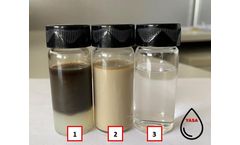
These techniques are: reverse osmosis, nanofiltration, carbon absorption and ion exchange resins. In oily wastewater treatment, the water recycling can be furtherly improved by installing a reverse osmosis or nanofiltration equipment as the last step of the wastewater treatment system. ...
ByYASA ET
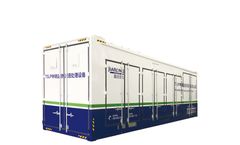
Thoroughly solve the problems of transfer station leachate problems Product Features: Direct discharge of produced water into the municipal network Water reuse, nanofiltration and DTRO water can be reused directly in the washing water of the transfer station. ...
Sterlitech is an innovator in the development of bench-scale cross flow test cells for membrane development, studies, and small scale processing applications. But what does that actually mean? Bench-scale: The term “bench” is shorthand for lab or work bench, and describes the coveted and often constrained space upon which most researchers or technicians use their equipment. Our ...
Question: How do I know if a membrane process is suitable for my unique application? Usually, researchers start with bench-scale feasibility testing. That means using a membrane sample from a large-scale membrane module offered by commercial manufacturers and testing that in a bench-scale filtration setup. Using only a small feed volume, researchers can mimic the hydrodynamic conditions of ...
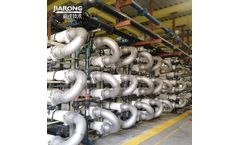
Processing scale: 7500 tons/dayTreatment process: TMBR+MTNFProject features: This project is the world’s super-large TMBR tubular membrane project and a domestic large-scale MTNF nanofiltration membrane project. The new process jointly developed by Jiarong Technology and Lier Chemical can ensure that pesticide wastewater is subject to extreme fluctuations in incoming water. ...
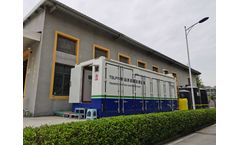
Thoroughly solve the problems of transfer station leachate problems Product Features: Direct discharge of produced water into the municipal network Water reuse, nanofiltration and DTRO water can be reused directly in the washing water of the transfer station. ...
Water treatment technologies that can remove PFAS include granular activated carbon (GAC), powdered activated carbon (PAC), ion exchange, and membrane processes like reverse osmosis (RO) and nanofiltration. Carbon filtration is most commonly used for PFAS treatment at the moment, but membrane processes like RO are the most effective. ...
The new Zero Brine pilot plant at the Polish Bolesław Śmiały coal mine, however, seeks to solve the problem with a combination of nanofiltration, reverse osmosis (RO), and electrodialysis. The model calls for recovery of clean water, salts, magnesium hydroxide, and calcium that can be sold. ...
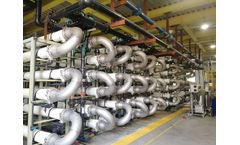
Processing scale: 7500 tons/day Treatment process: TMBR+MTNF Project features: This project is the world’s super-large TMBR tubular membrane project and a domestic large-scale MTNF nanofiltration membrane project. The new process jointly developed by Jiarong Technology and Lier Chemical can ensure that pesticide wastewater is subject to extreme fluctuations in incoming ...
Looking inside membrane fouling with optical coherence tomography (OCT) Internal Imaging in Real-time Optical coherence tomography (OCT) is an imaging technique that uses light scattering to show cross-sections of a 3D object (1). OCT has a resolution between 1 - 15 µm, which is about two orders of magnitude finer than traditional ultrasound (2). While this technique was originally ...