
Refine by
Ndt Test Articles & Analysis
116 articles found

We utilize normalizing and stress-relieving processes to guarantee the mechanical properties of every batch. Comprehensive Testing: Every shipment is backed by a Mill Test Certificate (MTC) as per EN 10204 3.1. We conduct Non-Destructive Testing (NDT), including UT, PT, and MT, ensuring zero defects. Beveled Ends Protection: All ...
API 5L (B through X80): Engineered for the transmission of oil and gas. These API 5L steel pipes are tested for toughness (Charpy V-Notch) and weldability, ensuring they can withstand the rigors of cross-country pipelines and fluctuating environmental pressures. ...
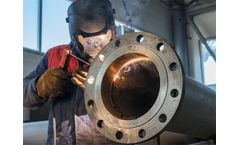
Inspection - including non-destructive testing (NDT), X-ray testing, ultrasonic testing (UT) and hydrostatic testing. ...
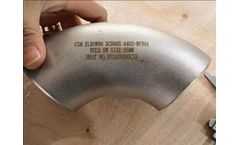
Finishing and inspection Polishing treatment: Enhance the smoothness of both inner and outer surfaces and reduce the adhesion of impurities. Non-destructive testing (NDT) : X-ray or ultrasonic flaw detection is used to ensure there are no cracks, pores, incomplete penetration or other defects. ...
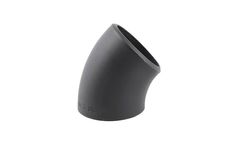
Key Standards include: ASME (American Society of Mechanical Engineers) ASTM (American Society for Testing and Materials) These bodies set the rules for material composition, dimensional tolerances, and testing requirements. ...
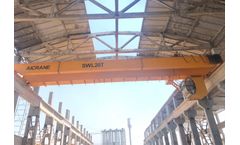
Typical Safety Factor: 4 to 5 for lifting medium. Wire ropes and chains tested for tensile strength far above rated load. 4.3 Brakes Purpose: Hold the load when lifting stops. ...

Dimensional Checks: Materials are checked for size tolerances, flatness, and surface finish to ensure conformity with design specifications. Nondestructive Testing (NDT): NDT methods such as ultrasonic testing and magnetic particle testing are applied on weldable materials to detect internal flaws or surface ...
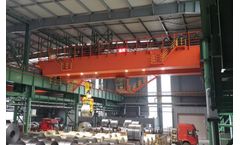
Common Fatigue Monitoring TechnologiesStrain Gauges: Installed at high-stress zones to measure deformation under load and identify cyclic stress ranges.Load Cycle Counters: Record the number and weight of load cycles to estimate accumulated fatigue damage.Acoustic Emission Sensors: Detect high-frequency sounds generated by crack propagation.Vibration Sensors: Identify abnormal movements and ...
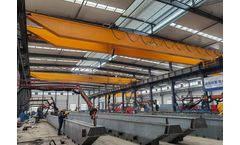
If any issues are found, they must be addressed before moving forward with the final assembly.2. Final Inspections and Testing After the beams are fully assembled, they undergo a series of rigorous inspections and tests. These include visual inspections for any signs of defects, dimensional checks to verify that all parts fit together as per the design ...

Defect detection in manufacturing refers to the process of identifying imperfections or faults in products during or after production. These defects can range from surface irregularities to structural flaws and dimensional inaccuracies. Detecting these defects early is crucial to ensure that products meet required specifications and quality standards. Advanced systems such as computer vision and ...
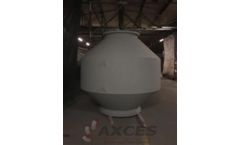
Process data: Fluid: Flexi Gas (MW= 23.3). Flow rate: 329,654 Nm3/h. Working pressure: 1.7 kg/cm2(a). Inlet temperature: 180 ...
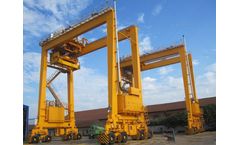
Look for signs of cracks, corrosion, fatigue, or deformation that could compromise structural stability or load-bearing capacity. Conduct non-destructive testing (NDT) if necessary to assess weld quality and structural soundness. ...
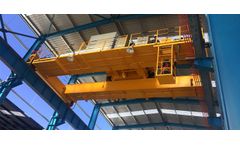
Test Safety Features Regularly test and verify the functionality of safety features and emergency systems on the overhead crane. This includes testing emergency brakes, anti-collision systems, overload limiters, load sensors, and warning alarms. ...

They cater for numerous different industries in all shapes and sizes, specializing in Non-Destructive Testing (NDT), Advanced NDT, Welding Inspection & Certification, Vessel Inspection, Pipeline Inspection, Management & Supervision, Quality Assurance, Corrosion Assessment & Analysis, 3rd Party Vendor Assessment, Asset Owner ...

Electromagnetic testing (ET) is a non-destructive testing method that uses the principle of electromagnetic induction for the detection of flaws in surface and subsurface levels. Eddy current testing (ECT) is a type of electromagnetic nondestructive testing (NDT) method. However, the terminologies for ET ...
Nondestructive testing (NDT) is the preferred method for coating thickness measurement on conductive and non-conductive materials. Eddy current array NDT is typically used for non-conductive coatings, and ultrasonic NDT for most standard wall thickness testing measurements. Of these methods, ultrasonic ...
However, to detect any underlying issues, it is important that the CRA overlay be inspected using nondestructive testing (NDT). In this article, we discuss the need for inspection of CRA weld overlay and the suitable NDT methods to ...
The manufacturing process relies heavily on materials and components that meet their specifications for structure, strength, and quality. Some materials being used in the process may require alteration in their properties to meet these specifications. Metallurgical heat treatment is one of the widely adopted methods to change the properties of these metals to meet the industry specification. ...
To ensure this protection, it is critical that companies employ the most effective nondestructive testing (NDT) solutions to detect any flaws within the weld seams of storage tanks and to monitor corrosion. ...

The possibility of a structural issue being present increases when the length of a weld extends, such as in long, multipass welds. Nondestructive testing (NDT) is vital to the detection of these flaws. Any technician inspecting long welds, welds in harsh conditions, or welds on irregular-shaped-and-sized materials knows how difficult it can be to ensure ...