
Nickel Catalyst Articles & Analysis
16 articles found

This study rigorously investigated the effect of charge-enhanced dry impregnation (CEDI) method on the physicochemical properties and catalytic performance of a ceria-supported nickel-based catalyst. The primary objective of the CEDI method was to augment the electrostatic adsorption of the nickel precursor onto the ceria support surface during ...

Therefore, it is widely used in gas turbines, gears, molds, aerospace, nuclear industry and other fields.Catalyst: Molybdenum compounds are one of the most widely used catalysts and are widely used in chemical, petroleum, plastics, textile and other industries. ...

The hydration method involves the reaction of propene with water in the presence of a sulfuric acid catalyst, leading to isopropanol production. Alternatively, the hydrogenation method employs acetone and hydrogen gas reacted in the presence of a nickel or copper catalyst, necessitating high pressure and temperature. ...

A new dawn for carbon utilisation in petrochemicals Imagine a world where the very emissions once considered a burden have become the foundation for cleaner, more efficient fuels. The petrochemical industry is on the brink of achieving such a transformation. The landscape is shifting away from decades-old traditional processes that, while profitable, have contributed significantly to global ...
BySpecac
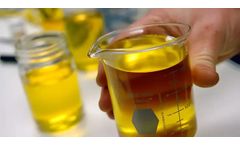
While traditional pyrolysis relies solely on heat to break down organic materials, catalytic pyrolysis introduces a catalyst into the reaction system. The catalyst acts as a facilitator, lowering the activation energy required for chemical reactions to occur. ...
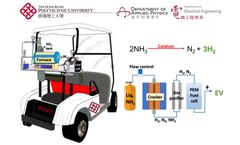
The integration of NH3 cracker (installed with catalyst), gas purifier, fuel cell, and energy management system formed a successful powertrain that could thrust a golf cart into motion. The catalytic performance of both nickel (Ni) and iron (Fe)-based catalysts was measured (cracker gas evolution monitored by HPR-20 EGA, Hiden), and the optimal ...
Compared with the steam reforming of methane, catalytic partial oxidation of methane (CPOM) is a preferred technology to produce hydrogen or synthesis gas with more economic incentives. Supported nickel (Ni) catalysts are widely used for the CPOM due to low cost and high effectiveness as compared to noble metals. However, application of the Ni ...

Filtration and clarification of pharmaceutical and biochemical liquids, decolorization and filtration of activated carbon, filtration of catalysts (palladium, carbon, nickel, etc.) and steam filtration. All kinds of domestic water, process water treatment, industrial wastewater purification (coking water, turbid water, etc.) are suitable for the treatment of oily ...
The performance of TPO requires a furnace or microreactor capable of increasing temperatures of a catalyst in precise increments up to extreme conditions, for example in brackets of 1-20°C up to 1000°C. An integrated mass spectrometer allows for constant real-time analysis of catalytic activity throughout a given thermal reaction, in which a gas mixture will flow over a ...

In fact, the use of nickel as a catalyst was first discovered as far back as 1897 and although it was displaced somewhat by the use of platinum in the mid-20th Century, it is becoming more important again as a lower-cost alternative in several important reactions, including the hydrogenation of vegetable oils, reforming of hydrocarbons, and the production of ...
What made this especially interesting from Tetronics’ point of view is that the most common types of catalyst on show are those based around nickel on an aluminium oxide substrate. So, to this list of uses for plasma we can now add that when the catalysts finally reach their sell-by date, Tetronics thermal plasma can be used to recover the ...

To protect the semiconductor from corrosion, the catalysts have to form a protective coating while simultaneously driving the water-splitting reactions. ...
ByEnsia
Hydrogen, which can be used in many fields without polluting the environment, is thought to be the cleanest fuel source of 21th century. Therefore, low cost production, facile storage and transportation of hydrogen are important research subjects that are investigated by many universities and related commercial facilities. Steam-hydrocarbon reforming is the major hydrogen production process ...

It has been demonstrated that the activity depended strongly on the presence of catalyst. The results show that catalysts containing nickel provide a higher extent of oxidation of the dye whereas the reaction carried out with the iron catalyst is faster. ...

Nickel-supported catalyst is used in petroleum, fertiliser and iron industries. This research studied the possibility of recovering nickel by leaching the ground catalyst with sulphuric acid. The leaching was done in single stage and multi-stages. ...
They could be classified into four distinct types of catalysts: nanoparticulate, nanoporous, nanocrystalline, and supramolecular catalysts. Most catalysts have consisted of nanometre-sized particles dispersed on a high-surface-area support, but recent advances in synthetic methods are leading to increasingly precise control of the variables ...