
Refine by
Nitrate And Phosphate Articles & Analysis
83 articles found

Industrial water pollution is a widespread problem throughout the planet. When harmful chemicals and compounds are discharged into water, the water becomes unsuitable for drinking and other uses. Although most of the Earth’s surface is covered by water, we can only obtain fresh water from water bodies such as ponds, lakes, rivers, streams, and reservoirs. This means that it’s in our ...
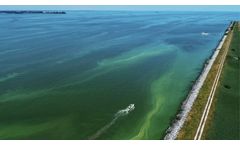
A decade ago, Toledo faced an unprecedented crisis when a toxic algal bloom in Lake Erie rendered the city’s water supply undrinkable for nearly three days. This disaster, which cost Toledo an estimated $65 million, not only disrupted daily life but also eroded trust in the city’s water system. ...

International standards for seawater purification are critical in today’s world. More countries and regions face water scarcity, making these standards essential. These guidelines and specifications help ensure the purified source water is safe for drinking and other uses. International standards for seawater desalination technologies encompass a range of aspects, including water quality ...

Summary This case study explores the efficacy of liquid and dry formulations of SmartBOD, compared to glycerin-based supplementation, in improving wastewater treatment processes. Focusing on aerobic activated sludge systems, the study aims to enhance microorganism health and effluent quality, with a particular emphasis on the newly introduced liquid formulation of SmartBOD. ...

Every business that makes something on an industrial scale produces wastewater, sometimes at millions of litres daily. All that wastewater must go somewhere, but contamination can make reuse and discharge impossible. The simple solution is industrial wastewater treatment, either on-site or off-site, to transform it into a cleaner product suitable for discharge or reuse. But who needs these ...

Major negatively charged ions are chloride, sulfate, carbonate and bicarbonate. Nitrates and phosphates are minor contributors to conductivity, but they are very important biologically. ...

Effective wastewater treatment can prevent overgrowth of the harmful algal blooms that release the toxins Blue-green algae are single-celled photosynthesizing bacteria, known as cyanobacteria, that are found in both fresh water and marine ecosystems all around the world. When sunlight and nutrients (nitrates and phosphates) are plentiful, they multiply rapidly, ...
Major negatively charged ions are chloride, sulfate, carbonate and bicarbonate. Nitrates and phosphates are minor contributors to conductivity, but they are very important biologically. ...

This year saw some record-breaking temperatures hit around the country, with prolonged periods of dry weather and several heatwaves during the summer… which have converged to put even more pressure on water resources all over the UK. Maximum temperatures this summer were far above average for much of England in 2022, with a new record temperature set for the UK at 40.3 degrees C, recorded ...

The use of dairy wastewater (WW) for irrigation is subject to concern because of the possible nitrate contamination of domestic water supplies and health hazards from the pathogens in WW. ...

Using monomer basic fertilizers such as: urea, ammonium nitrate, ammonium chloride, ammonium sulfate, ammonium phosphate monoammonium phosphate, diammonium phosphate, heavy calcium, ordinary calcium), potassium chloride (potassium sulfate), etc. as raw materials, they are crushed to After a certain degree of fineness, the ...
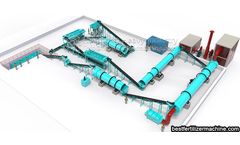
Raw material ingredients: urea, ammonium nitrate, ammonium chloride, ammonium sulfate, ammonium phosphate (monoammonium phosphate, diammonium phosphate, heavy calcium, superphosphate), potassium chloride (potassium sulfate) and other raw materials are prepared according to a certain proportion (according to the market demand and ...

More efficient spectrophotometric analysis of pollutant parameters in wastewater For many years, UV/Vis spectroscopy has been an established standard method with standardized procedural guidelines for the qualitative and quantitative analysis of a variety of parameters of wastewater such as nitrate (NO3), nitrite (NO2), ammonium (NH4), phosphate ions (PO4), ...
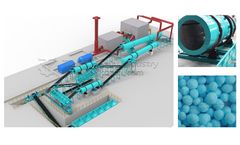
Compared with single chemical fertilizer, compound fertilizer particle products have more advantages. It can effectively reduce the nitrate content of groundwater, reduce the eutrophication of surface water caused by water pollution, and improve the quality of agricultural products. ...

The main goal of this project funded by the Italian regional Government is to develop and test prototype analyzers for routine laboratory use and for on-line application to measure algal toxins in fresh and coastal water. An automated method for the quantitative detection of micrcystins in surface water, to be applied in the above mentioned prototype analyzers in under ...

The dams also help to remove pollutants such as phosphates. Beavers do not eat fish, instead preferring aquatic plants, grasses and shrubs during the summer and woody plants in winter. ...
Technology is constantly evolving and changing to meet the needs of humanity, and one of those needs is for clean water. The water treatment industry is always researching, testing, and developing new and improved ways in which to treat wastewater and drinking water in ways that are both efficient and environmentally friendly. Zeolite water filtration media is a sustainable, natural treatment ...
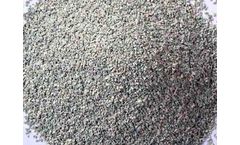
Summary of benefits of zeolite water treatment media: Low pressure drop High cation exchange capacity High solids loading Resistant Can have water softening capabilities Zeolite Water Treatment Media Can Treat for: Turbidity Heavy metals Hydrocarbons Bacteria Ammonia Nitrates and Phosphates Oils Odor Applications: Drinking Water ...
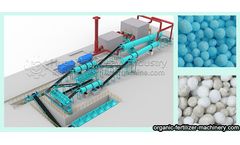
Solid aggregate method The basic monomer fertilizers such as urea, ammonium nitrate, ammonium chloride, ammonium sulfate, monoammonium phosphate, diammonium phosphate and potassium chloride are used as raw materials. ...
Inorganic compounds include heavy metals, mineral acids, salts, cyanides, sulfates, phosphates, and nitrates. Many of these pollutants actually occur naturally and leach into freshwater sources. ...