
Refine by
Nitrate Treatment Articles & Analysis
36 articles found

Belonging to the pan-semiconductor sector, the solar PV industry shares highly similar waste gas characteristics with integrated circuits and optoelectronic display manufacturing, leading to high treatment difficulty. CADAIR focuses on pan-semiconductor waste gas treatment and adheres to the core principle of classified collection and combined ...
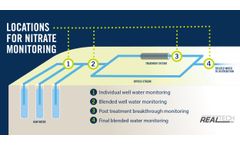
Benefits of Monitoring for Blending Applications Blending multiple source waters is a common non-treatment option to reduce nitrate concentration below the regulated MCL. ...
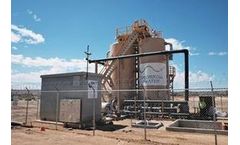
From Contaminated Groundwater to Potable Water Due to the presence of serious contaminants and potentially hazardous material in groundwater, there is an increasing threat to human health. Regions like the West and the Midwest with high concentrations of livestocks has already suffered from groundwater contamination. Facilities that use groundwater as tap water recognized the potential dangers ...

Benefits of Monitoring for Blending Applications Blending multiple source waters is a common non-treatment option to reduce nitrate concentration below the regulated MCL. ...

Scanning Success: A multiparameter analyzer helps a Kentucky treatment plant step up to the plate and meet a new phosphorus limit in its permit In 2001, the Lexington Fayette Urban County Government West Hickman Creek Wastewater Treatment Plant in Nicholasville, Ky., was starting Phase II of its third upgrade since 1972, when the state imposed a phosphorus ...

“The data shows background levels of 300 µg P/l, rising to 600 µg P/l following heavy rain, indicating high levels of P in run-off. Nitrate Similar to phosphates, excessive nitrate levels can have a significant impact on water quality. In addition, nitrates are highly mobile and can contaminate groundwater, with serious ...
In September 2012, AdEdge Water Technologies, LLC participated and was awarded a Contract managed by BG Consultants for the equipment pre-selection of a nitrate removal treatment system for the City of Green, Kansas. The scope of the contract included the design, manufacture, and startup of the treatment system. ...

[…] Denitrification is the conversion of nitrate (NO3) to nitrogen gas (N2) […] Heterotrophic bacteria utilize the nitrate (NO3) as an oxygen source under anoxic conditions to break down organic substances. ...

The wood-chip bioreactor with Typha angustifolia exhibited the highest consistent nutrient treatment with an average nitrate reduction in the LL phase of 88.4% (28.2 g N m−3 media day−1) and phosphate reduction of 34.4%. The nitrate reduction in this bioreactor was the highest among the values reported in the literature. The near-complete ...
Because total nitrogen (TN), in which nitrate (NO3–) is dominant in the effluent of most wastewater treatment plants, cannot meet the requirement of Chinese wastewater discharge standard (<15 mg/L), NO3– elimination has attracted considerable attention. ...

(OTCQB: BLGO) spent millions of dollars and many years developing a world-class water treatment technology that promises to impact the world for good. In much of the world, water equates to life, and the need for clean water has never been so critical as now. ...

Locating the TOTALOX feed system at the up-stream lift station permitted the permanganate-nitrate treatment to be mixed into the wastewater before it is lifted into the force main. The combination treatment of permanganate and nitrate worked perfectly. At the injection point, the permanganate rapidly destroyed any sulfides and ...
A simulation apparatus of in-situ groundwater remediation (SAIR) that used maize stalks pretreated with sodium hydroxide (MSSH) as a carbon source was designed for nitrate-contaminated groundwater treatment. Two experiments, RA and RB, were constructed in this SAIR. The removal performance of SAIR fed with real nitrate contaminated water was ...
Straws of four ornamental flowers (carnation, rose, lily, and violet) were added into denitrification biofilters using gravel as matrix through vertically installed perforated polyvinylchloride pipes to provide organic carbon for the treatment of nitrate-contaminated wastewater operating in batch mode. Removal efficiencies of nitrate and ...
Total nitrogen, in which NO3− is dominant in the effluent of most wastewater treatment plants, cannot meet the requirements of the Chinese wastewater discharge standard (<15 mg/L), making nitrate (NO3−) elimination attract considerable attention. In this study, reductant iron (Fe0) and γ–Al2O3 supported palladium–copper bimetallic catalysts (Pd–Cu/γ–Al2O3) ...

Control tanks were provided with natural seawater containing low levels of nitrogen (N) and phosphorus (P) (0.5 μM N and 0.05 μM P). Two further nutritional treatments were provided with natural seawater enriched with 2.5 μM N, in the form of ammonium or nitrate. A third treatment contained seawater enriched with 1 μM P and 2.5 μM ...
The current investigation reports the effect of cathode electron acceptors on simultaneous sulfide and nitrate removal in two-chamber microbial fuel cells (MFCs). Potassium permanganate and potassium ferricyanide were common cathode electron acceptors and evaluated for substrate removal and electricity generation. ...

Chemical parameters including salinity, chloride, calcium, alkalinity and total hardness were determined using titrimetry method. Sulphate and nitrate were determined by spectrophotometer while magnesium was determined by atomic absorption spectrophotometer. ...

As prices rise, large quantities of excess sludge from the treatment of wastewater have to be disposed of, which puts an enormous damper on profit margins. ...
Waste-derived multicomponent extracts were investigated as carbon source for biological nitrate removal. Aerobic and anaerobic sludge from a municipal wastewater treatment plant and leachate from an anaerobic digester treating food waste were studied. ...