
Refine by
Nitrification Articles & Analysis
592 articles found
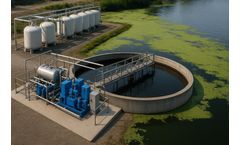
They can struggle with variable influent and seasonal swings, leading to inconsistent performance and higher chemical dosing and oversight costs.Strategies for Reducing Nitrogen and Phosphorus EfficientlyBiological Nitrogen Removal involves nitrification followed by denitrification. Aerobic bacteria oxidize ammonia to nitrates in an oxygen-rich environment, followed by ...
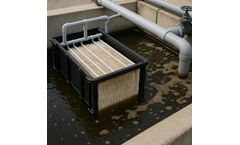
A specific type, biofilm-only MABR, is designed to efficiently remove ammonia through nitrification, focusing on converting ammonia to nitrate in a stable, energy-efficient process. ...
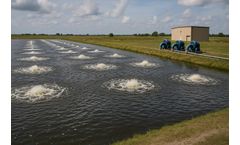
The biofilm enables simultaneous nitrification and denitrification within a compact footprint, reducing the need for extensive internal recycling or additional process tanks. ...

Reducing energy costs in Schützen am Gebirge, Austria through EDI polyurethane membranes. The Austrian Energy Efficiency Act (Energieeffizienzgesetz EEffG) from August 11th, 2014, obligates local energy providers to reduce their energy sales by 0.6% per year up to 2020. Wastewater treatment plants (WWTPs) are a significant energy consumer and make up approximately 20% of total municipal ...
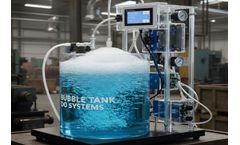
Enhanced Surface Area Contact: Fine bubbles multiply surface area instantly, increasing dissolution without higher airflow.Uniform Oxygen Distribution: Smart placement ensures even coverage, eliminating dead zones.Reduced Energy Consumption: Faster dissolution allows pumps to run at more consistent speeds, reducing energy costs over time.Real-Time DO Monitoring: Integrate a DO sensor to ...
Optimized Tank Hydraulics: Proper mixing minimizes sludge buildup and sustains balanced biomass activity.Operational Benefits for Treatment PlantsBubble Tank DO systems deliver measurable improvements, including lower specific energy consumption, improved nitrification rates, stable sludge age control, and faster recovery after load spikes. ...

SAMPLE(s): “SBR” TEST 1: reduce foam and NH3 (also COD) with Aquafix products Goal: reduce foam and improve nitrification Test dates: 5/7/12 – 5/11/12 Set up: 32oz glass straight sided jar + 400ml mixed sample + D.O. 2mg/L + 20ppm per day products for 5 days ...
Nitrification is one of the most critical biological processes in wastewater treatment, playing a central role in protecting receiving waters, meeting regulatory requirements, and maintaining overall plant stability. Despite its importance, nitrification is also among the most fragile treatment processes. It is highly sensitive to environmental changes, ...
Challenge A Virginia Beach wastewater authority operates a 50 MGD wastewater treatment plant, and from time to time their plant struggles with nitrification. ...
Challenge A sugar processing facility in Minnesota lost nitrification in its aerobic tanks. This facility has a 1 MGD flow rate, their basin is 2 MGD, and the ammonia level was at 189 ppm. ...
System Activated Sludge Flow Rate 120,000 gallons per day Background The municipality upgraded their wastewater plant three years ago with finebubble aeration. Immediately they began noticing a foot of foam on the basins and persistently higher effluent ammonia numbers. They traced the foaming issue down to a tannery in town. The tannery has an existing wastewater process of their own ...
They are typical sites designed for full biological nitrogen removal, with nitrification and denitrification. The Apeldoorn WWTP serves approx. 350,000 PE. Mainstream biological treatment via denitrification and nitrification takes place in 2 parallel modified University of Cape Town (mUCT) reactors with an anaerobic selector as well as anoxic and bottom aerated ...

It can increase the retention of nitrogen in the soil, reducing the amount of nitrogen available for nitrification and denitrification processes that produce N₂O. A research project in the United States showed that adding biochar to agricultural soils reduced N₂O emissions by up to 50%. 3. ...
Nitrifying bacteria are highly sensitive to cold, and as temperatures drop, nitrification rates can decrease by up to 50%, making ammonia removal more challenging in wastewater treatment. Bioaugmentation with acclimated nitrifiers (Nitrifier Pro) will help stabilize an restore nitrification in cold conditions and improve overall system ...
All of our work here at Aquafix is guided by our mission statement: “Safer water and better lives through pioneering biosciences.” In line with this mission, we have conducted and are continuing to conduct numerous studies involving quaternary ammonium cations (QACs or quats) and their toxicity concerning wastewater microorganisms, in both aerobic and anaerobic processes. Past studies ...

Robust treatment Removal of COD, ammonia and nitrogen even as a high loaded pre-treatment step. Simultaneous nitrification and ...
Wastewater treatment plant (WWTP) upsets, the looming monster every operator anticipates, are not a question of if, but when and how severe. These upsets can sometimes take days or weeks to resolve, and some plants never completely recover. The fallout can be extensive and expensive, lost production, equipment replacement, and permit failures. However, are these upsets truly an unavoidable ...
Nitrifier Pro is a formulation designed to enhance nitrification by promoting the growth and activity of ammonia-oxidizing bacteria. ...
As winter approaches, many wastewater operators have already begun increasing their solids retention time to prevent the loss of nitrification in the winter. Overall, this makes a lot of sense, as nitrifiers have a slow growth rate and metabolism. ...
This blog will cover a quick review of nitrification/ammonia removal, why ammonia removal works in traditional aerobic activated sludge systems, and why lagoons ...