
Nitrification Rate Articles & Analysis
59 articles found
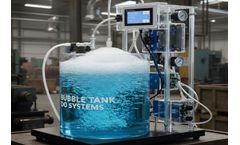
Their rapid action creates immediate oxygen release and expands the gas-liquid interface, yielding higher transfer rates and more efficient oxygen utilization. Traditional coarse bubble systems waste oxygen as large bubbles escape quickly; Bubble Tank DO systems maximize the use of circulating air.How Do Bubble Tank Systems Improve Efficiency?Enhanced Surface Area Contact: Fine ...
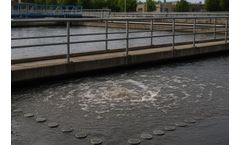
Increasing the gas–liquid interface raises transfer rates, improving oxygen utilization. Traditional coarse bubble systems waste oxygen through rapid buoyant rise of large bubbles; Bubble Tank DO systems minimize this loss and maximize oxygen transfer per unit of air.How Do Bubble Tank Systems Improve ...
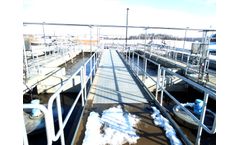
Nitrification is one of the most critical biological processes in wastewater treatment, playing a central role in protecting receiving waters, meeting regulatory requirements, and maintaining overall plant stability. Despite its importance, nitrification is also among the most fragile treatment processes. It is highly sensitive to environmental changes, operational upsets, and toxic events, and ...

Nitrifying bacteria are highly sensitive to cold, and as temperatures drop, nitrification rates can decrease by up to 50%, making ammonia removal more challenging in wastewater treatment. Bioaugmentation with acclimated nitrifiers (Nitrifier Pro) will help stabilize an restore nitrification in cold conditions and improve overall system ...

Using 15N stable isotope as a tracer to quantify N transformation rates in isotope-enrichment experiments improves understanding of the N cycle in various ecosystems. ...

After my sludge swelled (for about two or three weeks), the quality of the effluent was still good, but the removal rate of ammonia nitrogen was not high, and there were not many filamentous bacteria under the microscope, so the preliminary judgment was that the pH of the influent was too low. So I added lime for a week or two. The nitrification ...

It is necessary to search for some nitrification inhibitors which are effective in inhibiting nitrification and do not pollute the environment. ...
The transformation of ammonia to nitrite is usually the rate limiting step of nitrification. Nitrification is an important step in the nitrogen cycle in soil. Nitrification is an aerobic process performed by small groups of autotrophic bacteria and archaea. ...

Simultaneous organic matter removal and nitrification was assessed under different loading rates and temperatures (near 0 °C) using 12 laboratory-scale reactors operated in parallel. ...
Our group has examined the formation process of nitrifying granules and achieved high-rate nitrification for an inorganic synthetic wastewater using these granules. ...
The effect of inorganic suspended solids (ISS) on nitrification in freshwater samples has been described inconsistently and remains unclear. This study therefore investigated the effects of the chemical characteristics and concentration of ISS on the nitrification rate by focusing on Nitrosomonas europaea and Nitrobacter winogradskyi as the ...

Abstract Environmental factors control the rate of nitrification. For a determined substrate concentration, the most significant environmental factors are temperature, pH and oxygen availability. ...
The well known critical influence of those factors on the nitrification are here analyzed by making use of a specific software and advanced respirometry based on a dynamic LFS system, where the test conditions can be set in the corresponding test-settings board and their levels modified throughout the test performance. In this way, it is possible to get and asses the trajectory ...
However, settled biomass, present in the sediments, can contribute to nitrogen removal by different mechanisms such as nitrification and denitrification. This study investigated the influence of the bottom sludge present in a shallow maturation pond treating the effluent from an anaerobic reactor on the nitrification and denitrification processes. ...
PC transformation efficiencies were assessed in a 22 factorial design that employed the IFAS and CAS processes, operated in parallel under identical process conditions. Nitrification rate testing that was conducted to obtain insight into the biomass activity demonstrated that IFAS consistently had improved nitrification kinetics despite lower ...
Over a period of 9 months, the MABR oxygen transfer rate was stable and ranged between 8 and 12 g-O2/d/m2 of membrane surface area. The nitrification rate varied between 0.5 and 2.5 g-N/d/m2 and was affected primarily by the ammonia loading rate and the feed carbon to nitrogen ratio. Most of the oxygen transferred was accounted ...
In this full-scale study, the increment of the nitrification rate is examined in the mainstream process at different temperatures and at different flow rates of returned activated sludge to the side-stream treatment. Our results show that the nitrification rate in the mainstream process was increased by 41% ...
INTRODUCTION The influence of dissolved oxygen (DO) on nitrification is well known. Nitrification increases with the DO concentration until reaching a limiting-DO (between 3 and 4 mg/L) where the maximum nitrification rate is achieved (Figure 1). ...
Introduction The nitrification processes control must be based on a sufficient removal substrate rate to fit the actual hydraulic retention time of the biological reactor available for nitrification: Nitrification rate = ammonium-nitrogen uptake rate (AUR) Either the ...
Temperature and sludge withdrawal were important factors in determining nitrification and phosphorus removal rates. The SBR was viable for domestic wastewater treatment and showed that the microbial community greatly influenced its performance. ...