
Nitrogen Oxide Reduction Articles & Analysis
16 articles found
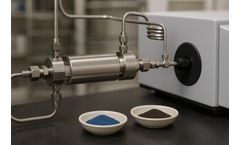
The study analyzes concurrent reactions that compete with the selective catalytic reduction of nitrogen oxides by ammonia (NH3-SCR), namely ammonia oxidation (AMO) and the formation of undesired by-products N2O and NO2, over Cu/SSZ-13 and Fe–Cu/SSZ-13 zeolite catalysts. ...
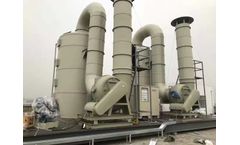
Common desulfurization methods include wet flue gas desulfurization (WFGD) using limestone or lime slurry, dry sorbent injection, or using renewable processes such as activated carbon. Nitrogen oxide removal (NOx reduction): Nitrogen oxides (NOx) are another group of harmful pollutants found in smoke. Selective ...
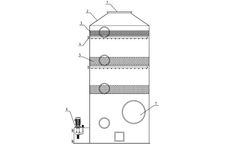
The resulting products are often called "scrubber slurry" and can be further processed. Nitrogen Oxides (NOx) Reduction: Nitrogen oxides are a group of pollutants that contribute to smog and respiratory issues. Selective catalytic reduction (SCR) and selective non-catalytic ...
Many governments—also in developing countries—set new limits for emissions such as nitrogen oxides in flue gas. Sulzer offers advanced mixing technology for flue gas cleaning. ...

Emissions of total hydrocarbons would be reduced by 10,600 tons per year, an 83 percent reduction; particulate matter would be reduced by 11,500 tons per year, a 92 percent reduction; hydrochloric acid by 5,800 tons per year, a 97 percent reduction; sulfur dioxide by 110,000 tons per year, a 78 percent reduction; and ...

The biggest bright spot of this model is the use of dual-fuel system can be dramatic reductions in the cost of car use. Current price of natural gas is much lower than that of gasoline and diesel fuel costs are generally save up to 60%. ...

The results, compared with a field experiment taken in the literature, show that the parameterisation of the segregation improves the model performances concerning NO2 and O3 in the first 300 m. Then the pollution reduction obtained introducing the electric vehicle is evaluated. Within the limits of the simple chemistry scheme and the particular meteorological and emissions ...
Trends of ambient NOX levels in the Jubail Industrial City, Saudi Arabia, are increasing, and the regulators have identified areas requiring substantial reductions to control the atmospheric NOX concentrations. In this study, a Selective Catalytic Reduction (SCR) system for the control of NOX emissions in stack gases from 2–ethyl hexanol plant in the Jubail ...

The nitrification and denitrification process used can start with a number of nitrogen sources, but the simplified inorganic oxidation and reduction reaction sequence is commonly written as Ammonia (NH3-N)> Nitrite (NO2 -) > Nitrate (NO3 -) > Nitrogen N2 (off gas). Until now, the technologies to measure the two ...
This paper presents the results of computational kinetic modelling of the removal of nitrogen oxides (NOx) from flue gases by selective non-catalytic reduction (SNCR) process using urea as a reducing agent. ...

The enforcement of year 2007 stringent emission norm for reduced NOx reduction/oxides of nitrogen gases from the diesel exhaust and the after treatment to reduce them will add to global warming by several fold according to renowned engine combustion kinetics, emission control process expert and inventor -Mr.Srinivasan Gopalakrishnan, Hydrodrive ...
Bionomic Industries' solution uses a unique catalyst oxidation process to convert the nitrogen oxide to nitrogen dioxide, which is then removed with a wet scrubber using a proprietary, highly efficient, low-toxic scrubbing chemistry. ...
The proposal to use the described device in a KE-25-24-C industrial boiler is outlined.Keywords: fluegas, nitrogen oxides, sulphur oxides, adsorbtion-reduction cleaning, active coal, carbon adsorbent, adsorbent, regeneration, ...
The selective catalytic reduction of nitric oxide with hydrocarbons in an oxygen-containing simulated flue gas has been investigated for a series of copper oxide and cerium oxide alumina supported catalysts at 600–775 K. The activity of these catalysts for the reduction of NO by methane or propane has been ...

Costs associated with site contamination and remediation, air pollution controls, consent orders, permit changes, presence of hazardous materials, or other liabilities, along with value from emission allowances, emission reduction credits (ERCs), advantageous environmental permits, etc. must be quantified and incorporated into the overall financial analysis for the bid. ...
ByAECOM
Many people living in towns and cities in EEA member countries are exposed to higher concentrations of ground level ozone and fine particulate matter than the proposed EC limit values. European emission reduction targets for nitrogen oxides and volatile organic compounds are unlikely to be met. ...