
Refine by
Nonionic Surfactant Articles & Analysis
17 articles found

Cellulose is one of the polysaccharides usually found in plants and, more precisely, is the major component of plant cells. 4) Others Given the constantly changing research demands on carbohydrates, suppliers also keep abreast of the times by offering various carbohydrate derivatives, enzyme substrates, and nonionic surfactants with optimized properties. For ...
Classification of Surfactant Surfactants can be divided into four categories according to their structural characteristics, namely, amphoteric surfactants, anionic surfactants, cationic surfactants, and non-ionic surfactants. ...

Sulfates, sulfonates, and gluconates are examples of anionic surfactants. Nonionic Surfactants Nonionic surfactants are neutral, they do not have any charge on their hydrophilic end. Nonionic surfactants are very good at emulsifying oils and are better than anionic ...

The list now includes a category containing 13 nonylphenol ethoxylates (NPE). NPEs are nonionic surfactants used in a variety of industrial applications and consumer products including adhesives, wetting agents, emulsifiers, stabilizers, dispersants, defoamers, cleaners, paints and coatings. ...
Surfactants The word surfactant means surface active agent, and, as the name implies, surfactants stir up activity on the surface you are cleaning. ...

Average 89% methanogenic degradation efficiency as well as 90%, 94% and 96% removal of total chemical oxygen demand (TCOD), biochemical oxygen demand (BOD) and nonionic surfactant were obtained, while nitrogen and phosphorus were only subjected to small removals. ...

The amphiphilic nature of surfactants drives the formation of micelles at the critical micelle concentration (CMC). Solid‐phase microextraction (SPME) fibres were used in the present study to measure CMC values of twelve nonionic, anionic, cationic and zwitterionic surfactants. The SPME derived CMC values were compared to values determined ...
This investigation deals with the extraction and concentration of the phenolic compounds into an aqueous phase using a mixture of nonionic/anionic surfactants. A synergistic effect for the extraction of the natural phenolic compounds was observed when Genapol X-80 was combined with sodium dodecyl sulphate (SDS). ...
Batch experiments were conducted to investigate the performance of nonionic–anionic mixed surfactants and their recovery through activated carbon. ...
The current procedures of nucleic acid extraction and purification, such as the freeze–thaw (F/T) method and the commercial kits, are time consuming and expensive. To this end, a surfactant extraction treatment (SET) was developed as a method to extract nucleic acids from Cryptosporidium using only surfactants. ...
Cadmium reacted with 8-hydroxyquinoline to form hydrophobic chelates, which were extracted into the micelles of nonionic surfactant oligoethylene glycol monoalkyl ether (Genapol X-080) in an alkaline medium. ...
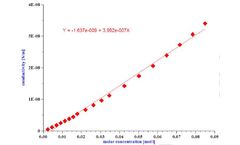
It is known that nonpolar liquids can be ionized by adding surfactants, either ionic or nonionic. Surfactant molecules serve as solvating agents, building inverse micelles around ions, and preventing their association back into neutral molecules. ...
The effects of the molar ratio of nonionic surfactant to SDS on the critical micelle concentration (CMC) of SDS/Brij 35, SDS/TW80 and SDS/TX100, the removal efficiency of Cu2+, the residual concentration of SDS in the permeate solution and the permeate flux were tested. ...
Salt bridges – multivalent cations allow for a denser soil layer to coat the membrane Carbonates, Silica, Oxides, Sulfates, Inorganics Fouling begets fouling Cleaning Mechanism Introduce functional groups to the fouling layer Creates an electrostatic repulsion from the membrane surface Strong enough to displace hydrophobic attraction Hydrophilic in nature Polarity ...

The results of four toxicity bioassays of selected anionic and nonionic surface active agents were presented. Three widely used anionic surfactants that belong to alkyl sulphates (AS), alkylbenzene sulphonates (LAS) and alkylpolyoxyethylene sulphates (AES) as well as nonionic surfactants: polyoxyethylene alkyl ethers (AE) and ...
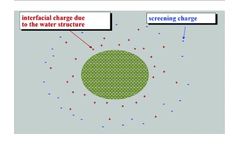
As a second step, we suggest using nonionic surfactant Tween 80 for probing and modifying the structure of the interfacial layer at high ionic strength. ...

In this study, biodegradation of phenanthrene as a model PAHs solubilized in saline micellar solutions of a biodegradable commercial alcohol ethoxylate nonionic surfactant was investigated. The critical micelle concentration (CMC) of the surfactant and its solubilization capacity for phenanthrene were examined in an artificial saline water ...