
Nucleic Acid Detection Articles & Analysis
20 articles found

The incorporation of biotin into nucleic acid molecules, such as DNA and RNA, allows for enhanced detection, isolation, and manipulation of these biomolecules. ...

The sequencing occurs in cycles, where one base is added at a time, and the fluorescent signal emitted from the incorporated nucleotide is detected. After each addition, the terminator is removed, allowing the next nucleotide to be incorporated. ...

Currently, nucleic acid aptamers are screened from large random nucleic acid libraries using SELEX technology. ...

However, there is a risk of bacterial, viral, or mycoplasma contamination during production, especially mycoplasma, a tiny bacteria without a cell wall that can pass through regular bacterial filtration systems and is difficult to detect in cell culture. Because mycoplasma contamination can potentially affect the safety and efficacy of the produced antibody drugs, strict ...

Therefore, mycoplasma testing of recombinant protein drugs is a necessary quality control step.Common methods of mycoplasma detection include: isolation culture method, indicator cell method, and nucleic acid method. ...

In this regard, the development of innovative tools and technologies such as in situ hybridization (ISH) probes has provided researchers with a powerful means to visualize and detect specific nucleic acids within cells or tissues. The CABR™ CAR-T Cell Detection ISH Probes represent a significant advancement in this area, ...
Peptide Nucleic Acid (PNA) is a synthetic polymer similar to DNA or RNA. PNA can be said to have been born in Denmark, where it was originally developed by Peter E. ...
Simultaneously, detection probes bind to capture probes. S1 nuclease is used to hydrolyze unbound single-stranded nucleic acids. ...
The method uses reversible dye terminator technology to detect the sequence of a DNA molecule. The process begins by fragmenting the DNA sample into short fragments, typically 100-150 base pairs (bp) in length. ...

Once injected into the body, microspheres are gradually degraded in the body, allowing the drug to be released slowly at a certain rate, maintaining the drug concentration in the blood at the site of the lesion, thereby prolonging the half-life of the drug and achieving long-acting sustained release. Fluorescent Microspheres for Nucleic Acid ...
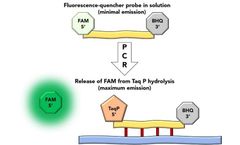
To this end, several diagnostic methods have been designed and tested, and one USA FDA approved test kit utilises fluorescence based reverse transcript real-time polymerase chain reaction (rRT-PCR) technique. The rRT-PCR test works by detecting replicated nucleic acid copies from the SARS-CoV-2 virus through a bound fluorescence probe that is ...
The technology fixes high-density designed oligonucleotide or cDNA sequence dot matrix on the chip surface, labeling fluorescent probes for nucleic acid hybridization, and detecting the hybridization signal by laser confocal scanning microscope, to obtain nucleotide sequence information. ...

Lyophilized reagents and kits improve a laboratory’s throughput, reduce labor, and require fewer consumables. Lyophilized Monkeypox Virus Nucleic Acid Detection Kit In response to the 2022 monkeypox outbreak, we have developed our Lyophilized Monkeypox Virus Real-Time PCR Kit and obtained CE-IVD approval. ...
ByFireGene

It has the advantages of free combination, high throughput, high speed, low cost, high accuracy, good reproducibility, high sensitivity, wide linear range, no washing, easy operation, and protein and nucleic acid detection can be done on the same platform. Application of Luminex Multiplex Assay Technology n Luminex quantitative cytokine assay ...

As an efficient optical "molecular ruler", fluorescence resonance energy transfer (FRET) has a wide range of applications in biological macromolecular interactions, immunoassays, and nucleic acid detection. In the field of molecular biology, this technique can be used to study protein-protein interactions under physiological conditions in living ...

Overview Catalogue Number: SCT124 Description: GelGreen Nucleic Acid Stain 10000X DMSO General Description GelGreen is a sensitive, stable and environmentally safe green fluorescent nucleic acid stain specifically designed for gel staining. ...

In recent years, CRISPR-based diagnostics have emerged as a programmable method for rapid, sensitive, and specific detection of nucleic acids 10–12. CRISPR-based diagnostics utilize the specific recognition of a target nucleic acid sequence by a guide RNA/Cas protein complex, which activates collateral ...

SARS-CoV-2 detection workflow in wastewater Monitoring wastewater for SARS-CoV-2 – or Coronavirus as it is more commonly known – can be a valuable data resource for an effective COVID-19 management. However, there are several challenges involved in detecting biological parameters in wastewater. Fortunately, there are also several solutions ...

Later, the monitoring was continued for some winter-spring months for norovirus and adenovirus. Viral nucleic acids were detected using molecular methods, such as real-time reverse transcription-polymerase chain reaction. ...

Carbon-nanotubes (CNT) represent an important group of nanomaterials with useful properties that enable their use for many important applications and made them extremely attractive for the task of electrochemical detection. Here, the author uses CNT to enhance the sensitivity of a multi-enzyme-based electrochemical bioassay for breast cancer gene (BRCA1) ...