
Refine by
Nutrient Modeling Articles & Analysis
49 articles found
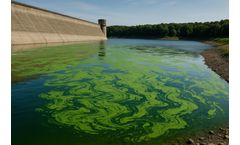
In freshwater reservoirs, cyanobacteria thrive as surface temperatures rise, stratification intensifies, and nutrient-rich runoff enters waterways after intense rainfall events. Legacy nutrient stocks in agricultural watersheds contribute to bloom conditions even when external inputs decline, as warming reduces oxygen at the sediment surface and phosphorus is ...
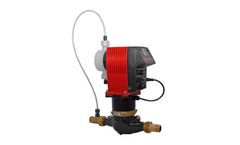
Agritechnica 2025 trade fair: Lutz-Jesco presents water technology for sustainable and efficient greenhouses of the future Nutrient deficiencies, over-fertilisation and crop losses: many greenhouses struggle due to inaccurate nutrient supply and fluctuating water quality. ...

He and his team studied pancreatic cancer metabolism in preclinical models: how cells acquire nutrients and what nutrients they use to promote growth and achieve therapeutic resistance. ...

Farmsio efficiently employs a satellite-based solution to provide various advisory services for the organization that works with farmers. Crop stress management, nutrient management, crop damage assessment, crop modeling, and various additional decision tools are among them. ...

Field data on TAN obtained from the cultured fishponds stocked with three different stocking densities were used to study the dynamics of TAN. A developed model used to study the nutrient dynamics in shrimp pond was used to validate the observed data in the IMC pond ecosystem. Two years of observed TAN data were used to calibrate the spreadsheet ...
In this research removal of NH3-N, NO3-N and PO4-P nutrients from municipal wastewater was studied, using Chlorella vulgaris, Pseudomonas putida, Bacillus cereus and an artificial consortium of them. The objective is to analyze the performance of these microorganisms and their consortium, which has not been previously studied for nutrient removal in municipal ...
Analysis of the impacts of nitrogen, phosphorus and potassium supplementation on biofilter performance for organic carbon removal was studied on laboratory-scale biofilter columns. Three dual media biofilter columns were fed with synthetic raw water C:N:P ratios of 546:24:1, 100:10:1, and 25:5:1 (w/w) to simulate nutrient limited and two nutrient supplemented conditions, respectively. ...
We calculate recent and future nitrogen balances from agriculture by applying an interdisciplinary modelling system, also considering the effects of the Nitrate Directive. The nitrogen surpluses are transferred to a nutrient emission model to simulate nitrogen emissions, in-stream retention and resulting riverine loads to the sea until 2021. ...
A companion study was the first to incorporate uncertainty within water resources development scenario modelling for a catchment in South Africa using the Water Evaluation and Planning (WEAP) model. That study is extended in the current study by considering water quality in the form of nutrients and salinity. The WEAP model was ...
Hydrodynamics and transport simulations were conducted with the modeling software TELEMAC-2D on Icó-Mandantes bay, a branch of the Itaparica reservoir. ...

In the current study, the researchers created a modelling tool for designing an efficient IMTA system at any site based on the proposed species. ...
Ordinary least squares (OLS) and spatial autocorrelation analyses were used as part of geographic information system (GIS)-based exploratory regression analysis to study the relationship between chlorophyll-a and nutrients, specifically total nitrogen and phosphate. Multiple logistic regression analysis was used to study the vulnerability of the creek to eutrophication. Results ...
In the last two decades, numerous models and modeling techniques have been developed to simulate nonpoint source pollution effects. Most models simulate the hydrological, chemical, and physical processes involved in the entrainment and transport of sediment, nutrients, and pesticides. Very often these models ...
The issues of diffuse and point source phosphorus (P) pollution in river systems are presented using a catchment model to assess nutrient behaviour, seasonal effluent standards and biosolid substitution. A process-based, dynamic water quality model (INCA-P) has been applied to four UK catchments, namely, the Rivers Tywi, Wensum, Lunan and ...
Households are an important source of nutrient loading to surface water. Sewage systems without or with only primary wastewater treatment are major polluters of surface water. ...

In trickling filters, oxygen demand is often satisfied by natural ventilation without any need for energy-intensive aeration and high-tech equipment- However, increasing effluent demands and process issues - such as media clogging in conventional, stone-packed trickling filters, along with a poor understanding of nutrient removal characteristics and poor modeling ...
Nitrogen retention was calculated in two agricultural catchments by the dynamic Integrated Nutrients in Catchments (INCA)-N model. The monetary valuation was based on purification efficiency of artificial wetlands. ...

A mixed–integer linear programming model that allows the examination of management scenarios for a region was developed and used to search for good solutions with respect to various goals (cost, nutrient release and risk). With a target of 30% reduction in nitrogen for a case study watershed, large difference in cost (a more than three–fold reduction in cost was ...

Changes in the volumes and distribution of lipids in humpback whales, particularly during migration, could play an important role in the pharmacokinetics of lipophilic contaminants such as the organochlorine pesticide hexachlorobenzene (HCB). Previous models have examined constant feeding and non‐migratory scenarios. In the present study, we develop a novel heuristic ...
Process-based nutrient models are increasingly used to determine the impact of future changes in land use, agriculture production practices and climate on the quantity and timing of nutrients reaching surface waters. ...