
Refine by
Occupational Air Articles & Analysis
49 articles found
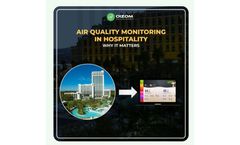
Smart hotels are now watching these numbers alongside their occupancy rates and revenue figures. The bottom line is straightforward: better air quality leads to better reviews, which leads to more repeat bookings. ...
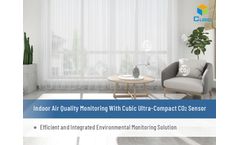
In the smart buildings, energy efficiency and indoor air quality have become paramount concerns. As the need for smart buildings increases, the need for advanced technologies that can seamlessly integrate into these environments is critical.CO2 levels are a significant indicator of air quality and occupant density, which directly impacts the ...

The Role of Pleated Air Filters One effective strategy to combat the infiltration of wildfire smoke and pollutants into indoor spaces is the use of high-quality air filters. Among the various types of air filters available, MERV 13 pleated air filters stand out as a reliable choice. ...

Because energy needs are in no way independent from external variables, EMS platforms must gather data from many other sources, including, but not limited to, water consumption, industrial production, building occupancy, weather conditions and air quality. Carbon emissions and waste data are many times also included in the scope of an EMS, given their correlation ...
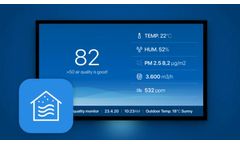
Employees and members of an organisation, as occupants of a building or indoor space, must ask for air quality tests to be performed periodically. ...

With the growing demand for sustainable and efficient buildings, there is a significant push for integrating smart technology solutions to enable more efficient operations, reduce costs, and achieve environmental goals. To focus on issues like air quality and infection control, we need to be constantly monitoring spaces and now be able to predict occupancy ...

Indoor air quality is a major concern for building occupants, as exposure to indoor air pollution can lead to various health problems, such as respiratory issues, headaches, and allergies. ...
ByGenotek
Expanded emphasis areas in 2022 were Decarbonization, Resilience and Sustainability, Indoor Air Quality, Effects of Air Pollution, Occupational Health, Storm Water, and more European content not emphasized in the US (e.g., Pollution from Shipping, Industrial Wastes, etc). ...
![Energy Management in Universities: Rey Juan Carlos University [Case Study]](https://d32zuqhgcrpxli.cloudfront.net/eyJidWNrZXQiOiJlZS1maWxlcyIsImtleSI6ImZpbGVzLzQ3MzU3L2FydGljbGVzLzEwOTA0MDcvNDczNTdfNl8yMDIyMTEyMzEyMzAzNTY3MzYwODNfcmF3LnBuZyIsImVkaXRzIjp7InJlc2l6ZSI6eyJmaXQiOiJjb250YWluIiwiYmFja2dyb3VuZCI6eyJyIjoyNTUsImciOjI1NSwiYiI6MjU1LCJhbHBoYSI6MX0sIndpZHRoIjoyNDAsImhlaWdodCI6MTQ1fX19 "Energy Management in Universities: Rey Juan Carlos University [Case Study]")
Occupancy: During the week, spaces such as classrooms or cafeterias are likely to be occupied most of the day, while halls or libraries may experience periods of very low occupancy. If they are kept lighted and air-conditioned, whether full or not, energy will be used unnecessarily. ...

In a sign of what the new post-Covid normal will look like, the Irish government is preparing to legislate for mandatory CO2 thresholds in the workplace. The Workplace Ventilation (Covid-19) Bill 2021 is at its Third Stage in the Houses of the Oireachtas. No longer a mere recommendation, if passed, every employee will be entitled to fresh air as defined by an environment with less than 900ppm of ...

In part 1 of this 2-part blog, I discussed the importance of indoor air quality for healthcare facilities in Singapore. Hospitals and polyclinics need good air quality and ventilation to help ensure the safety of staff, patients, and visitors. We also looked at how ultraviolet (UV-C) light can be used to sterilize duct-type fan coils and air handling units to help stop bacteria, viruses, molds, ...

They are major sources of environmental and occupational air pollution exposures and may therefore contribute to the global cancer ...
Providing indoor air quality to meet the safety of the occupants is a daunting task—at best. ...
ASHRAE has set guidelines for the amount of air circulation in a workspace is the document: ANSC/ASHRAE Standard 62.1-2016 titled, “Ventilation for Acceptable Indoor Air Quality.” This document referred to as “ASHRAE 62” is intended to “specify minimum ventilation rates and other measures intended to provide indoor ...
For this reason, only experienced, reliable clean-up contractors should be used for remediating a building or other structure, and the work must be isolated to protect other building occupants. Experienced remediators will have the equipment, training, and expertise to isolate a contaminated area with enclosures, similar to those used for asbestos remediation that will prevent ...
Sheriff, MS, CIH, CSP, President The amount of fresh air—outside air—that needs to be introduced into a building varies widely depending upon the activity and level of occupancy. Air Changes per Hour (ACH) The most common term used to refer to the amount of outside air that needs to be introduced ...

Silicosis is preventable through air monitoring and effective workplace exposure controls, including effective local exhaust ventilation and the appropriate respiratory protection." Dedicated to protecting workers and helping companies comply with existing crystalline silica exposure standards are the industrial hygiene professionals at Zimmetry Environmental. They offer ...

Requirements as specified in Section 721.63(a)(1), (a)(2)(i) and (ii), (a)(3) through (5) (respirators must provide a National Institute for Occupational Safety and Health certified air purifying, tight-fitting full-face respirator equipped with N-100, P-100, or R-100 filter with an Assigned Protection Factor of at least 50), (a)(6) (particulate (including solids ...

Engineering Controls: Where feasible engineering controls should be used to keep the sterilant gas concentrations in the ambient air below the Occupational Exposure Limits. Forced ventilation to prevent any emissions of sterilant gas from entering the ambient air Frequent air changes (10 changes per hour are recommended) ...
If employees or building occupants are complaining of poor air quality or increased illnesses like colds, flu, asthma, weakness, burning eyes, itching skin, rashes, sore throats, allergies, lethargy, or headaches, there is a possibility this could be related to the building. Our services include Boston indoor air quality testing for mold and ...