
Odor Adsorbent Articles & Analysis
6 articles found
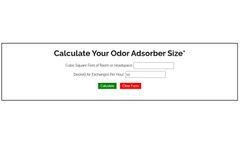
If you need to know what size adsorber you need, the below tool will help you calculate that. You will need the cubic square feet of the room or headspace you are calculating and the number of air exchanges per hour that you desire. Simply plug those numbers into the calculator below and it will tell you how wide a vessel you need and what airflow will give you the desired air exchanges per ...

Its high surface area and cation exchange capacity (CEC) promote soil aggregation, water retention, and microbial activity, creating a conducive environment for plant growth and nutrient uptake.Odor Control and Ammonia Reduction Poultry farming operations often face challenges related to odor control and ammonia emissions, which can affect air quality and animal health. Bamboo ...
The porous nature of bamboo charcoal provides a stable repository for captured carbon.Air and Water Purification Bamboo charcoal's porous structure extends its benefits to air and water purification. Its ability to adsorb impurities, odors, and pollutants makes it an eco-friendly solution for enhancing air quality and purifying water. ...

Carbon air filters contain activated carbon, which has a high adsorption capacity for VOCs and odorous compounds. When used in conjunction with MERV 13 pleated filters, carbon filters provide a comprehensive solution for indoor air purification during wildfires. Here’s why carbon air filters are an invaluable addition: VOC and Odor Removal: Activated ...

Oxidation is the only method that completely eliminates mercaptan odors. Precipitation technology may adsorb some mercaptans, but may readily release the adsorbed molecules. ...
Oxidation is the only method that completely eliminates mercaptan odors. Precipitation technology may adsorb some mercaptans, but may readily release the adsorbed molecules. ...