
Olive Mill Articles & Analysis
25 articles found
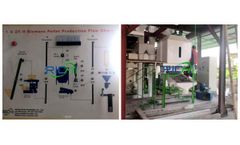
" I intend to open a biomass pellet fuel ranch with a day-to-day result of concerning 50 heaps. What type of biomass pellet mill device is better as well as how much is the biomass pellet mill and also biomass pellet assembly line?" ...
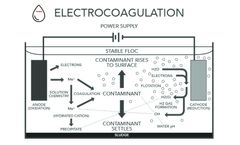
Electrocoagulation Applications Electrocoagulation has been tested and used in many applications: Emulsions and cutting liquids wastewater Synthetic textile dye wastewater Municipal wastewater Biodiesel wastewater Restaurant wastewater Synthetic brackish water with silica Synthetic solution of NOM in potable water Petroleum refinery wastewater Produced water Olive oil ...
ByYASA ET

Unavoidable food supply chain wastes (UFSCW), including crop residues, by-products of food processing such as apple pomace or olive mill waste, and livestock manures, represent a source of organic matter that can be used as a feedstock for biofuel, bioenergy, or biobased material and chemical production. ...

The goal here was to determine the framework for control of an ultrafiltration (UF) and nanofiltration (NF) batch membranes-in-series process treatment for olive mill wastewater, relying on these boundary flux points, which will thereafter serve for the automatic control of the process by an advanced control system. ...
A boron doped diamond (BDD) electrode was employed in an electrochemical reactor to oxidize the phenolic content of Jordanian olive mill wastewater. The BDD anode was fabricated using hot filament chemical vapor deposition on niobium and the morphology of the BDD electrode was characterized using an atomic force microscope. ...
The nutritional properties of olive oil can be attributed to its oleic acid and phenolic compounds content, acting as natural oxidants to prevent human diseases. In particular, hydroxytyrosol has an anti-inflammatory action similar to omega 3 fatty acids from fish oil. The olive oil production was conducted by two extraction procedures: first, a two-phase ...
The aim of the present work was to compare the potential of iron industry wastes to enhance ozone and hydrogen peroxide action on the degradation of olive mill wastewaters (OMWs). The results attained show a higher efficiency for ozonation using a lower catalyst load. ...
Olive oil mill wastewater (OOMW) is one of the most important industrial wastewaters in the world due to high organic load and phenolic compounds. ...

The plant of the study do not reach the have an important high olive mill wastewater which, besides a high organic it can contain an important amount of polyphenol. ...

Size fractionation of olive mill wastewater (COD:155000 mg/L; TOC:40000 mg/L; BOD5:37700 mg/L; total phenols:4100 mg/L; absorbance at 395 nm:145 cm−1) before and after FeCl3 coagulation, Ca(OH)2 precipitation, electrocoagulation and the Fenton process was investigated. ...
The effect of acid cracking (pH 2.0; T 70 °C) and filtration as a pretreatment step on the chemical treatability of olive mill wastewater (chemical oxygen demand (COD) 150,000 m/L; total organic carbon (TOC) 36,000 mg/L; oil–grease 8,200 mg/L; total phenols 3,800 mg/L) was investigated. ...
The aim of the current study was the exploitation of agro-industrial wastes or by-products such as olive mill wastewater (OMW) and defective wines. A cost-effective system for their maximum exploitation is suggested, using a combined process of membrane filtration and other physicochemical processes. ...
The possibility of coupling a physicochemical pretreatment (ozonation) with a biological treatment (anaerobic digestion) was investigated for the case of olive mill wastewaters (OMW). Batch ozonation experiments were performed in a glass bubble reactor. ...
Toxicity of raw and biotreated olive mill wastewater (OMW) was tested using three organisms, Daphnia pulex , Thamnocephalus platyurus and zebrafish ( Danio rerio ). ...

The production of olive oil generates two kind of waste waters: RINSING WATERS: the quantity is subject to change. ...
This study offers a solution for reducing the environmental effect of wastewaters generated by the olive-oil industry. Olive-oil companies produce variable quantities of wastewaters, which require treatment for disposal or reuse. ...
The study is focused on the external and internal mass transfers of lipids during their biodegradation process in a bioreactor with stationary basket bed of immobilized Bacillus spp. cells. By means of the lipid mass balance for a single particle of biocatalyst, considering the kinetic model adapted for the immobilized bacterial cells, specific mathematical models have been developed to estimate ...
The effect of storing human urine with olive oil mill wastewaters (OOMW) or water bubbled with CO2 (BW), was studied. ...
Olive oil Mill Wastewaters (OMW), are stored in clay basins in the region of Sfax (Tunisia). ...
Olive oil Mill Wastewaters (OMW), are stored in clay basins in the region of Sfax (Tunisia). ...