
Refine by
Optical Absorption Spectroscopy Articles & Analysis
24 articles found

The wavelength range from infrared through visible to ultraviolet is called the optical range. Light and energy Electromagnetic waves contain energy. ...
ByOPSIS AB
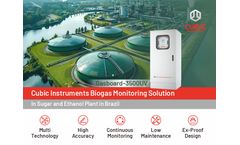
Traditional ECD (electrochemical detector) H₂S sensors tend to have a short lifespan under such conditions, resulting in frequent and costly replacements.To reduce maintenance demands and enhance monitoring reliability, a gas analyzer equipped with a long-lifespan H₂S sensor was required for effective biogas system operation.SolutionsAfter evaluating various technologies and suppliers, CG ...
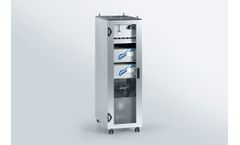
In this context, a technological innovation stands out: ProCeas LaserCEM® from AP2E, a French manufacturer (member of DURAG GROUP) using patented OFCEAS® (Optical Feedback Cavity Enhanced Absorption Spectroscopy) technology. ...

Calibrating Continuous Emissions Monitoring (CEM) gas analyzers is crucial for ensuring the reliable measurement of emissions from industrial smokestacks and maintaining compliance with environmental regulations. Using a CEM calibration system can create precise and dependable emission measurements. Read our guide to understand the key steps and requirements for calibrating CEM gas analyzers with ...

Are you ready for a deep dive into Hydrogen Chloride Analyzers? These devices measure Hydrogen Chloride in the air. You’ll learn all about them here! With this knowledge, you can keep your workplace safe and sound. Let’s jump ...
Welcome to an enlightening guide about HF Gas Analyzers. Here, crucial knowledge about hydrogen fluoride and its detection will unfold. Read on for valuable insights into this critical, science-backed ...
Welcome! You’ll learn a lot about UV-DOAS Gas Sensors here. Your journey will start with basic UV-DOAS technology. Next, understand its components and types of gases it can detect. You’ll also dive into how it calibrates, and its limits. Compare it with other gas sensors too. Finally, explore how it manages data. Now, start your exciting, enlightening ...
Welcome to the world of gas analyzers! Navigate through this guide for a deep dive into types, applications, and leading gas analyzer manufacturers. Uncover insights to optimize your device’s accuracy and ...
Unlock the potential of UV gas analyzers for enhanced detection. This blog aims to educate and inform on UV gas analyzer basics, advantages, applications, and techniques to maximize their ...

OPSIS Mercury Monitoring Here is where OPSIS offers the best solution on the market: the OPSIS System 400Hg. It is based on differential optical absorption spectroscopy, DOAS, which works excellent for atomic mercury (Hg0), where also extremely low levels can be detected. ...
ByOPSIS AB

Two principles in use: The CEMS-2000 series Flue Gas Continuous Monitoring System harnesses the hot-wet extractive method with the following two principles for different pollutants: · UV-Differential Optical Absorption spectroscopy (UV-DOAS) principle: Every type of molecule and gas has its own unique absorption spectrum ...
UVDOAS (Ultraviolet Differential Optical Absorption Spectroscopy) is a monitoring technique which uses the absorbance of UV light to identify and quantify gases within a sample. ...
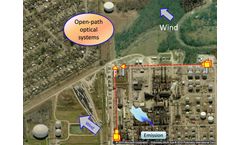
ORS systems employ open-path optical beams to spectroscopically speciate and quantify path-averaged pollutant concentrations in an advected plume. The long optical paths used to help capture spatially variable emissions from the nearby sources. Open-path ultraviolet differential optical absorption spectroscopy ...

Polycrystalline monolayer graphene films grown by chemical vapor deposition were exposed to a low-pressure inductively coupled plasma operated in a gaseous mixture of argon and diborane. Based on Langmuir probe and Optical Absorption Spectroscopy measurements, the discharge conditions were selected to be as “mild” as possible to ...

OPSIS initially based all of its gas analysers on the differential optical absorption spectroscopy (DOAS) technology. It utilizes a broadband (white) light source and the spectral analysis is made over a fairly wide wavelength window, typically some tenths of nanometres. ...
ByOPSIS AB
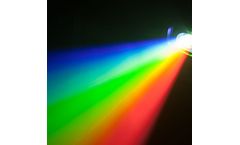
The measurement principle of several types of OPSIS gas analysers is called DOAS, which stands for differential optical absorption spectroscopy. A key component of the analyser is the “spectrometer”, a unit which separates incoming light into its individual wavelengths for subsequent recording of the light spectrum. But how does a spectrometer ...
ByOPSIS AB
Different methods of measuring mercury include: Cold vapor atomic absorption spectroscopy CVAA Cold vapor atomic fluorescence spectroscopy CVAF Differential Optical Absorption Spectrometry DOAS Sorbent Trap method (non-continuous) CVAA, CVAF and DOAS are all measurement technologies used in certified ...

DOAS stands for Differential Optical Absorption Spectroscopy. The DOAS technique was conceived almost a century ago, and it was applied on research level to air quality monitoring already in the 1970s. ...
ByOPSIS AB

One method used for gas analysis is called DOAS, read out as Differential Optical Absorption Spectroscopy. The light source is a xenon lamp and the detector is in its basic configuration a spectrometer, disclosing the fine details of a selected wavelength range, or “window”. ...
ByOPSIS AB

The instrumental methods covered included the gas filter correlation (GFC), differential optical absorption spectroscopy (DOAS), tunable diode laser (TDL), Fourier transform spectroscopy (FTIR)- medium and low resolution , and ion mobility mass spectrometry (IMMS). ...