
Refine by
Optical Detection Articles & Analysis: Older
83 articles found
Companies can no longer rely on periodic manual surveys or outdated detection tools. This is where the optical gas detector emerges as a central component. Using high sensitivity infrared or spectroscopic imaging, optical detectors provide real time visibility into leaks that would otherwise go unnoticed. This article explains the key elements ...
ByOPGAL
Optical gas imaging continues to evolve as industries demand higher sensitivity, greater reliability, and stronger field performance for methane and VOC detection. Among the technologies contributing to these advancements is Sierra Optical, a class of high precision optical components engineered for superior infrared ...
ByOPGAL

The measurement of manufactured components has evolved across decades. Traditional coordinate measuring machines (CMM) set a foundation for precision validation, while optical metrology introduced speed and non-contact ...
Introduction A measurement system is something we depend on every day, even if we never think about it. From checking the length of a part to ensuring a product meets tight tolerances, measurements guide decisions. In this guide, we will explore measurement systems ...

In industries where precision and accuracy are critical, the ability to see every detail can make the difference between flawless performance and costly setbacks. That’s why high-resolution inspection systems are indispensable tools for professionals across manufacturing, aerospace, automotive, and engineering fields. From detecting micro cracks in metal components to ensuring the ...
This marks a turning point for operators, who must now adopt advanced detection and monitoring technologies to ensure compliance. At the center of this new regulatory framework are OGI systems — advanced optical gas imaging platforms capable of detecting, visualizing, and quantifying methane emissions in real time. ...
ByOPGAL
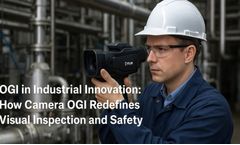
Introduction: From Leak Detection to Industrial Transformation Optical Gas Imaging (OGI) has long been associated with gas leak detection, especially in the oil and gas sector. ...
ByOPGAL

Advancements in microfluidics, detection strategies, antibody engineering, and immunoassay readers are driving the development of novel "next-generation" rapid POC diagnostics, with sensitivity approaching that of current "gold standard" clinical analyzers. ...
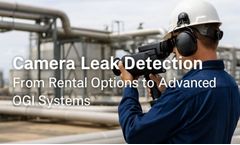
Introduction: Why Camera Leak Detection Matters Gas leaks pose significant safety, environmental, and financial risks. ...
ByOPGAL

For industries like oil and gas, petrochemicals, and power generation, the ability to detect, measure, and respond to CH4 leaks quickly is no longer a luxury – it is a necessity. At OPGAL, we see CH4 connections as a bridge between advanced optical gas imaging (OGI), thermal detection, and the broader goals of safety and sustainability. ...
ByOPGAL
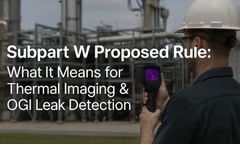
This shift creates both compliance obligations and an opportunity: integrating advanced tools like thermal imaging and Optical Gas Imaging (OGI) to detect invisible leaks faster, more accurately, and more safely than ever before. ...
ByOPGAL
What Is Heterogeneous Integration? Heterogeneous Integration refers to the process of combining multiple types of components, such as logic chips, memory, sensors, photonics, and RF modules, into a single compact system. These components are often manufactured using different materials and processes, but are combined into a unified package to deliver advanced functionality and high-performance ...
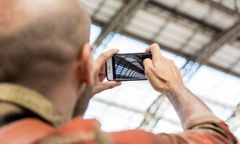
This article explores how advanced gas leak detection cameras using optical gas imaging (OGI) can prevent downtime and disasters. ...
ByOPGAL
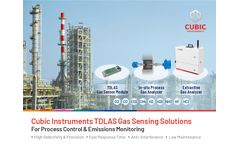
The lock-in amplifier is used to photoelectricity at the receiving end. The optical signal detected by the detector is demodulated, and combined with the Beer-Lambert relationship between the gas concentration and the laser absorption spectrum, the concentration of the measured gas is obtained. ...
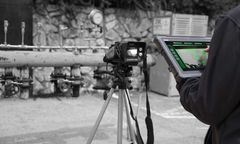
Environmental Protection Agency (EPA) has introduced a proposed framework known as Appendix K, designed to standardize Optical Gas Imaging (OGI) practices across oil and gas operations. This move, aimed at improving leak detection accuracy and accountability, introduces technical specifications and validation criteria that will shape how facilities operate and ...
ByOPGAL
The adoption of cutting-edge technologies such as optical gas imaging (OGI) and thermal detection systems is becoming a necessity rather than an option for companies striving for compliance. Opgal, a global leader in electro-optical solutions, plays a pivotal role in helping industries meet the evolving demands of Subpart W by providing ...
ByOPGAL
Their crystal structure provides great diversity in substitute sites that are vital for achieving a tunable bandgap. PQDs have structure and optical properties similar to traditional semiconductors, with the high absorption coefficient and excitonic nature that could surpass those of Cd-based QDs. ...
Measurement accuracy has always been at the heart of technological progress. In the early days of manufacturing, metrology—defined as the science of measurement—was a manual and time-consuming process. As industries scaled up production, the demand for faster, more precise, and automated measurement systems grew. This led to the evolution of high throughput metrology, a field that ...
Organic Photoconductors: mCP is used in the fabrication of organic photoconductors, which are essential components in photocopiers, laser printers, and other optical devices. It helps in detecting light and converting it into electrical signals. ...
Chemical Labelling(1) Fluorescent LabellingProteins are labelled with fluorescent dyes, making them easy to identify in mass spectrometry or other optical detection methods.(2) Reactive Group LabellingSpecific chemical reactive groups react with specific amino acid residues of proteins to form covalent bonds.3. Enzymatic LabellingFor example, proteins are ...