
Refine by
Optical Detection Articles & Analysis
90 articles found

The cost components of FK-1000-V3 and FK-600-V2, a typical ROI calculation for a five-megawatt PV plant, and how to pick the right model. Solar panel cleaning robot prices aren't usually published online — and there's a reason for that: every site is different, and the robot's cost is not just the machine's sticker price. In this article, drawing on Doka Engineering's 12+ years of field ...

How Automated Sorting Works An automated sorting system integrates detection technologies (optical sorting, NIR spectroscopy, AI machine vision), mechanical separation systems, and conveyor-based transport infrastructure. ...
What Is an Optical Sorting Machine? An optical sorter uses high-resolution cameras, near-infrared (NIR) sensors, and image processing algorithms to identify and differentiate materials in a mixed stream on a conveyor belt. They process what the human eye can see — but at a much more advanced level, including chemical composition identification invisible to ...

Why OOOOa is No Longer Sufficient The Existing Source Loophole: legacy assets built before 2015 largely outside LDAR. Low-Resolution Detection: OOOOa's optical gas imaging standards were vague relative to Appendix K, yielding inconsistent detection. ...
ByOPGAL

Modern digital infrastructure depends on fast, reliable data movement. As networks expand, traditional electrical transmission struggles with speed and distance. This is where optical transceivers become essential. They enable high-speed optical communication across fiber optic networks, supporting data centers, telecom systems, and advanced computing ...
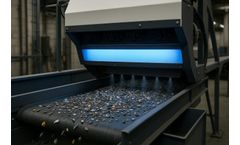
This technical approach defines the state of the art in automated sorting for battery processing lines.Introduction to Optical Sorting TechnologyHow Optical Sorters WorkAn optical sorter operates on a three-stage architecture: presentation, detection, and ejection. In the presentation stage, material is metered onto a high-speed ...

As an automotive Tier 1 supplier, Cubic designs and manufactures key components in-house—including optical modules, MEMS structures, gas-sensitive materials, and electronics—enabling different sensing elements to be combined efficiently into compact, vehicle-ready modules. ...
Optical gas imaging continues to evolve as industries demand higher sensitivity, greater reliability, and stronger field performance for methane and VOC detection. Among the technologies contributing to these advancements is Sierra Optical, a class of high precision optical components engineered for superior infrared ...
ByOPGAL
Companies can no longer rely on periodic manual surveys or outdated detection tools. This is where the optical gas detector emerges as a central component. Using high sensitivity infrared or spectroscopic imaging, optical detectors provide real time visibility into leaks that would otherwise go unnoticed. This article explains the key elements ...
ByOPGAL
The measurement of manufactured components has evolved across decades. Traditional coordinate measuring machines (CMM) set a foundation for precision validation, while optical metrology introduced speed and non-contact ...
Introduction A measurement system is something we depend on every day, even if we never think about it. From checking the length of a part to ensuring a product meets tight tolerances, measurements guide decisions. In this guide, we will explore measurement systems ...

In industries where precision and accuracy are critical, the ability to see every detail can make the difference between flawless performance and costly setbacks. That’s why high-resolution inspection systems are indispensable tools for professionals across manufacturing, aerospace, automotive, and engineering fields. From detecting micro cracks in metal components to ensuring the ...
Introduction: From Leak Detection to Industrial Transformation Optical Gas Imaging (OGI) has long been associated with gas leak detection, especially in the oil and gas sector. ...
ByOPGAL
This marks a turning point for operators, who must now adopt advanced detection and monitoring technologies to ensure compliance. At the center of this new regulatory framework are OGI systems — advanced optical gas imaging platforms capable of detecting, visualizing, and quantifying methane emissions in real time. ...
ByOPGAL

Advancements in microfluidics, detection strategies, antibody engineering, and immunoassay readers are driving the development of novel "next-generation" rapid POC diagnostics, with sensitivity approaching that of current "gold standard" clinical analyzers. ...
Introduction: Why Camera Leak Detection Matters Gas leaks pose significant safety, environmental, and financial risks. ...
ByOPGAL

For industries like oil and gas, petrochemicals, and power generation, the ability to detect, measure, and respond to CH4 leaks quickly is no longer a luxury – it is a necessity. At OPGAL, we see CH4 connections as a bridge between advanced optical gas imaging (OGI), thermal detection, and the broader goals of safety and sustainability. ...
ByOPGAL
This shift creates both compliance obligations and an opportunity: integrating advanced tools like thermal imaging and Optical Gas Imaging (OGI) to detect invisible leaks faster, more accurately, and more safely than ever before. ...
ByOPGAL
What Is Heterogeneous Integration? Heterogeneous Integration refers to the process of combining multiple types of components, such as logic chips, memory, sensors, photonics, and RF modules, into a single compact system. These components are often manufactured using different materials and processes, but are combined into a unified package to deliver advanced functionality and high-performance ...
This article explores how advanced gas leak detection cameras using optical gas imaging (OGI) can prevent downtime and disasters. ...
ByOPGAL