
Refine by
Optical Emission Spectroscopy Articles & Analysis
43 articles found
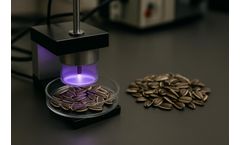
A key aspect was the control of the electrode gap, which strongly influenced discharge stability, power deposition, and seed–plasma interaction. Electrical measurements and optical emission spectroscopy assessed discharge homogeneity and excited species in the plasma phase.Stable reactive species generated during operation were identified using ...

When a $2.3 million aerospace component fails catastrophic testing, investigators often trace the problem back to a single moment: the loading dock where the wrong alloy entered the facility. A batch of 316L stainless steel arrives with paperwork certifying its composition. It looks identical to 304 stainless. The receiving team checks the documentation, signs off, and sends it to production. Six ...
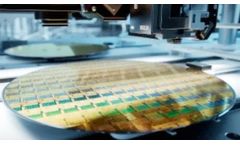
Ascertaining this level of precision requires end point detection (EPD) systems that signal when the etch process has reached or passed through the desired layer. Conventional optical techniques, including interferometry and optical emission spectroscopy, offer some capability but often fail in scenarios involving subtle material ...

Introduction Can you tell us what Spectro Scientific does, as well as its history? Spectro Scientific is the world’s leading supplier of lubrication oil testing equipment. We began as an equipment supplier to laboratories that provided lubrication oil testing as a service. Recently, we have expanded beyond the traditional lab to supply equipment for on-site and field portable ...

Introduction: Metal 3D printing, also known as additive manufacturing, has revolutionised various industries by enabling the production of complex and customised metal parts with unprecedented precision. However, ensuring the integrity and quality of printed components remains a critical challenge. Gas detection technologies offer a solution to this challenge, providing valuable insights into ...
Introduction This white paper reports diesel engine oil analysis data demonstrating use of filtergram particle quantifier x-ray fluorescence (FPQ spectroscopy) to quantify severity of wear and contamination. Two independent measurements are performed on each filtergram specimen: pore blockage particle count and FPQ spectroscopic large particle elemental analysis. Causal inflections in ASTM ...

Nesvax Innovations Limited Successfully Installs Analytik Jena’s Inductively Coupled Plasma Optical Emission Spectroscopy System at Yana Oils Limited in Nairobi, Kenya. Nesvax Innovations Limited, a leading provider of laboratory and analytical solutions, is pleased to announce the successful installation of Analytik Jena’s ...

Secondary ion mass spectrometry (SIMS) is advantageous for its high sensitivity and the ability to provide high spatial resolution elemental and molecular information as a function of depth. This makes SIMS imaging an essential tool for depth profiling, where samples’ chemical/molecular information is investigated layer by layer. It is compatible with a wide range of different species, ...
First, the creation of these species was studied with optical emission spectroscopy (OES) in the plasma region. It was shown that with increasing power and flow, the amount of radicals created increased in favor of the amount of ions. Varying the pressure (in a limited range) while the flow was kept constant did not yield significant changes in ...
The basis of modern oil analysis programs is the use of optical emission spectroscopy (OES) to measure the ppm (parts per million) levels of wear metals, contaminants, and additives in oil samples. ...
Introduction The basis of modern oil analysis programs is the use of optical emission spectroscopy (OES) to measure the ppm (parts per million) levels of wear metals, contaminants, and additives in oil samples. ...
Principle of Operation The MicroLab employs Optical Emission Spectroscopy (OES) to quantify elements from mechanical wear, oil additives or sources of contamination. ...

It has low mass, making it hard to detect, and you had to rely on destructive techniques that involved grinding and dissolving samples. Optical Emission Spectroscopy (OES) is a relatively simple technique that allows you to measure the steel directly without extensive preparation or the use of harsh chemicals. ...
Positive identification Manufacturers, and anyone along the carbon steel supply chain, need an ultra-reliable way of analysing steel samples for their carbon content before it’s put into use. Spark optical emission spectroscopy (OES) is the technology trusted by thousands of steel producers for its rapid, accurate and reliable carbon ...
Elemental alloy analysis is usually carried out by using either OES (optical emission spectroscopy), XRF (X-ray fluorescence) or with LIBS (laser induced breakdown spectroscopy). ...
Introduction The basis of modern oil analysis is the use of optical emission spectroscopy (OES) to measure the ppm (parts per million) levels of wear metals, contaminants and additives in oil samples. ...
What are the differences between Optical Emission Spectroscopy and X-ray Fluorescence Spectroscopy? Which is right for your application? The sections of the Knowledge Center include: Fluid Types Oil Hydraulic fluid Fuel Biofuels Coolant Analytical Techniques RDE Optical Emission ...
Substrate Surface decontamination efficacy determination of DeconGelTM 1101 on stainless steel, carbon steel, and concrete surfaces contaminated with beryllium surrogate compounds (aluminum powder (Al) and aluminum oxide (Al2O3)) was performed by ICP-OES (Inductively Coupled Plasma-Optical Emission Spectroscopy) according to Environmental ...
Abstract Surface decontamination efficacy determination of DeconGelTM 1101 on stainless steel, carbon steel, and concrete surfaces contaminated with aluminum compounds (elemental aluminum powder (Al), aluminum oxide (Al2O3), aluminum chloride (AlCl3), and aluminum potassium sulfate (AlK(SO4)2)) was performed using ICP-OES (Inductively Coupled Plasma-Optical ...
ABSTRACT Surface decontamination efficacy determination of DeconGelTM 1101 on stainless steel, carbon steel, and concrete surfaces contaminated with Potassium Chromate (K2CrO4) was performed with ICP-OES (Inductively Coupled Plasma-Optical Emission Spectroscopy) according to Environmental Protection Agency (EPA) SW-846 Methods: 3005A (sampling) ...