
Optical Gas Detector Articles & Analysis
12 articles found

The regulatory landscape for methane and industrial greenhouse gas emissions is shifting rapidly. The United States Environmental Protection Agency is strengthening requirements under the Subpart W proposed rule, part of the Greenhouse Gas Reporting Program. ...
ByOPGAL
Introduction: Reliability When It Matters Most Industrial facilities rarely operate in controlled, comfortable conditions. Oil fields experience scorching desert heat. Offshore platforms endure high winds, salt spray, and brutal humidity. Chemical plants face corrosive vapors, particulate dust, and extreme temperature swings. In these environments, detection equipment must perform flawlessly ...
ByOPGAL
Introduction: Why Methane Regulations Are Evolving Methane emissions have become one of the most pressing challenges in environmental regulation. Although methane accounts for a smaller percentage of greenhouse gases compared to carbon dioxide, its warming potential is over 80 times greater in the short term. This makes methane a critical target for climate action, particularly in the oil and ...
ByOPGAL
Introduction: The Growing Need for Gas Imaging Leaks of methane, VOCs, and other hazardous gases are one of the biggest challenges for industries such as oil & gas, chemical processing, and power generation. Detecting these emissions early prevents costly downtime, protects workers, and ensures compliance with strict environmental regulations. In recent ...
ByOPGAL
In the world of industrial safety and environmental compliance, leak detection is no longer a reactive task – it is a proactive responsibility. Whether for oil and gas operators, chemical processing facilities, or energy producers, the ability to accurately identify fugitive emissions is critical. Traditional tools like gas sniffers or pressure testing often fall short in sensitivity, ...
ByOPGAL
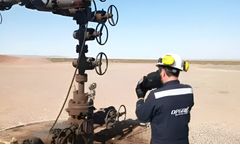
The ability to see gas leaks in real time has revolutionized leak detection. What was once a reactive process relying on handheld sensors and periodic inspections has now become a proactive, visual practice-thanks to the advent of optical gas detectors and imaging cameras. ...
ByOPGAL
The landscape of industrial leak detection is undergoing a dramatic transformation, and 2025 marks a new chapter in this evolution. At the heart of this shift is optical gas imaging (OGI)-a technology that has rapidly advanced to become smarter, faster, and more precise. Once considered a specialized tool used only by elite inspection teams, OGI cameras are now becoming standard across a broad ...
ByOPGAL

Semiconductor gas detector: This detector mainly uses semiconductor sensor, can detect toxic gas, flammable gas and so on. Optical gas detector: This detector mainly uses optical sensors, can detect toxic gas, ...
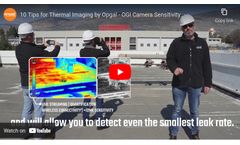
Optical Gas Imaging (OGI) cameras use pixel detectors that sense tiny infrared energy changes, thus allowing for easy visualization of gas plumes. That’s why OGI cameras like Opgal’s EyeCGas 2.0 are an excellent way to detect small to large gas leaks. Even as far as 10 miles (16Km) away. Why do we ...
ByOPGAL

In fact, if leaking from a pipe at a high enough pressure, hydrogen gas can self ignite without the aid of an external energy source. Working together, gas detectors and optical flame detectors can quickly identify a gas leak or the resulting flame. ...
For instance, the common catalytic flammable gas detector employs a technique that slowly destroys the sensor over time. ...
Catastrophic results can occur when a fire or a flammable/toxic gas release goes undetected in any petrochemical facility. For early warning and prompt hazard mitigation, flame detectors and gas detectors are essential tools. ...