
Refine by
Optical Spectroscopy Articles & Analysis
80 articles found

How Automated Sorting Works An automated sorting system integrates detection technologies (optical sorting, NIR spectroscopy, AI machine vision), mechanical separation systems, and conveyor-based transport infrastructure. ...

The wavelength range from infrared through visible to ultraviolet is called the optical range. Light and energy Electromagnetic waves contain energy. ...
ByOPSIS AB
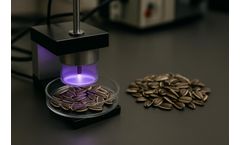
A key aspect was the control of the electrode gap, which strongly influenced discharge stability, power deposition, and seed–plasma interaction. Electrical measurements and optical emission spectroscopy assessed discharge homogeneity and excited species in the plasma phase.Stable reactive species generated during operation were identified using quadrupole mass ...
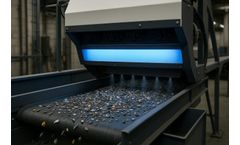
Manual sorting of such mixed streams at industrial throughput is neither economically viable nor sufficient to meet refinery purity requirements.Optical sorting addresses this challenge through automated, sensor-driven material identification and high-speed pneumatic separation. GME Recycling’s optical sorters combine near-infrared spectroscopy, AI-powered ...
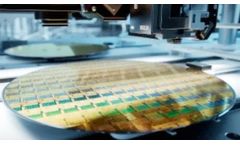
Ascertaining this level of precision requires end point detection (EPD) systems that signal when the etch process has reached or passed through the desired layer. Conventional optical techniques, including interferometry and optical emission spectroscopy, offer some capability but often fail in scenarios involving subtle material contrasts, ...

Traditional ECD (electrochemical detector) H₂S sensors tend to have a short lifespan under such conditions, resulting in frequent and costly replacements.To reduce maintenance demands and enhance monitoring reliability, a gas analyzer equipped with a long-lifespan H₂S sensor was required for effective biogas system operation.SolutionsAfter evaluating various technologies and suppliers, CG ...
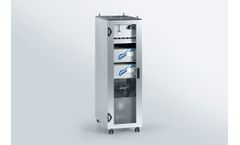
In this context, a technological innovation stands out: ProCeas LaserCEM® from AP2E, a French manufacturer (member of DURAG GROUP) using patented OFCEAS® (Optical Feedback Cavity Enhanced Absorption Spectroscopy) technology. ...

Optical Rotatory Dispersion (ORD) and Circular Dichroism (CD) are two important techniques widely used in the study of biomolecules, particularly the structure of proteins and nucleic acids. ...

Here are some key points about CD spectroscopy.PrincipleCD spectroscopy is based on the optical activity differences after circularly polarized light (Left and Right Circularly polarized light) interacts with the sample. This difference can be used to analyze chiral molecules (optically active molecules) and other molecules' three-dimensional ...
Introduction Can you tell us what Spectro Scientific does, as well as its history? Spectro Scientific is the world’s leading supplier of lubrication oil testing equipment. We began as an equipment supplier to laboratories that provided lubrication oil testing as a service. Recently, we have expanded beyond the traditional lab to supply equipment for on-site and field portable ...

Advanced sorting technologies, such as near-infrared (NIR) spectroscopy and optical sorting systems, can effectively identify and separate PP plastics from other materials. ...
Introduction: Metal 3D printing, also known as additive manufacturing, has revolutionised various industries by enabling the production of complex and customised metal parts with unprecedented precision. However, ensuring the integrity and quality of printed components remains a critical challenge. Gas detection technologies offer a solution to this challenge, providing valuable insights into ...

Additionally, innovating advanced sorting at materials recovery facilities simplifies separation and directs greater volumes of plastics to proper reclamation channels. Equipment like optical sorters, ballistic separators, infrared spectroscopy and float-sink tanks leverage physical and chemical properties to isolate target plastics from waste streams. ...
ByAntecs
Introduction This white paper reports diesel engine oil analysis data demonstrating use of filtergram particle quantifier x-ray fluorescence (FPQ spectroscopy) to quantify severity of wear and contamination. Two independent measurements are performed on each filtergram specimen: pore blockage particle count and FPQ spectroscopic large particle elemental analysis. Causal inflections in ASTM ...
Nesvax Innovations Limited Successfully Installs Analytik Jena’s Inductively Coupled Plasma Optical Emission Spectroscopy System at Yana Oils Limited in Nairobi, Kenya. Nesvax Innovations Limited, a leading provider of laboratory and analytical solutions, is pleased to announce the successful installation of Analytik Jena’s Inductively Coupled Plasma ...

Secondary ion mass spectrometry (SIMS) is advantageous for its high sensitivity and the ability to provide high spatial resolution elemental and molecular information as a function of depth. This makes SIMS imaging an essential tool for depth profiling, where samples’ chemical/molecular information is investigated layer by layer. It is compatible with a wide range of different species, ...

OPSIS Mercury Monitoring Here is where OPSIS offers the best solution on the market: the OPSIS System 400Hg. It is based on differential optical absorption spectroscopy, DOAS, which works excellent for atomic mercury (Hg0), where also extremely low levels can be detected. ...
ByOPSIS AB

For this, the future goes through continuous innovation in separation and classification technologies such as magnetic and induction separators, screening systems, sensors, robots, optical separators or laser spectroscopy (LIBS), a technique used in metal detection. ...

Two principles in use: The CEMS-2000 series Flue Gas Continuous Monitoring System harnesses the hot-wet extractive method with the following two principles for different pollutants: · UV-Differential Optical Absorption spectroscopy (UV-DOAS) principle: Every type of molecule and gas has its own unique absorption spectrum properties, like the ...
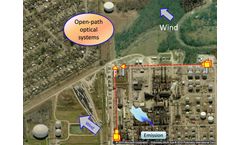
ORS systems employ open-path optical beams to spectroscopically speciate and quantify path-averaged pollutant concentrations in an advected plume. The long optical paths used to help capture spatially variable emissions from the nearby sources. Open-path ultraviolet differential optical absorption spectroscopy (UV-DOAS) is a ...