
Optical Turbidity Sensor Articles & Analysis
7 articles found
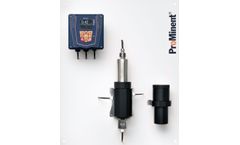
Turbidity as an early indicator in day-to-day process operations Turbidity describes the scattering of light by dispersed particles in water. ...

The evaluation also compared the LISST-ABS to standard turbidity sensors normally used by the USGS. The results are presented in this report: Manaster, A.E., Straub, T.D., Wood, M.S., Bell, J.M., Dombroski, D.E., and Curran, C.A., 2020, Field evaluation of the Sequoia Scientific LISST-ABS acoustic backscatter sediment sensor: U.S. ...

The new, versatile Triton TR80 Turbidity Analyzer features a highly-effective nephelometric turbidity sensor designed for use in water and wastewater. ...

During the field campaign, the dye tracer was monitored with field fluorometers and the turbidity was observed with an optical backscattering sensor interfaced to an OEM data acquisition system. ...

The HydroCAT-EP uses a closed, pumped flow path with anti-fouling infusion for Temperature, Conductivity, Dissolved Oxygen, and pH. Optical turbidity and chlorophyll sensors have a fully copper-protected window to keep biofouling virtually nil. ...

For measuring suspended sediments, the use of optical backscatter sensors or other turdibity sensors is widespread. At the same time, it is understood that these sensors respond to total particle area, not volume or mass. In other words, optical turbidity sensors have this ...

Parameters to be measured: temperature, conductivity, pH/ORP, dissolved oxygen, turbidity and chlorophyll- a. Current measured data should be recalled via the GSM radio network and the station shall be addressable 24 h / 365 days. ...