
Organic Waste Biodegradation Articles & Analysis
21 articles found
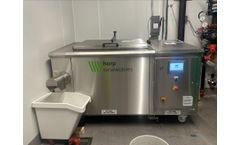
Ikea’s Commitment to Sustainability: Harnessing the Power of the Harp CX2 to Combat Food Waste Ikea, a global leader in affordable and stylish home furnishings, is not only known for its high-quality furniture and Swedish-inspired food but also for its strong commitment to sustainability. The company has long been focused on reducing its environmental impact, with goals to become ...

Introduction The residues generated from coconut processing pose a dual challenge - their sheer quantity and the diverse nature of the waste. This article delves into the intricacies of managing coconut processing waste, deciphering the merits of charcoal production and composting as sustainable solutions. Characteristics of Coconut Processing Waste Biomass Composition and Variability Coconut ...
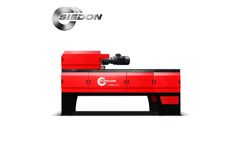
The integrated design combines crushing and dewatering screw press in one step without the use of screw conveying. For kitchen waste and other liquid material waste, we are equipped with an automatic feeding system (lifting feeding), and a protective cover is installed at the hopper to prevent the waste from splashing during automatic ...

What Makes Water Unsuitable for Drinking? The World Health Organization (WHO) organizes potable water contamination as organic, inorganic, radiological, and microbiological, and includes measures of acceptability of taste, smell, and appearance. ...

Sistem Granular Bed memungkinkan limbah cair yang bersifat High Organic Biodegradable Waste dapat diuraikan dengan maximum menghasilkan biogas yang kaya energi (kandungan methane yang tinggi) yang dapat memberikan keuntungan yang berlebih bagi perusahaan. ...

As wastewater flows through its polymer media, millions of living bacteria devour organic waste materials before it can pass through the system. The unique aerobic, oxygen-rich design removes organic waste, nitrogen compounds, surfactants, and other biodegradable contaminants to produce effluent with up to 97% of ...
Aerobic wastewater treatment ranges from the simple to revolutionary technologies like MABR, which saves energy and is ideal for decentralized treatment Aerobic wastewater treatment takes many forms, but fundamentally it’s a biological process widely used in the treatment of both domestic and industrial wastewater, particularly waste streams high in ...
Biological treatments rely on bacteria, nematodes, or other small organisms to break down organic wastes using normal cellular processes. Wastewater typically contains a buffet of organic matter, such as garbage, wastes, and partially digested foods. ...

Management Summary The biogas production from a mixture of food waste, garden waste, paper, napkins, plastic, metals and glass and anaerobically digested sludge was monitored until gas production had ceased. The homogenised biowaste mixture was subjected to two pre-treatment methods prior to being fed to the BMP reactors, these were: pasteurisation at 70oC followed by anaerobic digestion ...

The aim of this paper is to discuss the current state of efforts and alternatives with respect to the control of fugitive CH4 emissions generated from the anaerobic biodegradation of organic waste.Keywords: GHG emissions, methanotrophic processes, landfill gas, methane emissions, greenhouse gases, anaerobic biodegradation, ...
Anaerobic fermentation of press mud and sewage for biohydrogen production was conducted in six batch reactors for various total solid concentrations between 5–8.5%. Chemical oxygen demand, pH, total solid % for biohydrogen produced were monitored regularly. The experiments were conducted for 40 days to optimise the total solid content of the feed for maximum biohydrogen production. Effect of ...

Twenty years on, in 2010, recycling of materials from MSW has increased to more than 45 percent and landfilling has decreased to only 40 percent with the country achieving the important European Union (EU) target of reducing the amount of biodegradable waste landfilled by 25 percent in 2010, compared with the base year of 1995. This target was set by the EU to ...
Throughout the world, there have been increasing interests in the recycling of wastes for sustainable development. This especially applies for organic materials of municipal and agro-industrial origin. ...
ABSTRACT This paper describes how the Cambi Thermal Hydrolysis Process (THP) treats biodegradable organic waste and converts it to renewable energy and pathogen-free and bio-fertilizer. ...
Four lysimeters were operated under conventional landfill operation, leachate re-circulation, leachate storage with re-circulation and internal storage modes. Organic waste degradation, leachate quantity and characteristics and well as methane gas from each lysimeter were compared. Leachate re-circulation and storage operation helped promoting ...

The emission of volatile organic compounds (VOCs) from a solid waste disposal site for municipal solid wastes was quantified. ...
Water hyacinth, sugarcane bagasse and rice husk are major bio-organic wastes causing severe environmental problems. For their biodegradation, Eisenia fetida was used as a vermicomposting worm in outdoor open field conditions. The above wastes were mixed separately with fresh cow dung in the ratio 1 : 5 (by weight). ...
Landfill gases, predominantly methane and carbon dioxide, are produced by the biodegradation of organic wastes. Biodegradation occur, if the water comes in contact with the buried waste. ...
Two methods of vermicomposting were used for the bio-degradation of organic wastes, viz., the pit method and the heap method. The efficacy of these two methods was compared under field conditions over three seasons (winter, summer and rainy) by using one of the most promising composting worm species, Eisenia fetida. ...
This paper describes how the Cambi Thermal Hydrolysis Process (THP) treats biodegradable organic waste and converts it to renewable energy and pathogen-free and bio-fertilizer. ...