
Refine by
Oxidation Catalyst Articles & Analysis
143 articles found

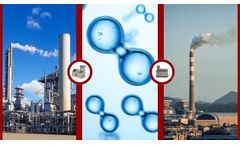
Stage 3: SCR DeNOx System for Final Polishing Following thermal oxidation, the flue gas enters the Selective Catalytic Reduction (SCR) system.The SCR unit is responsible for removing residual nitrogen oxides, including:Nitric Oxide (NO) Nitrogen Dioxide (NO₂)Using catalyst-assisted reactions between ammonia and NOx, the system ...

Should coating plants choose RTO or catalytic oxidation systems? What are the latest VOC emission standards in different countries and regions? ...

In this blog post, Metash will share the features of TOC-5000 TOC total organic carbon analyzer for sale, which provides a comprehensive set of functions that enhance its versatility, accuracy, and user-friendliness, making it an indispensable tool for environmental monitoring and quality control. Advanced Catalytic Oxidation Technology: The TOC-5000 employs a high-temperature ...

Temperature Programmed Reduction (TPR) with quadrupole mass spectrometry (MS) addresses a long-standing challenge in catalyst characterisation: the inability to distinguish between hydrogen consumption mechanisms during reduction. Conventional temperature programmed reduction reveals when a material responds to hydrogen, but rarely explains how or why that response occurs. If quadrupole MS is ...
Over time, catalysts lose activity due to carbon deposition, sulfur poisoning, and surface restructuring, which directly impacts throughput, selectivity, and operating cost. Temperature programmed oxidation (TPO) is a controlled characterisation technique that probes catalyst deactivation by oxidatively removing activity-limiting ...

Instead, it was dissolving the aluminium oxide coating that holds the catalyst in place.Most commercial catalytic converters use aluminium oxide for its enormous surface area and ability to support catalytic materials. But just as caustic soda eats away at aluminium cookware, it was eating away at the converter’s coating too.This insight pointed ...
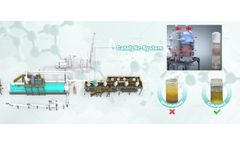
Mechanism and Process Advantages Unlike conventional pyrolysis, which relies solely on thermal degradation in an oxygen-deprived environment, catalytic pyrolysis employs materials such as zeolites, silica–alumina, or metal oxides to influence reaction pathways. Catalysts facilitate selective cracking of long-chain hydrocarbons into shorter, more uniform ...

What Are Alumina Catalyst Carriers? Alumina catalyst carriers consist of aluminum oxide (Al2O3) materials which provide extensive surface areas for catalyst distribution. ...
HEPA Filters with Activated Carbon: High-Efficiency Particulate Air (HEPA) filters combined with activated carbon can capture both particulate matter and VOC gases, providing comprehensive air purification. Photocatalytic Oxidation (PCO): This technology uses UV light and a catalyst (usually titanium dioxide) to break down VOCs into less harmful substances, such ...

Advanced reactor designs, coupled with innovative catalysts and process optimization techniques, have led to increased product yields and reduced energy consumption.Catalytic Pyrolysis: Catalytic biomass pyrolysis involves the use of catalysts to facilitate chemical reactions and improve product selectivity. Catalysts such as zeolites, metal ...
The study focuses on the development of perovskite oxide structured catalysts for a two-step thermochemical water splitting method that enables the sustainable production of hydrogen from renewable sources. Metal oxides with high redox capacity (x-H2), fast reaction kinetics and structural stability during thermal cycles are needed for efficient ...
This union of AI and pyrolysis technology not only augments efficiency but also lays the foundation for predictive maintenance, mitigating downtime and ensuring continuous operation. Catalysts: The Unsung Heroes Central to the evolution of plastic pyrolysis machines are the catalysts, the unsung heroes orchestrating the chemical ballet within the confines of the ...
However, the efficiency of this process has historically faced limitations, prompting the exploration of catalytic interventions.Catalytic Technology Unveiled Catalytic technology introduces a catalyst into the pyrolysis process, acting as a molecular facilitator to enhance reaction rates and alter the pathway of plastic decomposition. The catalytic approach holds the promise of ...

Quaternary Ammonium Ionization This method, also known as the Hillbert-Johnson method, allows direct nucleophilic substitution of substituted pyrimidines with halogenated sugars without electrophilic catalysts. For example, 2-alkoxy pyrimidines can undergo alkylation reactions with halogenated sugars to produce quaternary ammonium salts. ...
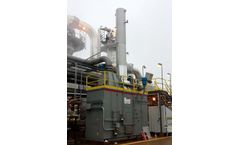
The Anguil Catalytic Recuperative Oxidizer destroys Hazardous Air Pollutants (HAPs), Volatile Organic Compounds (VOCs), and odorous emissions at significantly lower temperatures than thermal oxidation technologies through the use of catalyst. ...
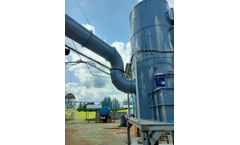
Activated carbon filters are commonly used to remove volatile organic compounds (VOCs) from air streams 4. Thermal Oxidizer: A thermal oxidizer is a device that uses high temperature to oxidize pollutants in exhaust gas. The pollutants are converted to carbon dioxide and water vapor, which are then released into the atmosphere. Thermal ...
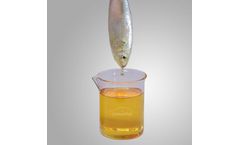
They are powerful catalysts for active oxidation and rancidity of oil. Because of their existence, the induction period of oil oxidation is greatly shortened and the speed of oxidation reaction is accelerated. ...
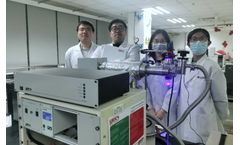
Kinetic study of catalytic reactions is vital to understand the reaction mechanisms and optimize the design of catalysts. Prof. Su’s group upgraded the HPR-20 system with their customer designed gas-inlet and in-situ reactor to explore the evolution of gas-phase chemicals during photocatalytic synthetic processes under realistic conditions. ...
A catalytic activity testing rig was developed for this purpose and was able to continuously monitor the concentration of NOx in the effluent, alongside the formation of by-products including ammonia and nitrous oxide. The catalysts in this study were prepared from palm kernel shell (PKS) activated carbon impregnated with copper and iron oxides ...
Supported nickel (Ni) catalysts are widely used for the CPOM due to low cost and high effectiveness as compared to noble metals. ...