
Refine by
Partial Oxidation Articles & Analysis
54 articles found
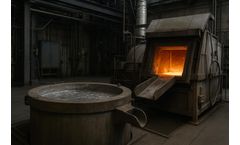
Atmosphere control is critical: oxidizing conditions promote lead oxide formation and copper removal via drossing, while reducing or inert atmospheres prevent excessive lead oxidation during antimony removal. Batch Refining Process Stage 1 – Copper Removal (Drossing): Heat to 400-450°C under oxidizing atmosphere. Copper forms ...
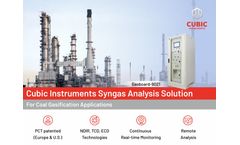
The Challenges: Process Variability and Gas Quality Instability in Coal Gasification Coal gasification proceeds through a series of thermochemical reactions that respond strongly to coal properties and operating conditions: Water-gas reaction: C + H2O → CO + H2 Partial oxidation: C + 1/2O2 → CO Boudouard reaction: C + CO2 → 2CO Water-gas shift ...

Even with challenges, the process stands to reap rewards in terms of energy savings and lower chemical use Nitrogen removal is one of the most energy-intensive and chemically demanding parts of wastewater treatment. As utilities and industries look for ways to meet ever-tighter nutrient limits with smaller carbon footprints, shortcut nitrogen removal has emerged as a compelling option. The ...

Oxygen supplementation strategies to maintain lagoon health. Over time, wastewater lagoons accumulate sediment. This decreases the effective treatment volume, decreases hydraulic retention time (HRT), and can lower available oxygen in the water column. Suspended solids, organic matter, and microbial byproducts are constantly added and settle to the bottom of the lagoon. This begins with the ...

Unlike traditional combustion, where biomass is fully burned, gasification partially oxidizes the biomass, allowing for the extraction of usable gases. ...
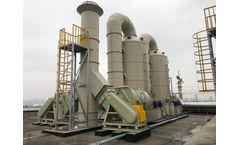
Physical Solvent Processes: Uses solvents like Selexol or Rectisol that physically absorb H₂S and CO₂. Best for gases with high partial pressures of acid gases. Direct Oxidation: Converts H₂S into sulfur using oxygen in the presence of a catalyst (e.g., Shell-Paques process). ...

Unleash the power of Syngas Analysis in Biomass Gasification Applications. The aim of this blog is to decode this subject. Delve deep into the process, its impact, and its benefits. An enlightening journey ...

The customer asked us to evaluate the Electrocoagulation for the Treatment of Bio-Diesel Effluent and to be able to drain the treated water into the sewer ...

Compared with the steam reforming of methane, catalytic partial oxidation of methane (CPOM) is a preferred technology to produce hydrogen or synthesis gas with more economic incentives. ...
His research interests are focused on different topics as: i) the CO2 capture and catalytic conversion to added product values; ii) the sorption and reduction/oxidation of other acid polluted compounds (CO and NOx); iii) the hydrogen production through different catalytic reactions (reforming, water gas shift, partial oxidation and biomass ...

What is hazardous waste? Hazardous waste refers to industrial or municipal waste that due to its toxicity and hazardousness must be treated using extremely safe methods. Of course they should not be disposed of in landfills. Such types of waste include those containing phosphides, isocyanates, alkali metals and acids, which form gases during combustion (e.g. chlorine forms hydrogen chloride, ...
ByTECAM
Electrocatalysis is the study of the catalyst material used at the electrode surface, or as the electrode, in an electrochemical reaction. The rate and mechanism of the electrode reactions at the electrode-electrolyte boundary also form part of the ...

Nowadays and more than ever before due to the Coronavirus pandemic, millions of tons of waste are generated at hospitals, laboratories, health centers, clinics and other medical centers. Sensitive and hazardous materials that require specific treatment Medical waste is very sensitive material when it comes to its elimination due to its hazardous nature: the possibility of bacteria, equipment ...
ByTECAM

Indeed, if enough oxygen is not available for combustion, it results in the partial oxidation of carbon-containing compounds. Carbon monoxide (CO) produces during such combustion instead of carbon dioxide (CO2). ...

Intermolecular contact, the formation of local high temperature and pressure, and the simultaneous generation of free radicals and excited reactive oxygen species, not only rapid oxidation of sulfides. Improves oxidation of oxidants, improves reaction selectivity, significantly shortens oxidation reaction time, and can also ...
ByVmets
In April, Eastman announced their “carbon renewal technology” capable of recycling some of the most complex plastic waste, including non-polyester plastics and mixed plastics that cannot be recycled with conventional recycling technologies. The process partially oxidizes the plastic and converts it into the basic building blocks of certain Eastman ...

This White Paper describes the science behind hydrothermal oxidation (HTO) as a waste treatment methodology and its potential across a range of industrial applications, which is now, thanks to this project, a demonstrable reality. AquaCritox and Hydrothermal Oxidation AquaCritox is a hydrothermal oxidation process that involves the use of ...
Researchers have been considering alternatives to natural gas reformation for years, including partial oxidation processes, while improvements to the existing manufacture of hydrogen include looking for ways to augment natural gas reformation processes with production from renewable energy sources. ...

And As(V) data were described perfectly by the Freundlich model with a maximal adsorption capacity of 58.341 L/mg. As(III) is partial oxidized to As(V) during the adsorption process. High arsenic uptake capability and cost-effectiveness of waste make it potentially attractive for arsenic removal. ...

The fuel descends through sequential reaction zones, from drying to pyrolysis/carbonization to partial oxidation at 2.200°F or higher. Hydrocarbon bonds are cracked, and in the reactor throat a syngas is formed, most tars are oxidized, and a residual char is formed, often accompanied by in an inert, vitreous slag. ...